" ITREALMS: need

Featured post @ITREALMS

The Complicit Screen: Midnight Feast @TikTok by Remmy Nweke — Telecoms Clinic@ITREALMS

Telecoms Clinic@ITREALMS ... making leadership SENSE with digital news! Part I of a Three-Part ITREALMS Investigative Series under Telecom...

Showing posts with label need. Show all posts

Friday, July 04, 2025

Nigeria doesn’t need applause, but access by Abidemi Adebamiwa - ITREALMS

Commentary@ITREALMS ... making leadership SENSE with digital news!

The International Monetary Fund has urged Nigeria to revise its ₦54.99 trillionth 2025 budget downward in response to weakening oil revenues. It also recommends continued tight monetary policy and high interest rates until inflation further slows.
Nigeria doesn’t need applause, but access by Abidemi Adebamiwa - ITREALMS
These suggestions may appear sound within orthodox economic models, but for most Nigerians, they are a recipe for deeper suffering.

Tuesday, June 10, 2025

Leo Stan Ekeh: ‘You need combined strength of Tinubu, Obi and Atiku to be successful entrepreneur in Nigeria’ – ITREALMS

Sponsored@ITREALMS ... making leadership SENSE with digital news!

The path of entrepreneurship, particularly within the dynamic and often unpredictable terrain of Nigeria, is not for the faint-hearted. It demands a unique blend of attributes to navigate the complexities and seize the latent opportunities. 
Leo Stan Ekeh: ‘You need combined strength of Tinubu, Obi and Atiku to be successful entrepreneur in Nigeria’ – ITREALMS
During a recent mentoring session in Ikoyi, Lagos, organised by some young business leaders, Leo Stan Ekeh, Africa’s most decorated tech entrepreneur, articulated a compelling and insightful perspective: to truly flourish as an entrepreneur in Nigeria, one must cultivate a composite strength, drawing inspiration from the distinct yet powerful qualities embodied by prominent national figures – Bola Ahmed Tinubu, Atiku Abubakar, and Peter Obi.

Friday, November 29, 2024

Oil tankers: Urgent need for improved safety standards by Elvis Eromosele - ITREALMS

Commentary@ITREALMS ... making leadership SENSE with digital news!

In Nigeria, tankers carrying petroleum products are a common sight on the nation’s highways. These massive vehicles, often loaded with flammable and hazardous liquids, are an integral part of the country’s transportation system, facilitating the movement of crucial fuel supplies across the nation. However, the increasing number of tanker accidents, many resulting in devastating fires and environmental disasters, has raised serious concerns about road safety.
Oil tankers: Urgent need for improved safety standards by Elvis Eromosele - ITREALMS
One of the primary factors contributing to the frequency of tanker accidents in Nigeria is the state of the country’s roads. While urban areas like Lagos and Abuja have relatively better road networks, the majority of Nigeria’s highways, especially those in rural and semi-urban areas, are poorly maintained. Potholes, lack of proper drainage, and uneven surfaces create hazardous conditions for all vehicles on the road, but for tankers carrying volatile materials, the risk is exponentially higher.

Thursday, April 25, 2024

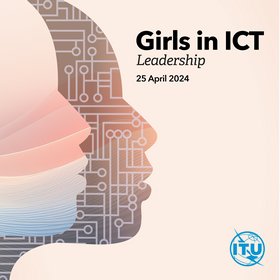
ITU boss: Future is digital, we need women to lead it - ITREALMS

ITREALMS ... making leadership SENSE with digital news!


Remarks by the Secretary-General, International Telecommunications Union (ITU), Doreen Bogdan-Martin on International Girls in ICT Day 2024.
Today, as we mark International Girls in ICT Day, we stand at the crossroads of a pivotal era. Less than a quarter of all Ministers for Information and Communication Technologies (ICTs) are women. 

Friday, October 27, 2023

Do we still need EFCC, ICPC for anti-graft war? By Zainab Suleiman Okino - ITREALMS

Commentary@ITREALMS ... making leadership SENSE with digital news!

Since their creation, the Economic and Financial Crimes Commission (EFCC) and Independent Corrupt Practices and Other Related Offences Commission (ICPC), have always been mired in controversy and blemished by political influence. 
Do we still need EFCC, ICPC for anti-graft war? By Zainab Suleiman Okino - ITREALMS
From the appointment of the heads to their activities, the anti-graft agencies are also troubled, as much as they trouble alleged offenders, in addition to subtle institutional rivalry between them and the Attorney General’s office.

Friday, September 23, 2022

Kuda's N6bn loss: Need to reinvent the model - ITREALMS

Commentary@ITREALMS ... making leadership SENSE with digital news!

Universal access to financial services is today widely regarded as a fundamental human right. Firms helping to drive access to financial services are highly regarded as enablers of financial inclusion.
Elvis Eromosele, a Corporate Communication professional and public affairs analyst lives in Lagos.
“Financial inclusion," according to the World Bank, "means that individuals and businesses have access to useful and affordable financial products and services that meet their needs – transactions, payments, savings, credit and insurance – delivered responsibly and sustainably.” It is viewed as a key enabler in reducing poverty and boosting prosperity.

Tuesday, July 26, 2022

Chigbo: Why undergraduates need to shun social media addiction - ITREALMS

ITREALMS ... making leadership SENSE with digital news!

The publisher of Realnews Magazine Online, Maureen Chigbo, has advised undergraduates especially medical students of Bingham University, Karu, Nasarawa State, to shun spending hours on social media in order not to perform poorly in their academic studies.
From R-L: Mr Egene Joseph Patron BhUMSA Preclinical arm, Tsavsar Manasseh, Northern Caucus Secretary,Choji Ebenezer Director on NiMSA Skill Acquisition Initiative Program, Mr Ben Odebe Member,Academic planning Unit Bingham University, Collins Ijah NiMSA Fundraising Assistant, Toochi Erdoo Sonia Deputy National Coordinator NiMSA Preclinical Forum,Dr. Kardi David Resident Doctor at Bingham University Teaching hospital Jos,Maureen Chigbo President of Corporate Online Publishers,Dann Odutokpono Vice President II BhUMSA Preclinical arm, Idodoh Emmanuel NiMSA Vice President internal affairs
Chigbo, who is also the president of the Guild of Corporate Online Publishers (GOCOP), stated this while speaking on "Social Media in Medical Training and Profession" July 9, at the symposium organised by Nigerian Medical Students Association (NiMSA), Preclinical Forum, North Central in collaboration with Bingham University Medical Students Association at the Architecture auditorium, Bingham University, Karu.

Tuesday, July 19, 2022

For sustainable growth: ISPs need to restrategize says Ajuzie - ITREALMS

ITREALMS ... making leadership SENSE with digital news!

The Internet Service Providers (ISPs) in Nigeria have been charged to revamp their businesses and market operations for growth, sustainability and profitability, says the chief operating officer, WTES Projects Limited, Mr Chidi Ajuzie.
chief operating officer, WTES Projects Limited, Mr Chidi Ajuzie.
He gave this charge at the telecoms sector sustainability forum organised by Business Remarks in Lagos State themed "Examining the Nigerian Internet Service Providers (ISPs) Viability in a Digitized Environment.

Friday, February 28, 2020

Telecom infrastructure: Airtel laments 1022 fibre cuts in 9 months, stresses need for CNI inclusion - ITREALMS

Acclaimed leader in telecommunications sector, the Airtel Nigeria, laments the 1022 fibre cuts on its infrastructure in the last nine months, stressing the need for inclusion of telecom in the Critical National Infrastructure (CNI) by the Federal Government (FG), reports ITREALMS.

The Director of Corporate Communications & Corporate Social Responsibility (CSR), Airtel Nigeria, Mr. Emeka Oparah, told 
ITREALMS that the declaration of telecoms infrastructure as Critical National Infrastructure (CNI) by FG would assuage the quality of services by telecom operators.

As said by him, Airtel alone recorded some 1022 cases of fibre cuts in nine months, that is, between July 2019 and 11th of February, 2020.

In addition, he explained that 405 cases of the fibre cut were as a result of road rehabilitation activities by construction workers while 617 cases were due to vandalism.

Airtel urged FG to quickly come to the aid of telecoms operators in the country as these activities have resulted in unprecedented dropped calls, poor network quality, network congestion and poor user experience for telecommunications subscribers across the country.

He also urged the federal and state governments to hasten the approval process for right of way for fibre deployment as well as quicken the Environmental Impact Analysis (EIA) approval process, noting that these actions would help solve the problem of network congestion and network failure.

Also speaking during the briefing, the Vice President, Network Operations, Airtel Nigeria, Dr. Adedoyin Adeola, lamented that telecoms installations across the country are repeatedly vandalized, stolen, bombed and destroyed with reckless abandon, creating myriad of problems for the network operators as well as the telecommunication consumers.

“Telecoms operators are plagued with so many problems ranging from security issues to illegal signal boosters. While a network provider is working hard to restore a fibre cut due to vandalism or activities of road construction workers, it also has to deal with illegal signal boosters, which interfere with network quality and operated by unlicensed operators.

“Then, all operators would have to wait endlessly for Right of way approvals, EIA approvals and other approvals. Also, telecoms installations are huge targets for thieves who cart away with inverter batteries, generators, diesels in addition to the other daily and long standing problems of multiple taxation, community issues and all,” he said.

Dr. Adeola also highlighted the efforts telcos are making to remedy the situation despite the harsh operating climate, stating that steps are being taken to improve surveillance across telecoms fibre routes; proactively engage with construction companies and communities; and enlisting the support of security agencies to access sites/telecoms infrastructure in flash points or troubled areas, among many others.

He also called on the government to urgently declare fibre routes as critical National Assets, contain the security challenges Country-wide and improve public power availability and quality.

Chuks Egbune/DoP

*JOIN our alert's group | Share stories with us | Advert placement: WhatsApp | SMS: +2348033592762 *Twitter: @ITREALMS *Email: itrealms.dsa@gmail.com*

Tuesday, October 24, 2017

Education: Government must ensure rules are followed

No matter your job, you need standards to ensure that you are working to meet your objectives. Unfortunately, where education and schools are concerned, these standards sometimes do not exist. Or, more often, they are not enforced. Schools are decidedly sub-standard in some places, with those in sub-Saharan Africa facing particularly strong challenges. Many teachers are not sufficiently prepared in the region, classrooms are often overcrowded, infrastructure is crumbling and learning is suffering.

More than one in four young people cannot read in sub-Saharan Africa today, while by some other recent estimate nine in ten children do not acquire minimum reading skills. Standards are slipping where they could be applied, which is putting our global education goal at risk.

Even though the number of children not in school globally has stagnated between 2008 and 2015, this doesn’t mean that the number going to school is stagnating too. During the same period, 30 million more children enrolled in primary school in sub-Saharan Africa alone - that’s more than all the children enrolled in primary school in the United States. Is it any wonder that standards are slipping?

Depending on what side of the fence you sit, the diversification of education providers, often in the form of low-fee private schools, can be a blessing or a curse. Many of these schools sprouted in densely populated slums, including in Kibera, Kenya, where governments did not wish to set foot. They attracted families aspiring to improve the education of their children. But oftentimes these schools have not lived up to expectations.

What the newest Global Education Monitoring (GEM) Report, Accountability in education: meeting our commitments, shows us is that governments must establish standards and regulations that lay down the law for all education providers, public and private. If they do not, negative practices quickly take hold.

At present, governments may not have standards in place even for public schools. We found that there are no regulations on class sizes in primary school in 10 countries in sub-Saharan Africa, including Liberia, Sierra Leone, Mali and Togo. This is a major challenge for teachers and a big contributor to low learning outcomes. Less than half of low and middle income countries reviewed by the World Bank had established standards for early childhood education – and even fewer monitored and enforced those regulations.

When governments relinquish control of education to private providers, it is equally if not more important that standards be in place to regulate them. By 2021, it is expected that one in four primary school age pupils in sub-Saharan Africa will be in private schools, up from 13.5 per cent in 2015. If these schools’ way of working does not meet the aspirations of our global education goal, SDG 4, it is highly unlikely we will achieve it.

The reality, we found, is that regulations are not being created or streamlined to adjust to the fast rate with which education systems are expanding. The very first step of accrediting schools in the first place is often cumbersome, prone to corruption, and therefore slow, leaving many operating without meeting even minimum safety and infrastructure standards. In 2010/11, for example, only 26 per cent of private schools in Lagos had been approved by the Ministry of Education. In Kenya and Uganda, some private schools were operating without qualified teachers and with inadequate infrastructure before regulations were put in place and courts shut them down.

An education system is not the work of just one person or body. An education system of good quality is a shared responsibility between multiple actors, governments, teachers, schools, parents and the private sector. But governments need to set the example, and introduce clear regulations that lead towards the global education goal. They are the missing link for restoring trust in the education system.

*Contributed by Dr. Manos Antoninis, Director, Global Education Monitoring Repor at  UNESCO


ITREALMS ... everything news digitally!

Sunday, August 27, 2017

JAMB Admission saga: A need for clarity

Some of us who were physically present at the JAMB Policy meeting owe it a duty to clarify issues and right some wrongs in the reportage of the meeting.

It is a pity that the personality and position of the incumbent Registrar, Prof Oloyede, is being unfairly vilified when he should be commended. These are the facts as observed and as stated to us at the meeting.

1) JAMB was established at the instance of 13 Vice Chancellors some decades ago to stream-line the process of admission and eliminate the duplication of entrance examinations to universities.

2)JAMB, by the edict establishing it, is supposed to confine itself to the conduct of examinations and release of results to the universities.

3) The Senate of each university is then expected to decide on the admission criteria and CUT OFF MARKS. Please note that the Senate of the university is the highest body empowered to make policies /pronouncements on academic matters. They award the degrees.

4) Over the years however, JAMB, had exceeded it's mandate and sought to take over the roles of the university Senate. It came to a head last year when JAMB forwarded the lists of students admitted to each university. Of course this was strongly resisted by most Vice-Chancellors, including yours sincerely.

Last time I checked, Tai Solarin University of Education (TASUED) is fully owned by the Government and people of Ogun State, and no parastatal in Abuja, will be permitted to act as if it owns/operates TASUED. This is the background of what brought in Prof Oloyede as the new Registrar .

5) Since he came on board,  he has tried to address the issues and correct anomalies observed. It was in the process of doing this that certain decisions were taken.

  a) the power to 'fully own' the admission process was transferred back to the Senate of each university, where it rightly belongs.  Each university now has some freedom to decide it's cut-off point, with a proviso that none should go below 120, which was the lowest submission . Most universities are sticking to 170-200 cut-off mark.

b) all admission processes should be placed on the table of public scrutiny and there should be no 'under the table' admission which is then covered later by regularisation through JAMB. The Registrar said he was shocked by the huge number of students who had not taken the JAMB exam and we're surreptitiously admitted by some universities. He said this has to stop from this session.

6) Prof Oloyede has computerised the admission process to make it more inclusive, open and interactive.  Applicants now have the opportunity to track their admission status and accept /reject courses offered whilst being considered by other universities who now have access to data of ALL applicants.

7) Prof Oloyede has shown uncommon courage in exposing and addressing the anomalies of the past. Please remember that he also returned over 5 billion Naira to the coffers of the Federal Government,  an amount which the Minister of Education said was higher than the sum total amount paid by JAMB since its establishment.

I believe the criticism of Prof Oloyede is unfair and could dampen his enthusiasm for the job. He should be commended not condemned.

Please note that I am not Prof Oloyede's spokesperson neither does he know of this submission. But I was at the meeting and I felt a need to clarify issues.

All it takes for evil to thrive is for good people to keep silent.

*Contributed by Professor Oluyemisi Obilade is the Vice-Chancellor of the Tai Solarin University of Education.


ITREALMS ... everything news digitally!

Friday, January 06, 2017

Do we need another ICT University?

Recent times, the media has been awash with the news of advanced plans by the Federal Government (FG) to enthrone an Information and Communications Technology (ICT) University, probably in the first quarter of 2017.

According to DigitalSENSE Business News findings, the Minister of Communications Technology, Adebayo Shittu, emphatically revealed this at the first annual workshop of the Nigeria Computer Society (NCS), Abuja chapter, saying that the global technology establishments in Nigeria, like Ericsson, Microsoft, Motorola among others, will be part of the management.

The key plan is to convert the Digital Bridge Institute (DBI) headquarters in Abuja to the ICT University and establish campuses in the six geopolitical zones across the country, with a bottom-line argument that Nigeria loses approximately $2.8 billion annually from the importation of ICT goods and services, including $1 billion spent annually on software imports, even as it will boost indigenous capacity of Nigerians to perform outsourcing in most of the areas that Nigerians spend huge money on importation.

The question arising thereof is whether Nigeria in the first instance needs another ICT University?

Records available to DigitalSENSE Business News from the National Universities Commission (NUC) shows Nigeria currently has some 152 universities, across the federal - 40; states - 44 and private - 68, as at time of filing this report. Among the 152 universities, there are four federal universities of technology, namely, the Federal University of Technology, Akure; Federal University of Technology, Minna; Federal University of Technology, Owerri; and University of Technology, Yola.

Also, out of 152, there are three states-owned universities of science and technology; comprising Enugu State University of Science and Technology, Enugu; Ondo State University of Science and Technology Okitipupa; and River State University of Science and Technology, Port Harcourt.

Just as there are three privately-owned universities of science and technology, precisely the African University of Science & Technology, Abuja and Wesley University of Science & Technology, Ondo, both established same year, 2007, while the third is Bells University of Technology, Otta-Ogun State, founded since 2005. Thus, the Nigerian state has some 10 universities of technology despite the nomenclature.

In the same vein, Digital Bridge Institute (DBI) was established in May 2004 by the Nigerian Communications Commission (NCC) to change the narratives of dearth of trained and suitably qualified human resources in ICT sector, and to continuously foster rapid development and growth of the Nigerian telecommunications marketplace. Currently, DBI prides itself as a Centre of Excellence in ICT training and education with campuses in Abuja, Lagos and Kano, which could pass for some geo-zones.

DBI academic courses run under four principles; within the accreditation of National Board for Technical Education (NBTE), professional courses, International Telecommunications Union (ITU) accredited courses and Electronic Learning (e-Learning).

Whatever is the shortcoming of DBI in achieving its original mandate is not farfetched, including lack of local patronage by those telecommunications and ICT companies which Minister is anticipating to run the ‘ICT University’ with as Public Private Partnership (PPP). So, what stops the Ministry of Communication taking a second look at DBI in terms of existing infrastructure, syllabus and patronage, in order to make the needed change required in DBI effective, rather than starting a new capital venture, if at all in the geozones in the name of making a record of six campuses nationwide?

If the Federal Government under President Muhammadu Buhari since inception has been lamenting lack of finance to build infrastructure will now go into establishing another set of universities with campuses in six-geozones, what will be the fate of existing DBI, which already has campuses in some zones?

If the argument of the Minister is anything to go-by, is the fact that the current 10 universities of technology and the entire university system in Nigeria have failed to produce indigenous capacity capable of salvaging the whole ICT eco-system and nation at large. It is worrisome too since building indigenous capacity has been ordinarily DBI sole mandate in ICT sector.

That Nigeria loses an estimated $2.8bn annually on ICT imports, cannot be attributed to lack of manpower in Nigeria no matter how feeble the Nigerian university systems, may be, but largely for lack of patronage and craze for anything foreign even from the Government, across all tiers and private sector.

So, instead of creating ICT University, one expected this Buhari cum Adebayo Shittu administration to prevail on the private sector players to assist the existing higher institutions including the 152 universities and DBI to have endowment of chairs in all faculties and departments, but not limited to Computer Sciences or Science and Technology, even as part of their Corporate Social Responsibility (CSR) programme.

This has become imperative, given that the world has not only become a global village but has since been knitted with ICTs, which means every faculty if not departments must as matter of urgency have distinct computer laboratory with requisite software developed locally for education purposes, installed and maintained by local software companies, who can confidently take-in undergraduates as interns and eventually take-in graduates as employees, without spending another round of annual year budget on retraining of such candidates.

If all things were well with Nigerian universities, they should be producing turn-key students that are trained as complete package for employment or innovation. Definitely not another university is required but maintaining that which we currently have coupled with adequate patronage above board will make the difference.

Except for the sake of nomenclature, DBI is already serving the purpose of which Minister Adebayo wanted Nigeria to have an ICT University. A change of name and accreditation from NUC will get this done. He needs to conduct ‘unofficial visits’ to the existing campuses to basically know the challenges facing the likes of DBI, and computer science departments of 152 Nigerian universities. 

This could lead to perhaps a dialogue with stakeholders championed by the Nigerian Computer Society (NCS), Institute of Software Practitioners of Nigeria (ISPON), Information Technology Association of Nigeria (ITAN), and Nigeria Technology Impact Group (NITIG) among others.

For instance, its heart-breaking to see lately some Federal Government’s agencies and departments tender, requesting foreign computer brands when Nigeria has the likes of Zinox, Omatek, Veda, SpeedStar, Brain to name a few, who have their Completely Knock-Down (CKD) factories locally in the country, thereby creating jobs and reducing the gap in technological transfer.

Maybe as a government that reputed with “change mantra,” the Federal Government under President Buhari should lead by example, when it comes to patronizing locally made ICT facilities including educational institutions like DBI.

If Nigeria and the ICT sector are searching for a solution, already DBI is the solution with a little improvement across board, especially using typical workable PPP model.

ITREALMS ... everything news digitally!

Saturday, October 01, 2016

Nigeria @56: A nation in need of change

Nigeria has clocked 56, but what is there to celebrate? At independence in 1960, who have ever thought that Nigeria has been led by leaders without vision and conviction. Are their cogent views for celebrating Nigeria at 56?

Nigeria's existence has been faced by the crass and almost irredeemable foolishness of her leaders. I know Rome was not built in a day, but there was a systematic, sincere and conscious effort to build Rome. Malaysia, Cyprus, Singapore and South-Africa have by far surpassed Nigeria when it comes to political, economic, educational, technological, and institutional indices. Where are we today? Be the judge.

Nigerians today go to bed without food. Ask me what we are celebrating, and I say it is sheer-mediocrity. Why should I celebrate when people go to bed with one eye widely opened? Why should I celebrate when the poor are getting poorer and the rich richer? Why should I celebrate when our hospitals are now death traps? Why should I celebrate when we are more divided than ever? Why should I celebrate when corruption is a way of life in life? Why should I celebrate when Boko Haram and Fulani herdsmen kill people with reckless abandon?

For me, I am not happy and cannot say "Happy Independence" to you, rather it is a time to pause and ponder, pray for the state of things to change in Nigeria.

Nigeria at 56 is a nation bedeviled by a plethora of challenges. Despite the abundance of human, material and natural resources, Nigerians are still suffering. Nigeria at 56 and I say that the country has lost her moral compass. A country enmeshed with wrong doings. If we keep eulogising wrong doings, we will create a cloudy environment that will make it extremely difficult for the next generation of leaders. Bad leadership bordering on ethnicity, religion and of course bad leadership have been the deceptive problem of this country and we cannot allow it to continue.

At 56,the President who preaches change is in love with nepotism and shady recruitment deals. I look at the President and his assemblage of ministers, we expected a new impeccable list having waited for so long for him to make his choice, what did we get and where are we today? The popular adage says,"if a man took the pain to stay long in the stream, it is because he wants to return home with a pot of clean water". In this case, the President succeeded only in wasting his time.

The country is 56 today, but we have failed as a people to lay the necessary foundation for the country's developmental progress. The country in yearning for change needs a political integrity coupled with effective leadership style and to ensure that anyone in the corridor of power has a clean state of selflessness and integrity to run the affairs of the country. Nigeria at 56, the country has been raped, bruised and sapped. We are just drifting like a balloon in the ocean without an anchor chain. 

For me, I am not in anyway carried away by the chants of change. Indeed, it is all sound and fury, signifying nothing - apology to Shakespeare. True change will come when we have fresh brains, fresh ideas and for now, we have to wait for a true agent of change. The promoters of change only shout change but pay lip service to the attitudinal change required to bring about the real and enduring change. They sold dummy to Nigerians, and we need the true face of change to move ahead. Nigeria's economy has slipped into recession. 

Nigeria is too big to be run without a coherent policy framework. We need to get our 
priorities right and discharge the bounden duty of resuscitating the economy in accordance with appropriate, tested and workable methods.

Since our return to democracy, to us it is still nascent, we have continued to move at the speed of millipedes while the rest of the world has gone supersonic. Today, the country is thoroughly messed up, economic and social lives are decrepit, and a larger percentage of the populace is miserable, encircled by grinding and excruciating poverty. 

That is why, there is no reason to celebrate Nigeria at 56. We are in the Hobbesian state of nature where life is brutish and short. A school of thought believes that 56 years is but a short time in the life of a nation. Do you agree? But the worrisome aspect is that majority of the leaders, followers do not appear inclined to change their ways of doing things.


Again I say, Nigeria at 56, conclusively, is living dangerously with the state of her affairs and the auguries for the future are not in any way an encouraging one. Just saying it the way it is.

*Contributed by Chris Uruakpa from Lagos
ITREALMS ... everything news digitally!