%20Taxation%20ethics,%20revenue%20neutrality%20&%20campaign%20finance%20paradox%20by%20Remmy%20Nweke%20-%20Telecoms%20Clinic@ITREALMS.jpg)
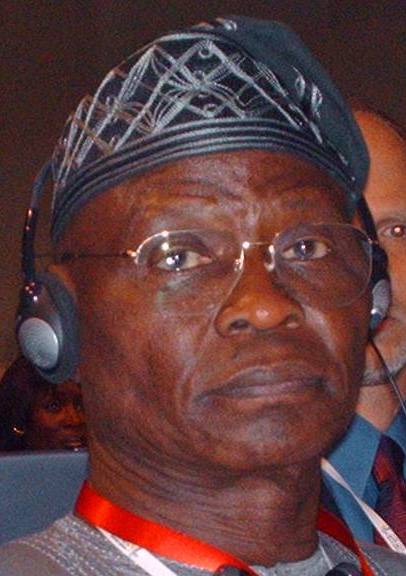
Centre for International ICT Policies, Central and West Africa (CIPACO) has announced the sponsorship of a senior reporter with Daily Champion, Mr. Remmy Nweke, to an international seminar on Information and Communication Technology, Diplomacy and Internet Governance (IG).
The seminar holding in Malta is organized by Diplo Foundation with offices in Malta and Switzerland, comes in a 10-day workshop on 'ICT and Contemporary Diplomacy' as well as a three-day conference on ‘Internet Governance: The Way Forward’.
The workshop organized in collaboration with the University of Malta is to prepare selected diplomats and stakeholders on the use of ICT tools at this era, lasting between January 31 and February 9.
While the international conference on IG; The Way Forward, is expected to proffer the next step for the Internet Governance, which takes place from February 10 through 12, this year.
The sponsorship would afford Mr. Nweke, who also edits ITREALMS Online, http://itrealms.blogspot.com; an insight into the use of ICT and contemporary diplomacy and report back to through his medium.
The Senegalese-based CIPACO is an initiative of Panos Institute West Africa (PIWA), headquartered in London and established to strengthen the capacity of African stakeholders for a more effective participation in international ICT decision-making processes.
Announcing this development, Project Coordinator at CIPACO, Mr. Ken Lohento, said he has the “pleasure to inform that we (CIPACO) have selected you to receive the grant to participate in international ICT policy events”.
The grant, worth $2500 is believed by CIPACO to facilitate his participation at the event, which is a following up to WSIS-05, hence the organization is interested for its benefit to the stakeholders.
The conference on Internet Governance is the first to be organised after the second phase of the World Summit on the Information Society (WSIS) late last year.


Featured post @ITREALMS
Saturday, January 28, 2006

Thursday, January 26, 2006
Pay $100, get DSTv for life
 Features of the week:
The need to meet up with societal class has forced some Nigerians to device a means of receiving Digital Satellite Television (DSTv) offering, just for a $100, reports Remmy Nweke.
WITH the increasing cost of acquiring Digital Satellite Television (DSTv) services occasioned by the current feud over the exclusivity of some key channels in the Pay Television industry, some smart Nigerians have devised means of initiating people into the ‘elite club’ of those who enjoy Direct-To-Home (DTH) access by simply paying N14,000, approximated $100 for unlimited subscription.
From apprentice to DSTv techi
When he came to Lagos in late 1990s, on completion of his post-primary education, Ejim Onye, had no idea of what is Digital Satellite Television (DSTv) looks like, but after spending about six years on apprenticeship, he passed out with some technical knowledge of how to fix some brands of television sets among other electronics.
Top on this list is connecting interested people on to the DSTv with locally sourced apparatus, to begin receiving DSTv services at their homes without subscription, in fact, it is for life, for less than N14,000.
His modus oparandi
According to him, the formular is that the client must have a modern digital television set, pay the above amount from where he would buy Video Home System (VHS) video machine, a pole depending on residence, original cable and antenna and video machine, then you would have an option of choosing from 15 foreign channels.
He named some of these channels to include the popular, Cable News Network (CNN), Sky Sports/SkyNews and TV, EuroSports, Discovery, Channel O, MTV Base, Network, Movies 42, Dream TV, Home TV, Love AM among others.
Noteworthy here is that CNN for instance, has been on top of controversy list of exclusives to some DSTv service providers in the country.
Ejim Onye is not alone in this business, though he has a workshop where he sales fairly used electronic TV sets at the Olodi-Apapa axis of Lagos State, many in the business seem to be operating under cover in the areas like Ijesha, Agege, Lagos Island, Oshodi as well as Okokomiko.
These areas are dominated by low income earners who would like to belong to the high-class in the society left for their economic state, hence some of them have chosen to be patronizing these kinds of ‘unlicensed’ operators of DSTV whether wittingly or unwittingly.
Even as subscribers of legal Pay TV provider in places like Ajao Estate are turning to these technicians for what someone called ‘Life DSTv subscription’.
But what matters to most of the users accosted in the cause of investigating this story is that they have been neglected for a long time and simply want to belong and also know what is happening around the world, especially through the Cable News Network (CNN).
Direct-To-Home (DTH)
Satellite television is television service delivered by way of communications satellites, as compared to conventional terrestrial television and cable television. In many areas of the world satellite television services supplement older terrestrial signals, providing a wider range of channels and services, including subscription-only services.
DTH platforms as at January 2004 was recording broadcast of over 7200 channels with over 60 million subscribers globally, according to DTH World Summit on Satellite TV platforms and channels held in Paris.
670,000 out of the 7 million TV homes in South Africa were reported to be receiving DTV transmissions - MultiChoice’s DSTv direct-to-home satellite service, according to the ICASA as quoted in the ‘Digital Dilemmas for South African TV,’ co-authored by Messrs Chris Armstong and Richard Collins.
Three main forms of digital television according Messrs Armstrong and Collins exist, namely the satellite, wireless/cable and digital terrestrial television (DTT).
Whereas DTH could be said to be strictly based on satellite, the wired systems which sends digital TV content to users through phone lines, broadband Internet connections, or by the cables hitherto used to deliver analogue TV.
Most recent evolution in the DTV family is DTT, which entails sending digital signals wireless via terrestrial, an earth-based transmitter towers.
DTT is pronounced in markets where there is less extensive cable-TV infrastructure, mostly within the European Union (EU).
Mr. Dish, specialist in dish and digital offerings also said that MultiChoice has made great strides since pioneering the advent of digital satellite television in Africa, even as it’s DStv now consists of 108 local and international channels, 53 video; 48 audio and seven data brought to subscribers in the comfort of their homes 24 hours a day in South Africa.
Genesis
Initially, history has it that satellite television signal was relayed from Europe to the Telstar satellite over North America in 1962 with the first geosynchronous communication satellite, Syncom 2 launched a year after.
The world’s first commercial communication satellite, called Early Bird, was launched into synchronous orbit on April 6, 1965 whereas the first national network of satellite television, called Orbita, created in Soviet Union in 1967, based on the principle of using the highly-elliptical Molniya satellite for re-broadcasting and delivering of TV signal to ground downlink stations.
The first domestic North American satellite to carry television was Canada’s geostationary Anik 1, which was launched in 1973 and by 1974, ATS-6, the world’s first experimental educational and Direct Broadcast Satellite, was launched. Two years later, the first Soviet geostationary satellite to carry Direct-To-Home television, called Ekran, was launched.
MultiChoice is the satellite for both South Africa and sub-Saharan Africa in this regard.
Low income precipitate patronage
Contacted, the immediate past marketing manager at Trumpet Internet Television (TiTv), a DSTv service provider, Mr. Will Ekanem, said that some of these connections break out intentionally by switching over intermittently to other stations with or without the owner applying the remote, which means, there is something, wrong, somewhere.
The wrangling in the industry is also giving this kind of grey market longevity, because if there is one voice, this could be handled collectively.
Although those patronizing such services, he said, are low income earners, he attributed the patronage in the first place to economic gap in the society, which is now forcing low income earners to show off as belonging to the high class of DSTv users.
Emphasising that if the income of an average wage earner increases in the country, the affected persons would definitely go for the real channels by subscription to the conventional DSTv providers of their choice.
Beyond quality programme
Reacting to this in a chat with correspondent recently, Public Relations Officer at MultiChoice Nigeria, Mr. Segun Fayose, said that what is most important to the consumers remain the choice and quality of the TV programmes they want to watch.
“This all-important content is, after all, the reason people watch television,” he declared, stressing that Pay TV has been rightly hailed as the ‘choice revolution’ but the multi-channel television industry was initially viewed with deep skepticism due to the lack of understanding around the value of ‘choice’ and the consumer’s appetite for it.
Explaining that there is much more involved in providing good quality content and a range of programmes to watch than just buying it from the many content producers, or rights owners, as they are known in the industry.
The idea of ‘roadside’ content providers like Onye, he said, does not work in the sense that it does not give the kind of quality of services consumers’ require, although it’s a reality that has come to live with us.
DSTv, a necessity
Public Relations Manager at Frontage Satellite Television (FSTv), Mr. Kola Johnson, told ITREALMS Online recently that DSTv is a necessity rather than a luxury as believed in certain quarters.
He also said that in economies like Nigeria where average citizen cannot afford three square meals a day let alone pay for television subscription, “PayTelevision operators’ owe it a duty to ensure that they make whatever sacrifice they could to uplift Nigerian society in access to information through reduction in subscription fee.”
At present
Presently, Pay Television operators in the country charge between N18,000 to N45,000 for installation and initial subscription after which consumers pay between N6,000 to N9,000 monthly, depending also on number of channels available to them.
The truth remains that as long as discordant tunes pervade, and coupled with the economic disparity, ‘roadside’ content providers like Onye, would continue to thrive, because people must dare the digital divide.
Microsoft commends NCC, presents computers
Nigeria Copyright Commission (NCC) has been commended by the software giant, Microsoft Nigeria on its efforts at combating the nuisance of piracy and protection of intellectual property in the country.
This is coming as the Microsoft presented some Personal Computers (PCs) to the commission to boost its operations.
Microsoft License Compliance Manager, for West, East and Central Africa (WECA), Mr Abednego Hlatshwayo, made this commendation during the presentation of PCs to the commission in Abuja.
He said that the gesture was to boost and appreciate the commission’s drive against piracy and protection of intellectual property in the society.
Mr. Hlatshwayo noted that the PCs were bought over as evidence of pirated Microsoft software from resellers and reinstalled with original Microsoft software under the Federal Government Enterprise Agreement with Microsoft.
He explained that the PCs were loaded with Microsoft Windows Operating System and also urged resellers of the fake software to stop the piracy, stressing that the donation to NCC is a step forward in the fight against piracy in the country.
Director General of NCC, Mr. Adebambo Adewopo, while receiving the set of PCs said that the gesture from Microsoft would not only beef-up the infrastructure of NCC, but would also aid it in providing services to other areas of the industry such as music and movie sectors as well as in the fight against Software Piracy.
He therefore described the Microsoft initiative as a model for Public Private Partnership (PPP) that worthy of emulation.
“Microsoft donation will boost our operations and beef-up our infrastructure in the combat against piracy and intellectual infringement beyond the software industry, it is worthy of emulation by other players in the private sector” he asserted.
He further noted that the gains of the five-year operation of Microsoft in Nigeria are already visible in terms of the volume of investment gains and support in the fight against piracy.
Xiti rates Firefox fifth
Internet browser based on open source, the Mozilla Firefox, has recorded a market share of more than 20 per cent in Europe, according to the latest figures released by French web metrics firm, XiTi.
Web browser is an application, which enable Internet users to access the world wide web, while open source is in relation with non-payment of royalty on or before usage unlike Microsoft Internet Explorer among others.
XiTi said the rating was based on a sample of 32.5m website visits, noted that Finland has the highest proportion of Firefox users, followed by Slovenia and Germany.
It found that the open-source browser is used by 38, 36 and 30 per cent of users in these countries, respectively.
According to United Kingdom-based ZDNet reports, UK has one of the lowest proportions of Firefox users in Europe, which accounts for only 11 per cent of website visits there.
The 20-per cent overall figure for Europe is an average calculated from the figures obtained for each European country, according to XiTi.
But XiTi’s figures should probably be taken with a grain of salt, as Firefox usage tends to be highest over the weekend, according to Mozilla Europe.
Glo subscribers receive cars in PH
Another set of winners in the Glo second anniversary Double Slam promotion in the Port Harcourt region were last weekend presented with their brand new car prizes.
A 30-year-old businessman at Aba Road, Port Harcourt, with Glo number 0805 7109028, Mr. Ifeanyi Walter, was presented with a brand new Kia Rio, while George Somnia Abio, a 35-year-old computer system analyst, who resides at Agip Estate, Port Harcourt , drove home a Volks Wagen Polo.
ITREALMS Online recalls that these cars were won at the second draw held for the region late last year.
The first set of car winners in the region were Miss Oghomwen Ogberoen, a 27-year-old Benin-based textile seller, Pastor Jeremiah Monweya of Asaba, Delta State, Eze Victor, a cosmetics dealer in Abuja and Aifesehi Efomo Joy, a Benin-based hairdresser, had earlier been presented with their cars.
They went home with a Mercedes Benz E240, a Kia Sorento Jeep, a Kia Rio and a Honda City, in that order.
Globacom’s Port Harcourt Regional Manager, Kunle Oyeyemi, said the promotion underscored operator’s commitment to continue to improve the quality of lives of its subscribers and Nigerians as a whole.
With the presentation, he stated, the company had fulfilled its pledge to give out six brand new cars to subscribers in the Port Harcourt region as part of the N350 million worth of prizes comprising six houses and 36 brand new cars in the Double Slam promo.
"We restate our acknowledgement of the goodwill and tremendous support we have enjoyed from Nigerians these past two years. The Double Slam promo is meant to thank our subscribers for their patronage".
Stressing that Glo’s commitment to world class telecommunication services and to improving the quality of life of Nigerians remains unwavering, even as this was why the network pioneered per second billing and led the crashing of cost of SIM packs and call tariffs.
Presentation of cars in the Lagos, Abuja and Kano and Enugu regions were being held, with Enugu coming up on January 26.
Also speaking to newsmen after receiving his prize Messrs Ifeanyi Walter and George Abio, said they did not believe the promotion was real. It was only after the car keys were handed over to them that it dawned on them that they were not dreaming.
"This is the biggest surprise of my life. I never imagined this kind of thing will come my way. I don’t just know how to thank Glo," Walter declared.
The special guest of honour at the event, Chief Colin Dixon, Chairman of Jarus Engineering Maritime Limited, commended Globacom for the unprecedented reward package.
"Business life has been revolutionized by GSM, particularly by Globacom. Your huge effort to empower Nigerians is highly commendable", he noted. He also praised the company for its support for the Super Eagles which he said led to its victory over the Black Stars of Ghana in the on-going Nations Cup championships.
A 30-year-old businessman at Aba Road, Port Harcourt, with Glo number 0805 7109028, Mr. Ifeanyi Walter, was presented with a brand new Kia Rio, while George Somnia Abio, a 35-year-old computer system analyst, who resides at Agip Estate, Port Harcourt , drove home a Volks Wagen Polo.
ITREALMS Online recalls that these cars were won at the second draw held for the region late last year.
The first set of car winners in the region were Miss Oghomwen Ogberoen, a 27-year-old Benin-based textile seller, Pastor Jeremiah Monweya of Asaba, Delta State, Eze Victor, a cosmetics dealer in Abuja and Aifesehi Efomo Joy, a Benin-based hairdresser, had earlier been presented with their cars.
They went home with a Mercedes Benz E240, a Kia Sorento Jeep, a Kia Rio and a Honda City, in that order.
Globacom’s Port Harcourt Regional Manager, Kunle Oyeyemi, said the promotion underscored operator’s commitment to continue to improve the quality of lives of its subscribers and Nigerians as a whole.
With the presentation, he stated, the company had fulfilled its pledge to give out six brand new cars to subscribers in the Port Harcourt region as part of the N350 million worth of prizes comprising six houses and 36 brand new cars in the Double Slam promo.
"We restate our acknowledgement of the goodwill and tremendous support we have enjoyed from Nigerians these past two years. The Double Slam promo is meant to thank our subscribers for their patronage".
Stressing that Glo’s commitment to world class telecommunication services and to improving the quality of life of Nigerians remains unwavering, even as this was why the network pioneered per second billing and led the crashing of cost of SIM packs and call tariffs.
Presentation of cars in the Lagos, Abuja and Kano and Enugu regions were being held, with Enugu coming up on January 26.
Also speaking to newsmen after receiving his prize Messrs Ifeanyi Walter and George Abio, said they did not believe the promotion was real. It was only after the car keys were handed over to them that it dawned on them that they were not dreaming.
"This is the biggest surprise of my life. I never imagined this kind of thing will come my way. I don’t just know how to thank Glo," Walter declared.
The special guest of honour at the event, Chief Colin Dixon, Chairman of Jarus Engineering Maritime Limited, commended Globacom for the unprecedented reward package.
"Business life has been revolutionized by GSM, particularly by Globacom. Your huge effort to empower Nigerians is highly commendable", he noted. He also praised the company for its support for the Super Eagles which he said led to its victory over the Black Stars of Ghana in the on-going Nations Cup championships.
‘The Year of IETF’ by ISOC
Internet Engineering Task Force (IETF) and the Internet Society (ISOC) recently celebrated the 20th anniversary of the IETF, the world’s leading Internet standards development body, just as ISOC has declared this year, “The Year of the IETF”.
The IETF is a large open international community of network designers, operators, vendors, and researchers concerned with the evolution of the Internet architecture and the smooth operation of the Internet. Its principal task today is the development and publication of technical specifications and standards for basic Internet protocols and is open to any interested individual.
The first IETF meeting was held on the afternoon of January 16, 1986, in San Diego, California. As a community-driven activity the IETF went on to pioneer a unique, open process for standards development. Open to all, and based on principles such as “rough consensus and running code”, the IETF has enabled the development of standards that have supported every aspect of the Internet’s phenomenal growth.
IETF Chair, Brian Carpenter said that the group is unique, “Unlike other standards bodies, there is very little in the way of formal hierarchy and there are no membership requirements or fees. The IETF welcomes broad participation by anyone interested in the future technical evolution and stability of the Internet - and IETF standards are available to all, without charge.”
For the chairman of the Internet Architecture Board at IETF, Leslie Daiglethere, the body has reach global recognition of its achievements especially in support of the development of Internet technology. As the demands on the Internet increase, “the IETF clearly has a vital role to play in ensuring that Internet technologies continue to evolve in a coherent and coordinated manner.”
Internet Architecture Board provides architectural oversight of IETF activities.
While the President of the Internet Society (ISOC), Lynn St.Amour, descributed it thus; “The success of the IETF has largely been due to a pragmatic, consensus-based approach to technology standards development.” Stressing, “Many of the principles of coop January 19, 2006 ration and collaboration that were developed in the IETF are now being successfully applied in other global forums. ISOC is proud to be associated with the IETF - we value its members’ accomplishments over the last 20 years and look forward to celebrating these achievements over the course of 2006.”
APC launches Data Center University
End-to-end global power solution provider, AmericanPower Conversion (APC), has launched Data CenterUniversity (DCU), an online educational institutionfor Information Technology (IT) professionals who areinvolved in building and operating server rooms anddata centres.
DCU, according to APC, includes both classroom andWeb-based courses with the initial launch offering 14foundational courses and six advanced courses in thesubject areas of data center design, build andoperations, just as courses are available online atwww.datacenteruniversity.com.
Officials of APC informed ITREALMS Online that allcourses focuses on vendor neutrality and do notpromote APC products, saying that focus on thecritical technologies and best practices are relevantto scaleable, modular data centre infrastructure.
Actual data centre executives, the firm said, withdecades of combined experience participated in thedevelopment of the courses.
This is in addition to individuals being able tocomplete most of the online, on-demand courses in lessthan one hour, even as DCU is an educational partnerof IEEE.
Country general manager, Africa at APC, Mr. CarlKleynhans, said that the firm's goal is to providedata centre professionals with training on real worldissues, not just theories.
"We expect that throughData Center University's continuing education courses,this institutions could help address the criticalshortage of qualified data centre professionals in theindustry," he said.
Stressing that DCU would provide individuals withstandardised training in the fundamental issues ofdata centre design, build and operations, as well asoffer them the knowledge and skills needed toeffectively manage real world issues in today'ssophisticated data centre.
IT professionals, he said, could now accesshigh-quality data centre education through thisvendor-neutral, one-stop and fast track educationalinstitution.
Emphasising that DCU gives IT professionalsunprecedented opportunity to broaden knowledge on awide variety of topics related to data centre designand management, comprising the latest high densityapplications that are creating challenging designissues for enterprises.
Other courses available include fundamentals ofcooling, fundamentals of power, and fundamentals ofphysical security.
He also disclosed that from now until March 31, 2006,the university would offer all online coursesfree-of-charge.Web-based education is self-paced and availableon-demand via the customer education.
Pointing outthat data center university addresses the great needfor advanced education in the disciplines of planningnetwork-critical physical infrastructure and designingdata centers."
As APC's core expertise has expanded into areas suchas data centre cooling and rack systems for bladeservers, Data Center University is a natural fit," hedeclared.
DCU, according to APC, includes both classroom andWeb-based courses with the initial launch offering 14foundational courses and six advanced courses in thesubject areas of data center design, build andoperations, just as courses are available online atwww.datacenteruniversity.com.
Officials of APC informed ITREALMS Online that allcourses focuses on vendor neutrality and do notpromote APC products, saying that focus on thecritical technologies and best practices are relevantto scaleable, modular data centre infrastructure.
Actual data centre executives, the firm said, withdecades of combined experience participated in thedevelopment of the courses.
This is in addition to individuals being able tocomplete most of the online, on-demand courses in lessthan one hour, even as DCU is an educational partnerof IEEE.
Country general manager, Africa at APC, Mr. CarlKleynhans, said that the firm's goal is to providedata centre professionals with training on real worldissues, not just theories.
"We expect that throughData Center University's continuing education courses,this institutions could help address the criticalshortage of qualified data centre professionals in theindustry," he said.
Stressing that DCU would provide individuals withstandardised training in the fundamental issues ofdata centre design, build and operations, as well asoffer them the knowledge and skills needed toeffectively manage real world issues in today'ssophisticated data centre.
IT professionals, he said, could now accesshigh-quality data centre education through thisvendor-neutral, one-stop and fast track educationalinstitution.
Emphasising that DCU gives IT professionalsunprecedented opportunity to broaden knowledge on awide variety of topics related to data centre designand management, comprising the latest high densityapplications that are creating challenging designissues for enterprises.
Other courses available include fundamentals ofcooling, fundamentals of power, and fundamentals ofphysical security.
He also disclosed that from now until March 31, 2006,the university would offer all online coursesfree-of-charge.Web-based education is self-paced and availableon-demand via the customer education.
Pointing outthat data center university addresses the great needfor advanced education in the disciplines of planningnetwork-critical physical infrastructure and designingdata centers."
As APC's core expertise has expanded into areas suchas data centre cooling and rack systems for bladeservers, Data Center University is a natural fit," hedeclared.
ITU workshop to discuss RFID
INTERNATIONAL Tele-communication Union (ITU), has concluded plans to stage a workshop to survey the Radio-Frequency Identification (RFID) standards.
RFID is an automatic identification method, relying on storing and remotely retrieving data using devices called RFID tags or transponders.
The workshop, slated to hold in Geneva, between February 14-15, at the ITU headquarters, is tagged ‘Networked RFID: Systems and Services, according to the Communications Officer, ITU Telecommunication Standardization Bureau, Mr Toby Johnson, is the
Mr. Johnson also explained that the workshop has become relevant because RFID is the much-touted system that enables data to be transmitted by a tiny portable device, called a tag, which is read by an RFID reader and processed according to the needs of a particular application.
ITREALMS Online recollects that analysts recently predicted that RFID will revolutionize areas of industry including supply chain management, security and mobile telecommunication services.
In addition, RFID is expected to play an important role in the realization of the Ubiquitous Network Society (UNS).
“All this will create a yet unquantified demand on telecommunication networks,” he said, stressing that currently, the market for RFID standards is extremely fragmented.
Special standards for certain limited fields of applications, he said, exist as well as quasi-proprietary or proprietary standards, just as many RFID applications still lack global standards for data formats, compatibility, interoperability, interference problems, personal information protection, authentication, key management and others.
The communications officer noted that the workshop would serve as a survey of the market in terms of standardization and identify new areas for work; it will also begin work on a standards roadmap and provide a starting point for coordination of future work.
The workshop is scheduled to center its discussions on present status of RFID technology and identify future trends, review current and future applications, services and business models leveraging networked RFIDs (NRFIDs), identify NRFID aspects relevant to telecommunications comprising services and network capabilities, architecture, QoS, performance, security.
Other issues participants would be discussing include analyzing how far existing standards could support NRFID applications and services, and identify where enhanced or new standards might be needed, identify elements for a roadmap for a standardization framework, including the clarification of the role of applicable Standards-Development Organizations (SDOs), forums and consortia.
Starcomms seals deal with 25 entities on VPN
Private Telecommunication Operator (PTO), Starcomms Limited has sealed a deal with 25 other corporate organisations to optimise the firm’s Virtual Private Network (VPN) known as Smart Business Service (SBS).
Commercial Head, Starcomms, Mr. Prakash Pantham, disclosed this and gave the list of some of the corporates to include Zenith International Bank Plc, Orion Technologies, Troyca Group, Stallion Group, Computer Warehouse Group and Lagos State University (LASU), among others.
He said that with the success of the service so far, Starcomms Smart Business Service is a virtual network that enables the subscribers to make calls within the network at highly reduced tariffs.
According to him, this service has been structured in such a way that it is flexible and capable of meeting the needs of small scale enterprises as well as big businesses with several branches.
He explained that the service has advantages such as convenience and low cost, emphasizing that the service could reduce the telecom spending of companies by as much as 56 per cent.
He listed other benefits of the service to comprise short code dialing, for easier use, increased organizational efficiency and dedicated account executives.
Starcomms, with over 250,000 subscribers, he said, recently launched its Global Short Messaging Service (SMS), which he noted is first of its kind by a PTO in the country.
This, he also said, was enabled by Starcomms’ Code Division Multiple Access (CDMA 2000 1X) Intelligent Network, which he explained is sophisticated technology platform that has made it possible for the company to provide a broad range of communications products and services.
Consumer Parliament goes to Ibadan
The first edition of this year’s Telecom Consumer Parliament organised by the Nigerian Communications Commission (NCC), train has moved to the centre of Yoruba politics, Ibadan.
Holding on Friday, January 27, at Jogor Centre, Harvester Close, Liberty Road, Ibadan, tomorrow, this edition would commence at 2.30 p.m. prompt, according to the Head, Public Affairs at NCC, Mr. Dave Imoko.
He explained that the parliament puts telecoms operators and the industry regulator on the spotlight of the consumers.
The event, which is the 26 edition, would deal with the services of both fixed line and mobile operators.
ITREALMS Online gathered that the parliament also would dwell on issues pertaining to Quality of Service (QoS), consumer rights protection, environmental impact assessment, interconnection, tariffs and universal service provision.
The audience, he said, is expected to cut across major stakeholders in the industry, opinion leaders, public affairs and policy analysts, government officials and students.
VIA Eden, ULV processor hit market
VIA Technologies Incorporated based in Taipei, Taiwan, has taken its latest in stock VIA Eden and Eden ULV processors to the market place.
The firm which leads development of silicon chip technologies and Personal Computer (PC) platform solutions, announced that VIA Eden processor family, which is fanless along with the VIA V4 bus, including the Ultra Low Voltage (ULV) VIA Eden processors offer unbeatable power efficiency in design and performance within the compact nanoBGA2 package of 21mm x 21mm.
Vice President of Corporate Marketing, VIA Technologies, Mr. Richard Brown, disclosed that by taking full advantage of the advanced VIA CoolStream architecture and world-class 90nm manufacturing, the new 1Gega Hertz (GHz) VIA Eden ULV processor, has an incredible low maximum design power (TDP) of just 3.5 watts and the 1.5GHz part in addition to 7.5 watts, while the whole VIA Eden processor family boasts the industry’s lowest idle power of just half a watt.
He explained that the VIA V4 bus interface of the new VIA C7 processor family enables VIA Eden processors to deliver unprecedented performance in the embedded field, with an average performance increase of more than 30 per cent across leading industry benchmarks over previous VIA Eden processor generations, while maintaining the signature fanless operation through enhanced power efficiency to ensure no active cooling is required.
He also said, “To be able to offer processor speeds up to 1.5GHz within such a low power envelope is a remarkable advance for the x86 market, placing us clearly ahead of the competition and enabling more powerful embedded and silent systems”.
Emphasising that with these unprecedented levels of performance and power efficiency, “the new VIA Eden processor looks set to extend our leadership in markets such as thin clients, where increasingly intelligent, stylish x86 devices require more powerful yet still very cool processing capabilities.”
Particularly, he said, that the product targeted at a range of business, industrial and commercial applications such as thin clients, silent desktops, and set top boxes, the new Eden processor line is available at different speeds to meet the needs of those different vertical market segments.
Further, all of the new processors, he said, have been designed to operate at very low maximum power (TDP); ranging from 400MHz at just 2.5W up to 1.2GHz at 7W.
While the ultra low voltage skus, VIA Eden ULV processors, take power-efficiency a quantum step further, with the 1GHz and 1.5GHz parts designed for a maximum of an incredibly low 3.5W and 7.5W respectively.
Whereas, operating power is further reduced with VIA PowerSaver technology that enables the VIA Eden processor to transition between maximum processor speed and the lowest speed of 400MHz, depending on application requirements, within a single clock cycle, which also ensures seamless running of real-time operating systems and ensures no latency issues.
The new VIA Eden processor, according to him, boosts competitive write bandwidth and linear ordering modes, as well as MMX, SSE2 and SSE3 support for enhanced multimedia performance, and 128KB of both L1 and L2 on-die cache.
Blind software pioneer delivers Turing Lecture
An IT entrepreneur, who overcame blindness to become a world champion water skier and went on to establish his own charity for the visually impaired, yesterday, Wednesday delivered the prestigious Turing Lecture at The University of Manchester in United Kingdom (UK).
Media Relations Officer at the institute’s Faculty of Engineering and Physical Sciences, Mr. Simon Hunter, informed that Director of Data Connection Ltd and founder of the a-technic charity, which develops technology for the disabled, Mr. Chris Mairs, delivered the lecture, entitled: “Lifestyle access for the disabled - adding positive drift to the random walk with technology.”
The lecture, hosted by the University’s School of Computer Science, focused on the affect advancing technologies like ipods, mobile phones and even microwave cookers have had on people with disabilities.
Mr. Hunter also said that the event was sponsored by the British Computer Society (BCS), Institution of Electrical Engineers and IBM.
Held at Roscoe Building, Lecture Theatre A, University of Manchester, he said, the lecture saw Mr. Mairs, who overcame a severe inherited eye disease to eventually lead the British disabled water ski team to victory at four world championships, said technology could sometimes be helpful to disabled people.
“On one hand technology can sometimes help visually disabled people, but on the other hand, the ‘technology heavy’ nature of 21st century lifestyle often disenfranchises the disabled. I will be looking at what should and can be done to improve the outcome resulting from this technological dichotomy,” he said.
Mr. Mairs who directs Data Connection’s product line strategy and is Chief Technical Officer of their MetaSwitch telephony subsidiary, also has oversight on Bat Blaster device which is used by blind water skiers throughout the world to compete in slalom events.
SANGONet web awards opens
Network of Non-Governmental Organisations (NGOs) based in Southern African known as SANGONet is set to host its members to a three-day annual conference and exhibition tagged “ICTs for Civil Society” in Johannesburg.
SANGONet also said that this was precipitated by the overall strategic objective of the NGOs’ awareness of the importance of their websites, even as it invited members to enter for “South African NGO Web Awards 2006”.
Official online news bulletin of the group made available to ITREALMS Online said that this is the second edition of the event, which it said, is to build on the success of the 2005 edition.
This year’s conference, the organisers said would focus on a wide range of policy issues and practical Information and Communication Technology (ICT) solutions and applications relevant to the work of civil society within the region.
The conference, officials said, would have a strong focus on free and open source software and open content issues, just as the second day of the event, March 8, has been dedicated to Open Source.
Ultimate aim of the conference, ITREALMS Online was informed is to expose participants to a wide range
of ICT-related issues that impact on the work of NGOs in Southern Africa and the environment in which they operate.
Programme of the event also made available to correspondent indicated that a combination of plenary sessions, breakaway sessions and practical technology demonstrations.
World Telecom Dev confab gets dates
Global telecommunications regulator, the International Telecommunication Union (ITU) has announced that this year’s annual World Telecommunication Development (WTD) conference slated for Doha Qatar, would hold in six weeks times.
ITU in a press statement made available to ITREALMS Online said that WTD conference facilitate an avenue to agree on telecommunication development priorities to bridge the digital divide.
ITREALMS Online also recalls that this is the first world development conference proceeding what some observers described as the landmark World Summit on the Information Society (WSIS) held Tunis, last December.
The purpose of the conference, the regulator said in addition is to focus on initiatives to implement the priorities mapped out for bridging the digital divide, taking into account the WSIS Geneva Plan of Action and Tunis Agenda, thus aiming at bridging the digital divide.
“A key objective is to promote international cooperation, regional initiatives and partnerships that could sustain and strengthen telecommunication infrastructure and institutions in developing countries. The Doha Action Plan will set out ways to implement these goals over the next four years,” the statement indicated.
Over a thousand policy-makers and practitioners from government, the private sector, international and regional organizations are expected to attend WTDC-06 to fast-track ITU’s objectives of bridging the Digital Divide in all its dimensions — technical, societal and economic — and to harness the power of ICTs for socio-economic development of the widest number of people, particularly the world’s most deprived.
The opening ceremony slated for March 7, the conference organisers said, will focus on new action lines for global and regional development of telecommunications and ICT, the role of ITU in the post-WSIS paradigm and promoting new initiatives and partnerships to give concrete shape to the global vision enunciated in the WSIS process.
Additionally, ITU noted that the adoption of a comprehensive strategy to achieve balanced telecommunication development worldwide in cooperation with development partners from both governments and private sector, that the conference will consider two new global initiatives benefiting persons with disabilities, and telecommunications for disaster prevention.
Several regional initiatives that have been tabled by countries through a regional preparatory process are also being considered.
UK probes mobile roaming rates
Worried by roaming rip-offs, the United Kingdom telecommunications regulator, Office of Communications (OfCom) announced Tuesday it is probing mobile roaming rates.
The regulator said specifically that the examination would center on the mobile roaming fees paid by UK mobile users when they travel abroad.
ZDNet UK reports that the investigation into the UK’s wholesale mobile roaming market is part of a Europe-wide inquiry into the issue.
Hence it comes amid growing concern that consumers are being overcharged when they use their mobile phones to make and receive calls and text messages while travelling abroad.
“International roaming agreements are complex and wholesale charges between network operators can vary significantly. This has led to confusion among users at the wide range of prices they might pay. Although some operators now offer simpler, unified retail tariffs, some consumers still incur substantial mobile phone bills as a result of international roaming charges,” said Ofcom in a statement.
Ofcom also published a guide on its Web site to help people avoid running up hefty bills when using their phone abroad.
Vodafone, one of the UK’s five mobile operators, said it welcomed Ofcom’s move, even though the regulator could eventually force operators to cut their prices.
“It is vital for consumers to understand what they are paying when roaming abroad and we have been working hard to provide our customers with better value and greater transparency with Vodafone Passport,” said Phil Kirby, director of regulatory affairs for Vodafone UK.
With Vodafone Passport, users can use call minutes from their domestic subscription abroad, plus a 75p fee per call on top.
Ofcom’s investigation will be restricted to mobile phone calls and messages, and will not cover data services.
As ZDNet UK reported last autumn, some operators are imposing excessive charges on customers who use third generation (3G) and General Packet Radio Service (GPRS) datacards overseas.
One Orange customer was charged £800 after using his datacard to download just 80 Megabyte (MB) of data in France and Germany.
An Ofcom spokesman explained that data services would not be investigated at this stage, because such services are relatively new.
LinuxPro takes certification ‘daratechPLANT’
Canadaian-based Linux Professional Institute (LPI), priding itself as the world’s premier Linux certification organization, yesterday, Wednesday, concluded provision of discounted certification exams at the “daratechPLANT” conference, in Houston, Texas.
The “daratechPLANT” conference is the premier industry meeting place for senior business development executives in engineering, operations and information technology who are involved in asset creation, lifecycle management, instrumentation, real-time operations and plant maintenance, creation, planning and construction.
LPI will be attending the conference to promote the value of Linux certified professionals in demanding and innovative IT work environments.
“This is a new initiative for LPI and is illustrative of the growing influence and adoption of Linux and Open Source technology in a number of business environments. This is the first time we have attended this event and it represents a very important industry vertical for LPI to become more visible in. Many of the attending companies are some of the largest plant manufacturers in the world. We are also proud to say that we will be one of the first Open Source organization at this conference,” said Jim Lacey, President and CEO of the LPI.
Director of Community Relations at LPI, Mr. Scott Lamberton informed that the institute offered both the 101 and 102 exams of the LPIC-1 certification at a discounted price of $90 (about N8,000) per exam to conference attendees.
The exam labs were held Tuesday, January 24 and Wednesday, January 25 in Room Salon 12 of the Wyndham Greenspoint Hotel, 12400 Greenspoint Drive, Houston, Texas.
Candidates, he said, were pre-register on the LPI website at https://www.lpi.org/en/register, to receive a LPI identification number and they brought valid photo identification and their LPI ID number to the exam event.
The Linux Professional Institute (LPI) is an internationally recognized, vendor-independent organization advocating and assisting the professional use of Linux, Open Source and Free Software, through the certification of Linux professionals. Established as a non-profit organization in 1999, LPI is community based and supported. LPI’s certification program is delivered worldwide in seven languages.
The organization has delivered over 100,000 Level One and Level Two certification exams, globally, since the programs inception.
Subscribe to:
Posts (Atom)