" ITREALMS: 2006-04-09

Wednesday, April 12, 2006

WiMax, last mile Internet access

Features of the week:

The need to expand Internet access in the country has taken a new turn as Internet Service Providers (ISPs) now route for Worldwide Interoperability for Microwave Access (WiMax) to achieve the last mile, writes REMMY NWEKE.

Before now most Internet Service Providers (ISPs) in the country were basically deploying their services through the Very Small Aperture Terminals (VSAT). But strong indications have it that WiMax is grabbing the market from VSAT with better service offerings.

Accenting to this proposition, President of the Nigeria Internet Group (NIG), Mr. Lanre Ajayi, recently declared that WiMax, is where the future market of Internet access is because it is cheaper and tends to take over from VSAT.

His argument was that WiMax apart from being reasonably priced is also affordable with a 100 per cent reduction over the price of VSAT currently.

Good thing about WiMax, he said, is that it comes along with the same broadband quality if not better than that offered by VSAT, thereby driving massive internet penetration. He also fixed the cost of WiMax terminal devices at not more than N51,200, about $400 as against VSAT’s price of N512,000, about $4000. Stressing this would afford both corporate bodies and homes requiring broadband technology access to Internet.

"WiMax would bring broadband, just the way VSAT is also bringing broadband and at affordable cost," he affirmed.

WiMax technology

This is a standards-based wireless technology that provides high-throughput broadband connections over long distances. WiMax could be used for a number of applications, including "last mile" broadband connections, hotspots and cellular backhaul, as well as high-speed enterprise connectivity for private homes and businesses.

In accordance with WiMax forum, it is a standard that enables the delivery of last mile wireless broadband access as an alternative to cable and Digital Subscriber Line (DSL).

WiMax also provides fixed, nomadic, portable, and, ultimately, mobile wireless broadband connectivity without necessarily direct line-of-sight to a base station.

It is informed by WiMax forum that in a typical cell radius deployment of three to 10 kilometers, WiMax certified systems could be expected to deliver capacity of up to 40 Megabits per second (Mbps) per channel, for fixed and portable access applications, hence availing enough bandwidth to simultaneously support hundreds of businesses with T-1 speed connectivity and thousands of residences with DSL speed connectivity.

Mobile network deployments are expected to provide up to 15 Mbps of capacity within a typical cell radius deployment of up to three kilometers. Therefore it is anticipated that WiMax technology will be incorporated in notebook computers and Personal Digital Assistants (PDAs) by 2007, allowing for urban areas and cities to turn into "metro zones" for portable outdoor broadband wireless access.

Globacom connection

Providing this connectivity, Mr. Ajayi, who also is the chief executive of PiNet Informatics, said, would spur access to the populace, expecting that by the end of this year, 2006, there would be massive deployment of WiMax in most cities of the country, which is in line with the projection of global WiMax forum.

This he said, would bring about a revolution in the industry, especially in the area of Internet penetration and usage, underscoring that the revolution would be likened to that of the Global System for Mobile communications (GSM) in the country.

An additional success factor, he said, is the transmission link, which today calls for lots of cable being laid across the country such as fibre optic, just as he also observed that these are currently being used mainly for voice services.

He anticipates that when WiMax is there for the people to use, some of these transmission links would be used tremendously for data and Internet access.

Mr. Ajayi further said that with the progress made so far by the likes of the Second National Operator (SNO), Globacom, on installing fibre optic nationwide and coming of WiMax, promotion of local content to the rest of the world from Nigeria would be an easy journey.

This came as a Lagos-based wireless internet access solution provider, NetnearU, is leveraging on the Globacom’s General Packet Radio Service (GPRS) to penetrate the homes in the country.

Managing Director, NetnearU, Mr. Kaycee A. Kennedy, who made this known penultimate Monday, said the firm has deployed 300 WiMax hotspots nationwide.

These hotspots, he said, came as response by the firm to venture into this territory so as to bring Internet access closer and affordable to Nigerians. And in line with this, NetnearU is collaborating with the SNO on its GPRS.

"We’re partnering with Glo’s GPRS on access to the hotspots and we’re deploying it in commercial quantity" he declared.

Explaining that with the offer, his company is dangling, a proposal for N9,999 monthly Laptops which come with two years warranty and Internet access at hotspots in addition to two-year insurance cover, and Glo’s GPRS-enabled internet card.

He also emphasized that the partnership with Glo would enable end-users who may have Laptops or even interested on the offer of With Out Worry (WOW) nationwide, based on Glo’s massive coverage of the country to join the fray.

From Abuja to Lagos

In continuation of the efforts to link the country with wireless connectivity embedded in WiMax, the Federal Capital Territory (FCT), Abuja has engaged Intel Corporation and its local partners such as NetnearU, even as Intel opened its regional office in Lagos.

This came as a United States-based 5G Wireless Communications and Polestar Nigeria announced a collaboration to deploy high speed Wireless Fidelity (WiFi) in Lagos State, with a promise of 24/7 uninterrupted internet connectivity via citywide cellular-style WiFi stations.

Remarkable is that Wi-Fi technology was designed and optimized for Local Area Networks (LAN), whereas WiMax was designed and optimized for Metropolitan Area Networks (MAN).

This step forms part of the phased massive infrastructural outlay that comes with the city-wide base station model 802.11b series, while Polestar explained that already, about four base stations are up and running in Lagos.

The NetnearU

In order to further boost this trend, Intel after opening its office in Lagos endorsed a deal in a Memorandum of Understanding (MoU) with NetnearU, to strengthen the local solution provider deployment of WiMax nationwide.

Speaking at the ceremony, Vice President, Intel Corporation, Dr. John Davies, who signed for his firm said that WiMax was made available to the public over a year ago by the firm, just as they were eager on opening the market through enabling connectivity by mainstreaming its base stations deployment.

Recounting that Nigeria is a veritable market place, Dr. Davies said, that was the reason behind Intel’s location of its West African office in Lagos. Pointing out that Intel would work with local PC assemblers, even as it has commenced partnership with the Nigerian government and some organizations.

He used the opportunity to activate the newly deployed 300 hotspots by NetnearU, thus bringing the number of hotspots by this wireless provider to 327.

Throwing more light on the MoU, Mr. Kennedy, said it would allow Intel to provide hardware solutions to deal with challenges faced in deployment of computers in the country, such as the subject of affordability, and reaching out to rural areas.

NetnearU, he also said is expected to gain by way of getting advice on WiMax deployment, while the two firms are to collaborate on projects such as Computer for All Nigerians Initiative (CANI), Wireless Without Worry (WOW) and rural connectivity.

On the other hand, NetnearU, is to provide broadband Internet connectivity, using appropriate technology WiMax connect to homes, schools and offices in the country, while also exploring other opportunities of collaboration with Intel, even as the MoU is to lower the cost of WiMax deployment in the country for internet access.

He said corporate individuals and organizations who signed on the NetnearU hotspots would get a flexible and cost convenient opportunity to own Hewlett Packard (HP) NX6110 Celeron or Centrino business notebook, equipped with Globacom’s Global Packet Radio Service (GPRS)-enabled Internet cards.

Some of the NetnearU hotspot in the country include NetnearU café, Chocolat Royale, Barcelos, Dolphin Estate, Astro Turf 2000, Irrua, NTA stations in Benin, Ibadan, Kaduna and all Chicken Republic outlets, as well as Federal Housing Authority Estate, Alexandar Café and NIIT Abuja respectively.

Caution

A word of caution, however, from WiMax forum is that there are vendors claiming their equipment is "WiMax-ready," or "WiMax-compliant," and "802.16-compliant," etcetera, these products may not be WiMax forum certified, meaning that their equipment is not independently certified to be interoperable with other vendors’ equipment. Only WiMax forum certified equipment is proven interoperable with other vendors’ equipment that is also certified.

ITREALMS Online recollects that recently, the WiMax forum selected Cetecom Spain as its first official certification laboratory and by July 2005, Cetecom started accepting member company products to validate the test scripts used during certification. This validation is a prerequisite to the start of certification waves that test conformance and interoperability.

Three waves of certification testing are planned through 2006 with mobile WiMax certification as early as the end of 2006.

Experts see the selection of Cetecom as a critical milestone on the path to enabling commercial availability of WiMax forum certified products, has affiliate regional labs which allow forum’s members worldwide to easily access the testing facilities.

The WiMax forum has gained significant momentum over the past two years, particularly from mid-2004, when the organization established mid-2005 as the target date for launching the forum’s certified programme.

Since that time, the forum profiles were selected; the International Electrical Electronics Engineers IEEE (802.16-2004) standard was completed, silicon manufacturers began sampling their products and the test lab was selected.

The forum also established a relationship with European Telecommunications Standards Institute (ETSI) to develop the test procedures used in the actual testing, whereas preparation of the test lab is the final step before launching the certification programme.
So, as we wait to see the level of penetration to be made by 2007, WiMax currently remains the last mile for Internet access in the country.

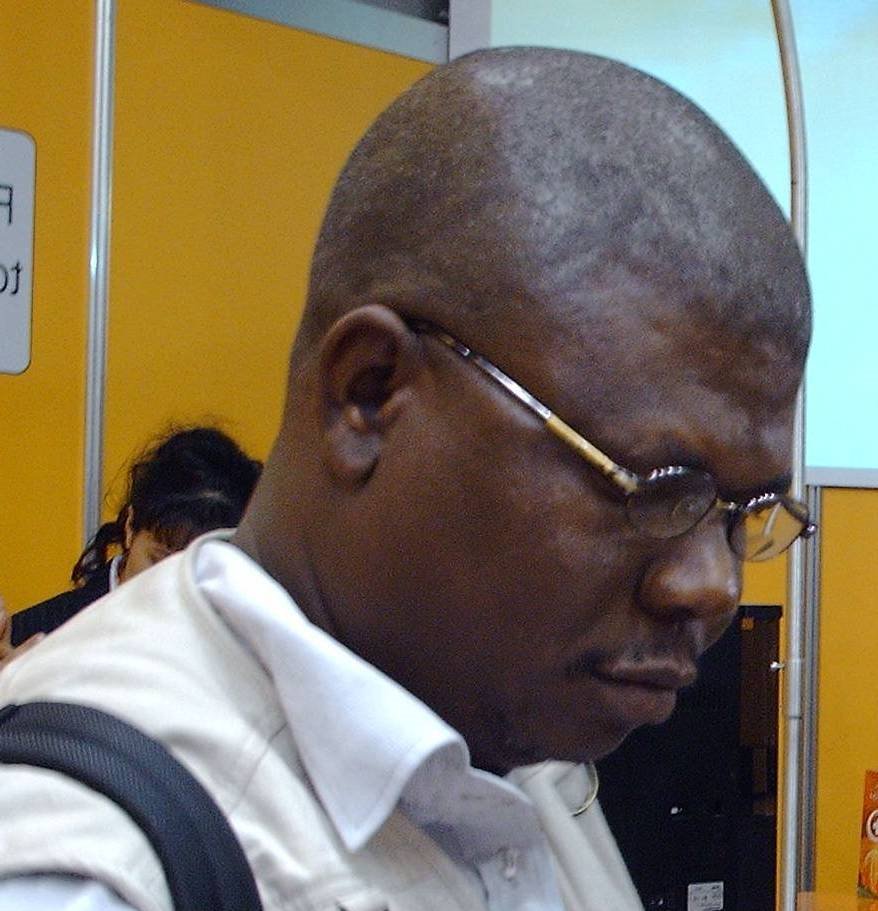
photo: remmy nweke

I-Cell to showcase @ Expo Nigeria 2006

ACCLAIMED distributors of world leading mobile handset brands, I-Cell is set to showcase its wares at the three-day Expo Nigeria 2006, taking off tomorrow in Lagos.

The firm said the exhibition is part of its strategic business decision to remain dominant in the nation’s mobile handset market.

I-Cell, an authorized distributor for Nokia, Motorola and Samsung in the country, noted that in recognition of the enormous potential that the nation’s market offers, its poised to make a huge investment in the Nigerian market.

I-Cell President, Mr. Gino Zahrai said that the expo offers I-Cell an ideal platform to leverage its lineage of reputable mobile phones.

"I-Cell would participate at the exhibition in partnership with Nokia, Motorola and Samsung and organize brand activation programmes to reach out to the Nigerian consumers," he said.

According to him, it would also provide them with memorable experiences during the three- day expo, which closes Saturday, and holds at the Expo Centre, Eko Hotel, Lagos.

He disclosed that his firm would equally use the opportunity provided by the platform to organize what he said is brand activation so as to create excitement for visitors.

Key activity to be expected at the expo from I-Cell, he said, is the special promo on Nokia, which is aimed at rewarding consumer loyalty and enhance market share for Nokia brands in the country.

In addition, there would be a lucky dip at the expo center where consumers and guests are billed to win phones and other accessories.

Further, he said, the exhibition would avail I-Cell to showcase the latest products from Nokia, Motorola and Samsung and enable consumers to interact with the brands along with product demonstrations.
Pointing out that Nigeria’s market is of importance to his firm’s overall success on the continent, Mr. Zahrai said, it offers enormous business potential and I-Cell is keen to take dominance of the market as handset distributor.

UMITT turns out 3,000 students per month

The Universal Mandatory Information Technology Training (UMITT), a project of AfriHub Incorporate of United States in collaboration with some Nigerian universities is turning out about 3,000 students per month.

The project is collaborating with the University of Nigeria, Nsukka and Enugu campuses both in Enugu State, and Nnamdi Azikiwe University (NAU) Awka, Anambra State.

Executive Vice President, AfriHub Limited Liability Company (LLC), Prof. Manny Aniebonam, informed ITREALMS Online, that the training which is now mandatory at UNN and NAU for all students would enable beneficiaries to be e-compliant before they graduate.

The course is free to students and all must pass a qualifying AfriHUB competency exam at completion of the training, he said.

Describing the response as tremendous, Prof. Aniebonam said, "we now wish to roll it out to other regions and universities."

These days, he noted many companies’ primary request for employment is IT acquisition, stressing that UMITT affords students relevant knowledge in IT to face the labour market on graduation.

The programme, he also said, has enormous benefits for the Nigerian people, most especially in the form of human capacity building and economic development.

The success so far recorded on UMITT, he said, is what encouraged his firm and their foreign collaborators to extend the programme to other regions of the country.
Developed jointly by NAU, UNN and AfriHub, the programme was built in the spirit of Public Private Partnership (PPP), using state-of-the-art Information and Communication Technology (ICT) centers.

Annan approves Global Alliance, plans steering committee

Secretary-General of the United Nations (UN), Mr. Kofi Annan, has approved soon to be launched Global Alliance, just as plans are up to form the Steering Committee and Strategy Council.

Global Alliance represents an opportunity for the UN system to come together around Information and Communication Technology (ICT) to promote the achievement of the internationally agreed development goals in partnership with all other stakeholders, from government, business and civil society, as a platform for follow-up of discussions at the World Summit on the Information Society (WSIS).

Director, Office for ECOSOC Support and Coordination, department of economic and social affairs at UN Plaza in New York, Sarbuland Khan, disclosed this, saying he was delighted to report that his office has received formal approval for the launch from Mr. Annan’s office.

Khan in a statement made available to ITREALMS Online, said, "I am delighted to report that we have just received formal approval for the launch of the Global Alliance from Secretary-General Kofi Annan".

Noting that the work-in-progress has been a long time in the making, and the outcome is a result of the tireless efforts of all who participated in consultations preparing the ground for this initiative.

According to the director, in keeping with the open approach ECOSOC have employed throughout the year-long consultation process, "we are now planning to engage all interested parties to develop the arrangements for running this decentralized network of stakeholders in information and communication technologies for development."

The ECOSOC boss, encouraged stakeholders to share their views and hope that their organization would continue to work the Global Alliance so as to enable it take the expected rapid shape.

"We will be expediting steps for the formation of the Steering Committee and Strategy Council, the outreach campaign to potential participants, the development of a draft business plan, and the programme for the inaugural meeting with a view to a launch in Kuala Lumpur in the week of June 19, 2006" the director said.

Pointing out that ECOSOC wish to spread the net as wide as possible and to solicit inputs to the next phase of activity.

In addition, a web-based portal is being developed that will include background documentation and information updates so that the alliance could communicate with the public.

A number of upcoming meetings, the director said, will provide an opportunity to amplify news of the Alliance’s launch, including the CEB in Madrid, the GIIC in Washington DC, and the International Chamber of Commerce (ICC) and OECD in Paris, as well as the Global Knowledge Partnership (GKP) in Sri Lanka and the WSIS follow-up information week in Geneva in May.

The Alliance also provides a common platform for the UN system and other key stakeholders to contribute to the follow up to WSIS by the Economic and Social Council and the Commission on Science and Technology for Development.
Its principal purpose is to mainstream and integrate ICT into the broader UN development agenda.

iTouch enters Nigerian market

Mobile entertainment content provider, iTouch, has entered the nation’s telecommunications market by opening its office in Lagos, to boost it's offering in the West African region.

iTouch which specializes in mobile content entertainment and services, is coming from its regional base in South African, to open the Lagos office, was to expand its business on the continent.

With the United Kingdom-based iTouch Plc worth ₤130 million, as its parent company, the Nigerian office, would accommodate sales, customer support and marketing teams, along with the engineering staff to maintain the technical systems that give Nigerian customers the same fast, easy access to content and services enjoyed by iTouch customers around the world.

Managing Director of iTouch Nigeria, Mr. Samson Isa informed that the nation’s mobile market is one of the biggest in Africa with well over 19 million subscribers, and still growing with as much as three million new users every year.

iTouch, Mr. Isa said, sees this market as an incredible business opportunity for the company and its partners.

With the launch of iTouch, Isa noted, Nigerians should look forward to more excitement in telephony.

“Nigerians are now looking for more than just a voice connection from the network operators. They also want to take advantage of some of the lifestyle advantages that mobiles could deliver” he declared.

According to him, iTouch Nigeria would commence offer with three main product lines to consumers, such as ringtones, logos and entertainment via jokes, poems, among others.

He also listed the Short Messaging Service (SMS)-based information services such as news, sports results and stock exchange information; and competitions using SMS and voice response.

iTouch’s systems, he said, would provide a wealth of mobile services from e-banking to e-government to customer support tools.

Managing Director, iTouch South Africa, Mr. Greg Brophy said the main brands that will be available to Nigerian customers, would be Jippii, a successful Finnish subscription brand that has proved very successful in South Africa.

This, he said, would incorporate, Funky Fone, a brand oriented towards the ‘ghetto fabulous’ or ‘wafi culture’ of Nigeria and South Africa and Movilisto, a formidable European brand and Mobile Magic, an Eurocentric brand targeted at the urban youth.

“Nigeria has an incredible local entertainment industry for movies, TV, music and mobile telephony provides a new channel to market this content. iTouch has a policy of only using licensed content, which means local artists can benefit from new ways to earn a living from their craft, as well as find new audiences,” says Mr. Brophy.

Stressing that mobile entertainment is a really powerful way for South African and Nigerian audiences to start enjoying each other’s arts.

Stakeholders mourn Ikhemumhe


*As he goes home

INFORMATION and Communication Technologies (ICTs) stakeholders under the aegis of a non-governmental organization (NGO), the Joint Action Committee on ICT Awareness and Development (JACITAD), are in pains as they mourn the passing on of one of their members, Mr. Godfrey Ikhemumhe.

He died at his home in Lagos, penultimate Monday, and would tomorrow be buried at his home town, Okpella in Edo State.

Reacting to the demise, JACITAD in conjunction with stakeholders declared a one-week mourning beginning last Wednesday, thus putting all ICT-related activities on hold.

President, JACITAD, Mr. Biyi Fashoyin informed that though Mr. Ikhemumhe is dead, he would always be remembered for his active role in repositioning information dissemination that characterized the ICT revolution in the country, especially in the last half a decade.

He described it as a huge loss to the ICT industry, assuring that stakeholders have taken a firm decision led by JACITAD not to abandon his family, as an endowment fund is underway.

This, he said, would assist the family in ensuring that the children left behind benefit from a sound and qualitative education.

He also disclosed after a sympathy visit to the widow at their residence, that Mr. Ikhemumhe’s remains would tomorrow commence a journey home as he would be buried in his home town, Okpella in Edo State.

Stakeholders, he said, have elected some members to join the corpse from Lagos.

Mr. Ikhemumhe until his death last week Monday, was the Assistant Communications Editor, Vanguard Media Lagos and had won several industrial and professional awards including the continental African Information Society Initiative (AISI) media award last year, as the overall-winner, Nigeria Media Merit award among others, as well as an exposed international senior journalist.

This is coming as tributes are pouring in from across the globe, eulogizing his professional quality and praying for the repose of his soul.

story/photo@WSIS-05 by Remmy Nweke

Lagos lifts ban on PTOs, Odili decries random masts erection

Remmy Nweke, Chinedu Wosu PH

Lagos State government has finally lifted the ban on the ‘stop order’
on Private Telecommunications Operators (PTOs) in the state over laying of cables across public roads and properties, even as Globacom is yet to be unbanned over the same issue.

This is coming as Governor Peter Odili of Rivers State has urged the Nigerian Communications Commission (NCC) to checkmate the random erection of telecommunications masts in Port Harcourt, just as NCC is to establish a zonal office in the state.

Principle Public Relations Officer (PPRO) at the Lagos State Ministry of Works and Infrastructure, Mr. Jide Lawal disclosed this reversal to Champion Infotel, saying that the State House of Assembly has completed the enactment of Infrastructure Maintenance and Regulatory Agency Law, to guide the construction of lines and laying of cables across public roads and properties in the State.

Mr. Lawal quoted the Commissioner for Works and Infrastructure, Mr. Rauf Aregbesola, in a press statement made available as saying that the unbanning directive did not include the Second National Operator (SNO), Globacom, as the Ministry and Globacom are still at long ahead.

“The unbanning directive did not include Globacom as the Ministry and Globacom are still on the verge of agreeing on specific details that would culminate in giving the go ahead for duct laying activities by Globacom,” he declared.

The commissioner also said that the unbanning of the other PTOs was as a result of serious commitment exerted from them on the need to repair the road after cutting and to meet some other conditions, arguing that the roads cost government a huge fortune to construct and maintain.

Mr. Aregbesola pointed out that in order to prevent the indiscriminate cutting of roads by PTOs in the Lagos State, it was pertinent that some guidelines be put in place to check the anomaly.

According to the commissioner, part of the modalities put in place to control the manner of road cutting by PTOs during the laying of their telecom pipes include that the PTOs must submit to the Ministry of Works and Infrastructure a weekly programme of works to be carried out, display of signboards on site for identification as this will guide road users plying the roads while also providing a layout of area of coverage.

He explained further that the Ministry has issued abatement notices to some individuals and private companies whose activities on Lagos roads have been found to be injurious to the durability of roads in the state.

Emphasising that some of the unwholesome activities could negatively affect the roads as being exhibited by perpetrators including the use of roads as workshops particularly by some artisans such as Mechanics, Car wash operators and Blockmaking factories, discharging of waste water on road, effluent discharge on road, the cutting of roads without approval or not conforming to specification and using parts of pavement as workplace.

The Commissioner also advised all affected corporate companies and private individuals to desist from such exercises, observing that the maintenance and safeguarding of Lagos roads should be the collective duty of everybody.

In a related development, Governor Peter Odili of Rivers State has urged NCC to checkmate the indiscriminate erection of telecommunications masts in the state.
This came as NCC is set to establish a zonal office in Port Harcourt.

Gov. Odili gave the charge when the Executive Vice Chairman, NCC, Dr. Ernest Ndukwe visited him at Government House, Port Harcourt, Rivers State, at the weekend.

Odili, who lamented the random erection by the service providers in the state is problematic, particularly to aviation industry.

He called on NCC to regulate the activities of the operators in this regard, and decried the destruction of roads, pipelines and other infrastructure in the state by the service providers especially water pipes and underground cables.

“These providers fail to restore the lines and cables after destruction” he lamented, and appealed for cooperation from the commission and operators.

He also assured NCC that his government would not make any law that is contrary to the constitution, assuring of his administration’s support in developing telecommunications infrastructure in the state and the country at large.

Responding, NCC boss, Dr. Ndukwe said that the commission has decided to make Port Harcourt a zonal operating center for the South-South zone.

Stressing that it is strategic due to its socio-economic importance to the nation and requested for a land to build its zonal headquarters and for installation of monitoring radio equipment in the state.

AMINET elects new leaders

African Media Information and Communication Technology Trainers Network (AMINET), has been inaugurated, even as it has elected its first crop of leaders at a meeting in Addis Ababa, Ethiopia, recently.

The election came as a Nigerian foremost broadcaster, Mr. Bayero Agabi, emerged the continental coordinator of the network. While a director at the Kenya Media Training Institute, Mr. David Makali became the deputy, among other regional coordinators.

AMINET is the network formed under United Nations Economic Commission for Africa (UNECA) as part of its implementation of policy on ICT diffusion within the frame work of Africa Information Society Initiative (AISI).

This follows a training organized by UNECA to train the trainers in ICT media in Ethiopia the UNECA headquarters.

According to the officer in charge, Development Information Services Division (DSID) at ECA, Ms Aida Opoku–Mensah, at a cocktail for the network at Addis Ababa, said the media represents a value added constituency for providing awareness on the role of ICTs in Africa’s social economic development, especially in demonstrating ICTs applications in areas such as education, health, commerce, trade to name a few.

It is for this reason that a series of activities to build the capacity of media in information society issues were launched, including the development of training module, aimed at building media capacity on such issues as ICTs policies, infrastructure development, and access to information, local content development and networking.

Ms Opoku-Mensah also said, that the network is expected to come up with programmes that will impact on ICT development and awareness in the different regions coordinated continentally by the regional coordinators.

AMINET’s objectives include integrating ICT media training in curriculum/programmes to stimulate debate on ICT for development, through media outlets, public debate, awareness campaign, workshops, and conferences, thus serves as liaison between those who have and those who are in need of ICT training.

Responding to the election, the continental co-ordiantor, Mr. Agabi, who is also of the African Independent Television (AIT) Infotech Network, on behalf of the group said proposals on projects to be implemented in their various regions have began to come up and described their election as national pride.

Vmobile new billing system to offer faster recharge

*More options

This Vmobile said, is in order to give customers better service offerings, especially on faster recharge and more language options.

Chief Executive Officer, Vmobile Nigeria, Mr. Willem Swart, said the upgrade to a new prepaid billing system would facilitate the company choice to deliver faster air-time recharging and flexible pricing of products and services to suit the specific needs of customers.

“It will also allow us to implement more language options for the additional convenience of our customers when they call our customer care line to make enquiries,” he said.

Mr. Swart also said other features of the new billing system are personalised product and service offerings as well as facilitating a range of new services that increase customer satisfaction.

According to him, this would make it possible for Vmobile to provide better services, and making use of the mobile phone would become an enjoyable experience for its subscribers.

He cited an instance, that the new prepaid billing system would allow Vmobile to deliver customer care services in the English language and four other local languages namely, Hausa, Yoruba, Igbo and Pidgin.

The telco further said the upgrade would end on May 8, 2006. Just as Vmobile said that some customers may experience disruption of service during the period of this year’s upgrade and appealed to such customers for their understanding and cooperation.

The system upgrade is being done in phases between midnight and 6am, he said, stressing that is when call traffic is low in order to minimize its impact on our valued customers.

Some customers may experience challenges in making calls, sending or receiving Short Messaging Service (SMS) and Multimedia Services (MMS). We sincerely apologise for any inconvenience the upgrade may cause,” Mr. Swart appealed.

Research on new technology to gulp N.112b

The sum of E0.5 million, about N.112b, has been awarded for the study of new technology influence on the size and social relationships of today.

The grant awarded to three universities in the northern United States would also establish links between today’s technology generation and yesterday’s cave dwellers.

The three beneficiaries include Universities of Manchester, Liverpool and Sheffield Hallam. While the University of Manchester got £307,000, the University of Liverpool received £180, 000 and Sheffield Hallam also got £40,000.

Foresight project is jointly funded by the Engineering and Physical Sciences Research Council and the Economic and Social Research Council.

These universities are to use the fund to invest in what the Media Relations Officer at University of Manchester, faculty of humanities, Mr. Mike Addelman, described as an emerging field of science and known as Computer Mediated Communication (CMC).

The three universities are expected to pursue ground breaking research into how new technology affects the size and make up of social relationships.

The fund came based on the theories of evolutionary psychologist Robin Dunbar from the University of Liverpool, who says human beings naturally congregate into groups of about 150.

Led by Prof. Alistair Sutcliffe of the School of Informatics at The University of Manchester, the research would also investigate how mobile phones and the internet affect the size and make-up of contemporary social relationships.

Mr. Addelman also noted Dunbar’s argument was that humans are hard-wired to have about 150 people in a community of friends and that the natural order of human groups is the product of evolutionary history.

This, he elucidated, saying it is in turn driven by the amount of quality social time people spend together.

“Innovations such as mobile phones, newsgroups, ipods and blogs are helping to establish world wide communities,” he asserted.

Emphasising, it is not clear how or even whether these technologies were changing the size and nature of man’s natural social groupings.

“In an era of Information Technology (IT)-driven communications, we will need to understand better how technology facilitates social processes in group-based tasks. Do they help, or do they hinder? ” Prof. Sutcliffe said.

He further said, that there are huge implications of this type of research on society and business, citing an instance with policy makers.

“Policy makers, for example, are hugely concerned with the disintegration of social capital. We want to look at how technology could form the glue for economic and social communities around the globe.

“Developments on the internet, for example, are encouraging self-help communities, new forms of political action as well as dominating electronic commerce. So we would like to try to understand how the technology impacts on us - whether it’s for good or for ill” Prof. Sutcliffe said.

Noting that the aim is to create theories which will shape public policy, use the Internet more effectively and influence the way the next generations of computer technologies are designed.