%20Taxation%20ethics,%20revenue%20neutrality%20&%20campaign%20finance%20paradox%20by%20Remmy%20Nweke%20-%20Telecoms%20Clinic@ITREALMS.jpg)
The Information and Communication Technology (ICT) sector may have start the year 2010, but top on the list of stakeholders was the SIM card registration writes REMMY NWEKE.
Anticipating Broadband!
Beginning with the much anticipated launch of the two submarine cables, several events that heralded the year, somewhat centered on the expected broadband to come. It was not surprising then that the founding chief executive officer, eShekels, Mr. Fola Odufuwa, chairman of the Association of Licensed Telecommunications Operators (ALTON), Mr. Gbenga Adebayo and president, Institute of Software Practitioners of Nigeria (ISPON), Mr. Chris Uwaje, were top on the list of speakers lined up for the inaugural edition of a Broadband forum billed for March 2010 by eWorld Magazine.
Aaron Ukodie, the Managing Editor of eWorld said Mr. Odufuwa spoke on ‘Keying Nigeria into Global Broadband Trends,’ chairman, Association of Licensed Telecommunications Operators of Nigeria (ALTON) Mr. Gbenga Adebayo, President of the Institute of Software Practitioners of Nigeria (ISPON) and Nigeria’s ICT Oracle, Mr. Chris Uwaje x-rayed Broadband Implication for the local environment.
Speaking on Broadband Ways To the 2015 Digital Harvest for the Digital Banquet, then ATCON president, Dr. Ekuwem said they see eWorld Forum “as a good step in the right direction because it will give the industry the privilege to plot both the present and the future of broadband in Nigeria”.
Additionally, there was a broadband summit put together by e-Business Magazine, which further strengthens the importance of broadband initiatives to the ICT sector in the country.
WSIS forum 2010 opens consultation:
The forum on the World Summit on Information Society (WSIS) consultation opened its 2010 roundtable by calling for participation organized by the United Nations Education, Scientific and Cultural Organisation (UNESCO) in collaboration with the International Telecommunication Union (ITU), United Nations Development Programme (UNDP) and UN United Nations Conference on Trade and Development (UNCTAD).
Participants dwelt in three-fold process consisting of an online discussion, a questionnaire and a review meeting, which hinged on the achievement of WSIS goals by 2015. The forum which held in Geneva, Switzerland from May 10 to 14, 2010, was regarded as an important opportunity to review the progress made in the WSIS implementation during the last five years and to reconsider strategies for the remaining five years.
Based on the outcomes of the 2009 WSIS Action Line Facilitators Meeting on May 22 2009, coupled with several exchanges among WSIS stakeholders, an open consultation, focusing on the themes of the 2010 forum was set up.
Gathering support for Haiti quake victims:
One thing that caught the attention of the Nigerian ICT sector during the year just ended 2010 was the concern to support for the Haiti quake victims. This began with the solicitation of aids for the earthquake victims in Haiti by the likes of Globacom Limited, one of the nation’s telecom operators. This, Glo management said was to assist victims through the raising of funds for their rehabilitation occasioned by the recent earthquake in Haiti.
The Group Chief Operating Officer (GCOO), Mr. Mohamed Jameel had described the Haiti earthquake as one of the most devastating natural disasters in recent human history and more massive in repercussion than the Asian Tsunami of 2004. Pointing out that the Haitian earthquake disaster saw near total destruction of the Haitian capital, Port-au-Prince and the loss of an estimated 200,000 lives.
Jameel in his appeal said the support was to ensure that Nigerians have an opportunity to contribute their own quota to salvage and rehabilitation effort being launched globally for the people of Haiti.
“This is a human disaster of almost unimaginable proportions and most Nigerians who are willing to help do not know how to contribute towards the relief effort,” he had said and based on this, Glo decided to launch this appeal by creation of a short code through which Nigerians could make donations to help the Haitian people.
Also, he urged Nigerians, especially subscribers on Glo network to make contributions of a minimum of N50 by sending the word HAITI to the short code 33090 which was specially created for the Haiti support purpose. He emphasised that subscribers were free to donate as many times as they wish to the relief effort by sending multiple SMS’ at the cost of N50 per SMS.
All donations made by Nigerians through the short code, he said, will be presented on a monthly basis on behalf of the Nigerian people to the Nigerian Red Cross which is already on ground in Haiti via the International Committee of the Red Cross (ICRC).
Reassuring that none of the proceeds will be withheld as the project is being undertaken on compassionate grounds and in line with Glo’s corporate responsibility obligations, that Globacom has given support to an online campaign which will run through the social networks such as Facebook, MySpace and Twitter; while Classic 93.7 FM has committed to help raise awareness by giving free hypes and airtime.
Debut of Group Connect:
As the year 2010 gain momentum, MTN Nigeria introduced a new product known as ‘Group Connect’ to make telephone usage, mostly for a seamless conference calls at no extra cost beyond the cost of normal telephone calls.
Chief Enterprise Solutions Officer, MTN Group Connect, Mr. Derek Appiah had said the service, was another first from the stable of MTN Business, a division of MTN focused on providing a comprehensive range of business communication solutions to corporate Nigeria. He explained that with MTN Group Connect, companies, business people, professionals and other categories of telephone users will be able to hold secured, multi-party conversations over the phone, without the need to travel.
In his comment, the Corporate Services Executive, MTN Nigeria, Mr. Wale Goodluck had noted that this service was aimed at enhancing the efficiency of businesses in the country. “With this service, you will save time and money you could have otherwise spent on travelling to attend meetings at distant locations,” he said.
Cybercrime worries Naija IT professionals:
The rise in cybercrimes associated with the country became a subject for great concern for the members of the Nigerian Information Technology (IT) Professionals in diaspora, just as they tasked the United States government via the Federal Bureau of Investigation (FBI), to help Nigeria in curbing this upsurge in online crime.
The group had urged America to crack down on online crime from the closure of a US-based fraudulent site called t35.com. Even as they claimed that the site, t35.com has been replicating information purportedly from the Central Bank of Nigeria (CBN) and electronic payment institutions like Interswitch.
Meanwhile, the Whois report on t35.com indicated that the registrant actually is based in the US, as one of the contributors urged those Nigerians residing in the States to take the issue up with the authorities, especially the Federal Bureau of Investigation (FBI) to act quickly.
“Can people in the US please take this up with either t35.com or FBI to disable the site or is t35 an accomplishment in this crime against people and government of Nigeria?” asked a contributor.
FG named Omatek, 3 others e-learning partners:
Last year, the Federal Government appointed some four Information Technology (IT) firms to implement the electronic learning (e-learning) projects of the government as part of the public, private partnership (PPP).
According to the immediate past Federal Minister of Education, Dr. Sam Egwu, these companies include Omatek Computers, Zinox Technologies, Galaxy Backbone and Calfa. He said the project partners were to put into operation both the hardware and software components depending on specialty with regards to the Federal Government’s e-learning scheme, which leads to the deployment of a healthy content and curriculum in addition to monitoring and evaluation to ensure continuity and seamless execution.
Egwu, who inaugurated the Policy Coordination and Implementation Committees on e-Learning Initiative, recently, informed that the purpose was to improve the quality of teaching and learning in schools through the use of Information and Communication Technology (ICT), while increasing the number of students who are proficient IT users in furtherance to the realization of the roadmap for the Nigerian education sector.
Noting that the Education Roadmap clearly demonstrated a deep understanding of the key issues as challenges to the education sector and e-learning initiative is one of the strategies to be implemented over the next few years as part of efforts to reposition the sector.
DSA and April date for Nigeria IGF-10:
At the end of the first quarter, the organizers of the Nigeria DigitalSENSE forum, the DigitalSENSE Africa (DSA), explained the through its Executive Director, Operations, Mrs. Nkemdilim Nweke, that the timing of the forum follows the need to sell Nigeria’s position to the West African countries before the region session held in Dakar, Senegal, on August last year.
Other West African countries, she said, must be carried along in the nation’s bid to ensure that her own interest is well represented in the global session of the Internet Governance Forum, which held in Vilnius, Lithuania between September 14 and 17, 2010.
She noted that the global IGF for 2010 came much earlier than that of previous year, hence the choice to hold the Nigeria DigitalSENSE forum in April, in order to give time for Nigeria, recalling that the decision was for the forum to hold on Friday 16 with the theme ‘Five Years of IGF, the Way Forward for Nigeria.’
Stressing that following the success of 2009 edition, it was befitting to make certain the 2010 edition takes place in good time in order to ensure that those stakeholders planning to be at this year’s Internet Governance Forum, had most of the subject that needed trashing at heart.
She called to mind the fact that 2009 edition was presided over by chairman of the pioneer Internet Service Provider, Linkserve Group, Chief Chima Apugo Onyekwere with the participation of the Federal Minister of Information and Communications, Prof. Mrs. Dora Akunyili and Executive Vice Chairman (EVC) of the Nigerian Communications Commission (NCC), Dr. Ernest Ndukwe, who were both adequately represented at the forum.
ITU to introduce life mimicking 3D system:
2010 also saw the International Telecommunication Union (ITU) announcing plans to set stun Television viewers with high sophisticated broadcasting system with stereoscopic Third Dimension (3D), that mimics real life visual experience, according to the Study Group 6 of Radiocommunication Sector (ITU-R) in its 2010 report, led by Christoph Dosch.
The study outlined a roadmap for future third dimension television (3D TV) implementation, which envisages that the systems will be so smart they could accurately mimic the way human eyes and brains perceive the visual world. This new roadmap would see 3D TV technology rolled out in three successive generations, which is technically known as profiles.
They cited an instance of the first generation ‘plano-stereoscopic television’ which calls for two views to be delivered to viewers’ TV sets. Wearing special glasses similar to those used to watch 3D cinema, viewers will be able to see depth in the picture, although the view will remain the same when they move their heads in real life, and view changes when they move their heads.
The second generation will provide for multiple views, with head movement changing the view, for a viewing experience that more closely mimics real life. The third generation features systems that record the amplitude, frequency and phase of light waves, to reproduce almost completely human beings’ natural viewing environment. These kinds of highly advanced systems are technically some 15-20 years away.
Commenting, the Director of ITU’s Radiocommunication Bureau, Mr. Valery Timofeev said the new ITU report establishes a clear framework for the development of new types of systems that will totally change the way we experience broadcast and multimedia content.
“It maps out an exciting vision that won’t just change the look of entertainment, but open up a whole range of exciting new possibilities in sectors from education and healthcare to traffic management,” he said.
New 3D TV technologies being developed under the auspices of ITU will also have major implications for the film and television production sector, as content will need to be filmed using special new equipment in order for viewers to enjoy the full 3D experience.
‘Free blackberry subscription’
The year 2010 witnessed the introduction of free blackberry subscription by one of the innovative mobile company, Etisalat Nigeria. This is the company said, was exhibition of commitment to the Nigeria telecom market.
Chief Marketing Officer, Etisalat Nigeria, Mr. Wael Ammar noted that the company’s ongoing Blackberry service free promo is a reflection of Etisalat’s continuous drive to provide necessary tools and services for its customers to gain the competitive advantage in their business and family relationship. He also noted that it helps customers in expanding the value derivable from mobile telephony far beyond internet and data transmission but also enhanced connectivity.
Ammar said as subscribers who have benefited in the ongoing special promotion package that offers two months free subscription at the purchase of any of the blackberry devices; Bold 9000, Storm 9500 and Curve 8900 on the unique BlackBerry internet service plan, have continued to get commendation.
ITREALMS Online ... delivering news for ICT4D


Featured post @ITREALMS
Wednesday, January 12, 2011

62 countries suffer Internet censorship in 2010 – RWB
No fewer than 62 countries across the global suffered internet censorship in the year just ended for 2010.
This is coming as 152 bloggers and netizens were arrested within the same period, according to the Reporters Without Borders (RWB) latest report.
Censorship has been defined as the counter-intelligence achieved via placing a ban or deletion of any information of value to the enemy, especially inspired by the government in power, thus a suppression of speech or removal of communicative material alleged to be objectionable, harmful, sensitive, or inconvenient to the government or media organizations as determined by a censor. That is, the use of state or group power to control freedom of expression, such as passing laws to prevent media from being published or propagated.
The RWB report made available to ITRealms Online also indicated that a total of 2877 were humiliated in one way or another in the last 12 months.
This RWB stated to include 57 journalists that were killed, which is 25 per cent fewer than in 2009; 51 journalists kidnapped, 535 journalists arrested, 1374 physically attacked or threatened, 504 media censored, 127 journalists fled their country, 152 bloggers and netizens arrested and 52 physically attacked.
Secretary-General, Reporters Without Borders, Jean-Francois Julliard noted that 57 journalists were killed in connection with their work in 2010, which is 25 per cent less the figure for 2009, when the total was 76.
“The number of journalists killed in war zones has fallen in recent years,” Julliard said, stressing that significantly, it is becoming more and more difficult to identify those responsible in cases in which journalists were killed by criminal gangs, armed groups, religious organizations or state agents.
“Fewer journalists were killed in war zones than in preceding years. Media workers are above all being murdered by criminals and traffickers of various kinds. Organized crime groups and militias are their leading killers worldwide. The challenge now is to rein in this phenomenon. The authorities of the countries concerned have a direct duty to combat the impunity surrounding these murders. If governments do not make every effort to punish the murderers of journalists, they become their accomplices,” Julliard said.
A distinguishing feature of 2010 was the major increase in kidnappings of journalists, noting that there were 29 cases in 2008, 33 in 2009 and 51 in 2010.
“Journalists are seen less and less as outside observers. Their neutrality and the nature of their work are no longer respected as abductions of journalists are becoming more and more frequent and are taking place in more countries.” Reporters Without Borders said.
The group pointed out that for the first time, no continent escaped this evil in 2010 as Journalists were turned into bargaining chips.
“Kidnappers take hostages in order to finance their criminal activities, make governments comply with their demands, and send a message to the public. Abduction provides them with a form of publicity. Here again, governments must do more to identify them and bring them to justice. Otherwise reporters – national or foreign – will no longer venture into certain regions and will abandon the local population to their sad fate,” RWB lamented.
Journalists, RWB reports were particularly exposed to this kind of risk in Afghanistan and Nigeria in 2010.
The case of French TV journalists Herveì GhesquieÌre and Steìphane Taponier and their three Afghan assistants,
held hostage in Afghanistan since 29 December 2009, is the longest abduction in the history of the French media since the end of the 1980s.
Reporters Without Borders pointed out that even the Internet is no longer refuge to many media practitioners who should have loved to carry out their duties without censorship.
This, they said, was manifested in the death last June of the young netizen Khaled Mohammed Said, who was arrested by two plain-clothes police officers in an Internet cafeì, taken outside and beaten to death in the street.
There were reports that his death was prompted by a video posted online that incriminated the police in a drug deal. Autopsy reports attributed his death to a drug overdose, but this was belied by photos of his body.
The number of arrests and physical attacks on netizens in 2010 was similar to previous years, said RWB.
While harassment of bloggers and censorship of the Internet have become commonplace, there are no longer any taboos about online filtering.
“Censorship is taking new forms as more aggressive online propaganda and increasingly frequent use of cyber-attacks as way to silence bothersome Internet users. Significantly, online censorship is no longer necessarily the work of repressive regimes. Democracies are now examining and adopting new laws that pose a threat to free speech on the Internet,” RWB said.
Remmy Nweke:
ITREALMS Online ... delivering news for ICT4D
This is coming as 152 bloggers and netizens were arrested within the same period, according to the Reporters Without Borders (RWB) latest report.
Censorship has been defined as the counter-intelligence achieved via placing a ban or deletion of any information of value to the enemy, especially inspired by the government in power, thus a suppression of speech or removal of communicative material alleged to be objectionable, harmful, sensitive, or inconvenient to the government or media organizations as determined by a censor. That is, the use of state or group power to control freedom of expression, such as passing laws to prevent media from being published or propagated.
The RWB report made available to ITRealms Online also indicated that a total of 2877 were humiliated in one way or another in the last 12 months.
This RWB stated to include 57 journalists that were killed, which is 25 per cent fewer than in 2009; 51 journalists kidnapped, 535 journalists arrested, 1374 physically attacked or threatened, 504 media censored, 127 journalists fled their country, 152 bloggers and netizens arrested and 52 physically attacked.
Secretary-General, Reporters Without Borders, Jean-Francois Julliard noted that 57 journalists were killed in connection with their work in 2010, which is 25 per cent less the figure for 2009, when the total was 76.
“The number of journalists killed in war zones has fallen in recent years,” Julliard said, stressing that significantly, it is becoming more and more difficult to identify those responsible in cases in which journalists were killed by criminal gangs, armed groups, religious organizations or state agents.
“Fewer journalists were killed in war zones than in preceding years. Media workers are above all being murdered by criminals and traffickers of various kinds. Organized crime groups and militias are their leading killers worldwide. The challenge now is to rein in this phenomenon. The authorities of the countries concerned have a direct duty to combat the impunity surrounding these murders. If governments do not make every effort to punish the murderers of journalists, they become their accomplices,” Julliard said.
A distinguishing feature of 2010 was the major increase in kidnappings of journalists, noting that there were 29 cases in 2008, 33 in 2009 and 51 in 2010.
“Journalists are seen less and less as outside observers. Their neutrality and the nature of their work are no longer respected as abductions of journalists are becoming more and more frequent and are taking place in more countries.” Reporters Without Borders said.
The group pointed out that for the first time, no continent escaped this evil in 2010 as Journalists were turned into bargaining chips.
“Kidnappers take hostages in order to finance their criminal activities, make governments comply with their demands, and send a message to the public. Abduction provides them with a form of publicity. Here again, governments must do more to identify them and bring them to justice. Otherwise reporters – national or foreign – will no longer venture into certain regions and will abandon the local population to their sad fate,” RWB lamented.
Journalists, RWB reports were particularly exposed to this kind of risk in Afghanistan and Nigeria in 2010.
The case of French TV journalists Herveì GhesquieÌre and Steìphane Taponier and their three Afghan assistants,
held hostage in Afghanistan since 29 December 2009, is the longest abduction in the history of the French media since the end of the 1980s.
Reporters Without Borders pointed out that even the Internet is no longer refuge to many media practitioners who should have loved to carry out their duties without censorship.
This, they said, was manifested in the death last June of the young netizen Khaled Mohammed Said, who was arrested by two plain-clothes police officers in an Internet cafeì, taken outside and beaten to death in the street.
There were reports that his death was prompted by a video posted online that incriminated the police in a drug deal. Autopsy reports attributed his death to a drug overdose, but this was belied by photos of his body.
The number of arrests and physical attacks on netizens in 2010 was similar to previous years, said RWB.
While harassment of bloggers and censorship of the Internet have become commonplace, there are no longer any taboos about online filtering.
“Censorship is taking new forms as more aggressive online propaganda and increasingly frequent use of cyber-attacks as way to silence bothersome Internet users. Significantly, online censorship is no longer necessarily the work of repressive regimes. Democracies are now examining and adopting new laws that pose a threat to free speech on the Internet,” RWB said.
Remmy Nweke:
ITREALMS Online ... delivering news for ICT4D
ISOC to focus on chapter dev.
President Internet Society, Lynn St.Amour, has said that key investment focus of the society this year, 2011, is to further empower its chapters and regional bureaus.
ISOC is a non-profit scientific, educational membership organization incorporated in 1992 in the District of Columbia. Internet Society provides leadership in addressing issues that confront the future of the Internet, and is the organizational home for the groups responsible for Internet infrastructure standards, including the Internet Engineering Task Force (IETF) and the Internet Architecture Board (IAB).
St. Amour in her new year message ‘Making “The Internet is for Everyone” Even More Real in 2011’ disclosed that a key investment area in 2010, and one that would continue in 2011, is the further empowerment of Internet Society Chapters and Regional Bureaus.
She noted that in 2010, ISOC had focused on building local roots and global engagement.
“In conjunction with Chapters, twelve INET events were held, as well as five regional Chapter workshops. Staff and members developed Chapter toolkits and Primers on a variety of issues such as Public Policy, Mobilizing Volunteers, and Network Neutrality. And, we provided substantial additional direct funding opportunities for Chapter activities,” she said.Also she said, through the launch of the Next Generation Leaders programme - built on the successful Internet Society Fellowship to the Internet Engineering Task Force, and the Internet Governance Forum Ambassadors programme.
“We expanded our efforts to foster Internet knowledgeable policy makers and policy savvy technologists around the world. And, wherever we could, we helped catalyze support for a multistakeholder approach to discussions about Internet matters,” she said.ISOC, she said, therefore advocated globally for the deployment of technologies key to the future of the Internet, such as Internet Protocol version 6 (IPv6) and Domain Name System Security Extensions (DNSSEC) which is a suite of Internet Engineering Task Force (IETF) specifications for securing certain kinds of information provided by the Domain Name System (DNS) as used on Internet Protocol (IP) networks.
On the development front, ISOC said, it actively supported the launch of several Internet Exchange Points (IXPs) in Africa, and supported many other regional developmental efforts and policy forums, such as the Inter-American Telecommunication Commission (CITEL) in Latin America.She expressed optimism that the coming year holds the promise of even greater accomplishments and growth.
“As outlined in the multi-year Business Plan recently approved by the Internet Society Board of Trustees, we plan to take additional steps to support local globally integrated action in support of our Mission. Strengthening support to and providing additional resources for the five Internet Society Regional Bureaus will be a central focus,” she said, assuring that ISOC would continue to build the leadership development efforts, such as the Next Generation Leaders programme, and embed them in all that the society do.
At the Internet Society, the president said, its strength lies in a shared vision, expressed by our mission, which is to promote the open development, evolution, and use of the Internet for the benefit of all people throughout the world.
This mission, ISOC said, is realized through the actions of a global community of individual members, Internet Society Chapters, member organizations, and our partners in the Internet ecosystem, with each of member working to ensure that in the future, Internet users will continue to have access to the same open, global Internet we benefited from.“A testament to our collective efforts, I am extremely pleased to report that we have seen increased impact and significant growth in virtually all areas of the Society’s activities over the past year,” she said.
As said by her, ISOC community is larger and more active today than any time in its history, noting that over the past year, the number of active chapters increased by nearly 50 per cent and we added a significant number of new organizational members.
“In addition, the number of individual members increased to 45,000, and we set a target of doubling the number of individual Members each year for the next five years, with a goal of 1 million members by 2017,” she disclosed.
Remmy Nweke:
ITREALMS Online ... delivering news for ICT4D
ISOC is a non-profit scientific, educational membership organization incorporated in 1992 in the District of Columbia. Internet Society provides leadership in addressing issues that confront the future of the Internet, and is the organizational home for the groups responsible for Internet infrastructure standards, including the Internet Engineering Task Force (IETF) and the Internet Architecture Board (IAB).
St. Amour in her new year message ‘Making “The Internet is for Everyone” Even More Real in 2011’ disclosed that a key investment area in 2010, and one that would continue in 2011, is the further empowerment of Internet Society Chapters and Regional Bureaus.
She noted that in 2010, ISOC had focused on building local roots and global engagement.
“In conjunction with Chapters, twelve INET events were held, as well as five regional Chapter workshops. Staff and members developed Chapter toolkits and Primers on a variety of issues such as Public Policy, Mobilizing Volunteers, and Network Neutrality. And, we provided substantial additional direct funding opportunities for Chapter activities,” she said.Also she said, through the launch of the Next Generation Leaders programme - built on the successful Internet Society Fellowship to the Internet Engineering Task Force, and the Internet Governance Forum Ambassadors programme.
“We expanded our efforts to foster Internet knowledgeable policy makers and policy savvy technologists around the world. And, wherever we could, we helped catalyze support for a multistakeholder approach to discussions about Internet matters,” she said.ISOC, she said, therefore advocated globally for the deployment of technologies key to the future of the Internet, such as Internet Protocol version 6 (IPv6) and Domain Name System Security Extensions (DNSSEC) which is a suite of Internet Engineering Task Force (IETF) specifications for securing certain kinds of information provided by the Domain Name System (DNS) as used on Internet Protocol (IP) networks.
On the development front, ISOC said, it actively supported the launch of several Internet Exchange Points (IXPs) in Africa, and supported many other regional developmental efforts and policy forums, such as the Inter-American Telecommunication Commission (CITEL) in Latin America.She expressed optimism that the coming year holds the promise of even greater accomplishments and growth.
“As outlined in the multi-year Business Plan recently approved by the Internet Society Board of Trustees, we plan to take additional steps to support local globally integrated action in support of our Mission. Strengthening support to and providing additional resources for the five Internet Society Regional Bureaus will be a central focus,” she said, assuring that ISOC would continue to build the leadership development efforts, such as the Next Generation Leaders programme, and embed them in all that the society do.
At the Internet Society, the president said, its strength lies in a shared vision, expressed by our mission, which is to promote the open development, evolution, and use of the Internet for the benefit of all people throughout the world.
This mission, ISOC said, is realized through the actions of a global community of individual members, Internet Society Chapters, member organizations, and our partners in the Internet ecosystem, with each of member working to ensure that in the future, Internet users will continue to have access to the same open, global Internet we benefited from.“A testament to our collective efforts, I am extremely pleased to report that we have seen increased impact and significant growth in virtually all areas of the Society’s activities over the past year,” she said.
As said by her, ISOC community is larger and more active today than any time in its history, noting that over the past year, the number of active chapters increased by nearly 50 per cent and we added a significant number of new organizational members.
“In addition, the number of individual members increased to 45,000, and we set a target of doubling the number of individual Members each year for the next five years, with a goal of 1 million members by 2017,” she disclosed.
Remmy Nweke:
ITREALMS Online ... delivering news for ICT4D
US regulator applauds telecom strides in Nigeria
The Federal Communications Commission (FCC) of the United States has applauded its Nigeria’s counterpart, the Nigerian Communications Commission (NCC) over strides recorded in the nation’s telecom industry.
FCC also said Nigeria has made strides which has placed the country at par with several advanced nations of the world.
Confirming this in a press statement made available to Champion Infotech, Head, Media and Public Relations at NCC, Mr. Reuben Muoka, quoted Commissioner of FCC, Ms Mignon Clyborn, as remarking at a meeting with Nigerian delegation who visited FCC recently, that after comparing notes about how Nigeria has strived to better the sector over the past years.
Clyburn who is one of the five Commissioners who supervised the activities of the telecom and broadcast regulatory body in the USA, said that the Nigerian regulator, appeared ahead of other African countries and indeed, some more advanced countries of the world in telecom regulation.
Also, Ms Clyburn said that the visit, the first time of its kind to be hosted by the Commission for a delegation of telecom regulatory institution from Africa.
Further, she said, FCC is keen on how Nigeria and indeed Africa marches on to exploit the benefits of telecom and ICT.
The two-day meeting hosted by the FCC under its International Visitors Programme (IVP), discussed issues of mutual bilateral telecom regulatory best practices, with an interactive session where the two telecom regulators exchanged ideas on the different dimensions and challenges and agreed to continue to share idea and information.
Some issues that topped the agenda at the meeting include telecom compliance and enforcement regulation, universal service, competition and interconnection, rule making procedures and ethics among others.
The Executive Vice Chairman (EVC) of NCC, Dr. Eugene Juwah, who was accompanied by the Chairman of the Commission, Mr. Peter Igoh and Executive Commissioner, Stakeholder Management, Mr. Okechukwu Itanyi, noted that part of NCC’s success was as a result of non- interference by the government in telecom regulation.
He pointed out that during the issuance of licenses to operators and the transparency that attends the process at all times.
He also told the FCC officials comprising Donald Stockdale, Chief Economist, Tom Peters, Chief Engineer, Wireless Telecom Bureau, Thomas Beers, Chief Policy Division, Timothy Peterson, Chief of Staff, Public Safety and Homeland Security Bureau, Eric bash, Associate Chief Enforcement Bureau, among other senior officials that the NCC in Nigeria is also seeking ways of enriching the legal requirements of advancing the Nigerian telecom industry by supporting sector focused workshop for judges in Nigeria so that they will be fully equipped to face the challenges and dimensions of emerging technologies and services.
ITRealms Online recalls that FCC is the independent telecom and regulatory agency of the USA established by the Communications Act of 1934 and is charged with the responsibility of regulating interstate and international communications.
Remmy Nweke:
ITREALMS Online ... delivering news for ICT4D
FCC also said Nigeria has made strides which has placed the country at par with several advanced nations of the world.
Confirming this in a press statement made available to Champion Infotech, Head, Media and Public Relations at NCC, Mr. Reuben Muoka, quoted Commissioner of FCC, Ms Mignon Clyborn, as remarking at a meeting with Nigerian delegation who visited FCC recently, that after comparing notes about how Nigeria has strived to better the sector over the past years.
Clyburn who is one of the five Commissioners who supervised the activities of the telecom and broadcast regulatory body in the USA, said that the Nigerian regulator, appeared ahead of other African countries and indeed, some more advanced countries of the world in telecom regulation.
Also, Ms Clyburn said that the visit, the first time of its kind to be hosted by the Commission for a delegation of telecom regulatory institution from Africa.
Further, she said, FCC is keen on how Nigeria and indeed Africa marches on to exploit the benefits of telecom and ICT.
The two-day meeting hosted by the FCC under its International Visitors Programme (IVP), discussed issues of mutual bilateral telecom regulatory best practices, with an interactive session where the two telecom regulators exchanged ideas on the different dimensions and challenges and agreed to continue to share idea and information.
Some issues that topped the agenda at the meeting include telecom compliance and enforcement regulation, universal service, competition and interconnection, rule making procedures and ethics among others.
The Executive Vice Chairman (EVC) of NCC, Dr. Eugene Juwah, who was accompanied by the Chairman of the Commission, Mr. Peter Igoh and Executive Commissioner, Stakeholder Management, Mr. Okechukwu Itanyi, noted that part of NCC’s success was as a result of non- interference by the government in telecom regulation.
He pointed out that during the issuance of licenses to operators and the transparency that attends the process at all times.
He also told the FCC officials comprising Donald Stockdale, Chief Economist, Tom Peters, Chief Engineer, Wireless Telecom Bureau, Thomas Beers, Chief Policy Division, Timothy Peterson, Chief of Staff, Public Safety and Homeland Security Bureau, Eric bash, Associate Chief Enforcement Bureau, among other senior officials that the NCC in Nigeria is also seeking ways of enriching the legal requirements of advancing the Nigerian telecom industry by supporting sector focused workshop for judges in Nigeria so that they will be fully equipped to face the challenges and dimensions of emerging technologies and services.
ITRealms Online recalls that FCC is the independent telecom and regulatory agency of the USA established by the Communications Act of 1934 and is charged with the responsibility of regulating interstate and international communications.
Remmy Nweke:
ITREALMS Online ... delivering news for ICT4D
JACITAD to Jonathan: Make broadband democracy dividend
 A non-governmental organisation, the Joint Action for Information and Communication Technology (ICT) Awareness and Development (JACITAD), has asked President Goodluck Jonathan to turn the availability of broadband initiatives in the country into democracy dividends for Nigerians.
The group made this call in its 2011 agenda for the ICT sector in the country.
Speaking through its president, Prince Ogbonnia Osuagwu, they called on President Jonathan to use the accessibility of broadband with the commercial launch of MainOne Cable and Glo-1 since last year.
To achieve this, Prince Osuagwu in the company of the Secretary-General of JACITAD, Mr. Oluwaseun Ayotokun informed ITRealms Online that the government led by President Jonathan, should as matter of urgency consider broadband as digital right of the citizens.
This call, JACITAD said is in line with the recent recommendations of the global telecom body of the United Nations, the International Telecommunication Union (ITU).
“We all know today that broadband has become the life wire of any economy,” Osuagwu said.
The group pointed out that in any society where broadband is scarce or the cost is high as it is in Nigeria, “no matter other natural resources that may be available in that society they may still be groping in the dark.”
Apart from other rich natural and human resources available to Nigeria, JACITAD noted that two monolithic initiatives berthed at the shores of Nigeria in the preceding year of 2010, but there is nothing to suggest that the government of the day has plans to drive this plan to the populace.
“We feel that all it takes is for the government of the day to cash-in on that to transform the economy,” the group said, advising President Goodluck Jonathan to emulate the United States President, Mr. Barrack Obama, who has since launched a dedicated fund for broadband penetration drive to the rural areas of the country.
“We wouldn’t mind if he would take it as his efforts of delivering democracy dividends,” JACITAD said.
ITRealms Online recalls that last May, at the World Summit on Information Society (WSIS) Forum 2010 in Geneva, ITU and United Nations Education, Scientific and Cultural Organisation (UNESCO) proclaimed the establishment of a top level Broadband Commission for Digital Development (BCDD), which will define strategies for accelerating broadband rollout worldwide and examine applications that could see broadband networks improve the delivery of a huge range of social services, from healthcare to education, environmental management, and safety to name a few.
The Commission, which comprised of some 30 top names from around the world, represents technology, business and social enterprises leaders with President Paul Kagame of Rwanda and the Honorary Lifetime Chairman of Grupo Carso, Mr. Carlos Slim Hélu, as co-chairmen, while ITU Secretary-General, Dr. Hamadoun Touré and UNESCO Director-General, Ms. Irina Bokova, will serve as joint vice chairpersons.
The Commission has the support of UN Secretary-General Ban Ki-moon, who received the Commission’s findings during the UN Millennium Development Goal (MDG) Summit in New York last September.
Speaking then at the launch of BCDD, Dr Touré said that governments now need to view broadband networks as basic national infrastructure.
“In the 21st century, affordable, ubiquitous broadband networks will be as critical to social and economic prosperity as networks like transport, water and power,” he said, pointing out that not only does broadband deliver benefits across every sector of society, it also helps promote social and economic development, and will be key in helping us get the MDGs back on track.
JACITAD was formed in 2003 to champion and assist in molding the understanding of media practitioners within the information and communication technology sector.
ITREALMS Online ... delivering news for ICT4D
Ekuwem to preside @ Nigeria DigitalSense forum’11 - ITREALMS
The former president of the Nigeria Internet Group (NIG) and the Executive Vice Chairman, Teledom Group International, Dr. Emmanuel Ekuwem would preside over the 2011 edition of the Nigeria Digital Sense Forum taking place between Thursday 24 and Friday 25 March, 2011 at the Golden Gate Paradise, Ikoyi-Lagos, on ‘Internet Governance and Broadband Evolution in Nigeria’.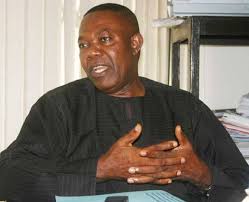
The Nigeria DigitalSENSE forum is an annual assembly of the Nigerian Information and Communication Technologies (ICT) with particular reference to the Internet community, offering them a platform to deliberate on how the Internet is governed and its developmental impact to the country as well as contributing to the global Internet Governance Forum (IGF).
The Nigeria DigitalSENSE forum is an annual assembly of the Nigerian Information and Communication Technologies (ICT) with particular reference to the Internet community, offering them a platform to deliberate on how the Internet is governed and its developmental impact to the country as well as contributing to the global Internet Governance Forum (IGF).
Monday, January 10, 2011
NIRA names Bickersteth, COO
The Executive Board of the Nigeria Internet Registration Association (NIRA) has approved the appointment of Mr. Sola Bickersteth as the first Chief Operating Officer (COO) of the registry.
NIRA is the custodian of the nation’s country code Top Level Domain (ccTLD) .ng on behalf of the Nigerian internet community since its formation in 2005.
The President of NIRA, Mrs. Mary Uduma, disclosed this after handing over the offer letter of employment to Mr. Bickersteth at the Federal Capital Territory (FCT), Abuja at the weekend.
She said that the offer letter signed by her and the company of the chairman, Establishment Committee of NIRA, Mr. Sekiri Shehu Mohammed has been given to Mr. Bickersteth on behalf of the organisation.
She expressed delight on the development, saying it’s a landmark step by NIRA with the support of the Internet community in the country.
Also, she said that this was an actualization of part of the cardinal promise of the present board after it’s inauguration in August last year; to transform NIRA as a world class organisation in the management of .ng.
Mrs. Uduma said that the new COO, Bickersteth would resume duty on Thursday, January 10, 2011.
“I wish to thank the Chairman Establishment Committee and his members for job well done. I also wish to thank all for the constructive contributions to the perfect the exercise. Congratulations to the Board and to Sola,” she declared.
She noted that the emergence of Bickersteth as the COO was heavily contested by two other contenders.
In his remark, Mr. Bickersteth said he was excited to be found worthy to occupy the position of COO of NiRA and the first at that.
“I am extremely humbled by your endorsement and do not take it for granted ....” he asserted.
Bickersteth also promised to put in his best effort towards helping NIRA to achieve its goal of a world class organization that the Executive Board will be proud of.
While soliciting for the continuous support of the board, he noted that without their increased support , “there is very little that I can achieve.”In addition, he solicited for the advice, reprimand, suggestions and prayers to make the effort worthwhile for all members of the Nigerian Internet community.
“Your time, service and contributions to NIRA shall not be in vain and it shall also be to the benefit our nation and indeed generations to come,” he prayed.
Remmy Nweke:
ITREALMS Online ... delivering news for ICT4D
NIRA is the custodian of the nation’s country code Top Level Domain (ccTLD) .ng on behalf of the Nigerian internet community since its formation in 2005.
The President of NIRA, Mrs. Mary Uduma, disclosed this after handing over the offer letter of employment to Mr. Bickersteth at the Federal Capital Territory (FCT), Abuja at the weekend.
She said that the offer letter signed by her and the company of the chairman, Establishment Committee of NIRA, Mr. Sekiri Shehu Mohammed has been given to Mr. Bickersteth on behalf of the organisation.
She expressed delight on the development, saying it’s a landmark step by NIRA with the support of the Internet community in the country.
Also, she said that this was an actualization of part of the cardinal promise of the present board after it’s inauguration in August last year; to transform NIRA as a world class organisation in the management of .ng.
Mrs. Uduma said that the new COO, Bickersteth would resume duty on Thursday, January 10, 2011.
“I wish to thank the Chairman Establishment Committee and his members for job well done. I also wish to thank all for the constructive contributions to the perfect the exercise. Congratulations to the Board and to Sola,” she declared.
She noted that the emergence of Bickersteth as the COO was heavily contested by two other contenders.
In his remark, Mr. Bickersteth said he was excited to be found worthy to occupy the position of COO of NiRA and the first at that.
“I am extremely humbled by your endorsement and do not take it for granted ....” he asserted.
Bickersteth also promised to put in his best effort towards helping NIRA to achieve its goal of a world class organization that the Executive Board will be proud of.
While soliciting for the continuous support of the board, he noted that without their increased support , “there is very little that I can achieve.”In addition, he solicited for the advice, reprimand, suggestions and prayers to make the effort worthwhile for all members of the Nigerian Internet community.
“Your time, service and contributions to NIRA shall not be in vain and it shall also be to the benefit our nation and indeed generations to come,” he prayed.
Remmy Nweke:
ITREALMS Online ... delivering news for ICT4D
Tech Diplomat plans knowledge transfer for youths
Tech Diplomat, an initiative of TTC Mobile has stepped up plans to improve the knowledge transfer of Nigerian youths.
Disclosing this, the Managing Director of TTC Mobile, Mr. Akin Aregbesola, said that some Nigerian youths would be taken to India on knowledge transfer programme in April this year.
Although he did not disclose the number of participants as at press time, Aregbesola was optimistic that participants would course to smile at the completion of study technology-related courses.
“Our passion to continually develop individuals and create manpower for both paid and self employment opportunities in telecom has opened new opportunities for the Nigerian youth, in this TTC Mobile sponsored training project tagged Tech Diplomat,” he said.
Aregbesola explained that Tech Diplomat is a technology transfer programme that seeks to train talented and passionate individuals in advance technologies as practiced in Asia and Europe, with an objective to bring back home those technologies that are relevant to our national development, via creation of direct employment.
The beneficiaries of this project, he said, will be deployed to India to study technology-related courses.
On their return, he said, they would be required to serve with TTC Mobile to further help transfer same technology to as many Nigerian youths as possible, before proceeding to setup their own business solutions.
He also said that the entire process from visa application to flight ticket, accommodation and tuition fee in India, will be sponsored by TTC Mobile.
“First batch of beneficiaries of this project are expected to travel to India by April, 2011,” he said.
Aregbesola equally said that order than genuine interest in telecom, applicants do have to meet specific conditions to be eligible for this opportunity, stressing that interest candidates should visit TTC Mobile for details.
He recalled that TTC Mobile has been contributing to the development of IT and Telecom manpower in Nigeria via different grass-root oriented training programmes like free Information Technology (IT) Training (2003 - 2004), National Youth Development Program (2005 - 2006), National ICT Summit (2007), National Telecom Scholarship (2008-2010). According to him, several thousands of youths in the country have accessed quality telecom training via these programmes, who are now gainfully employed in various sectors of the economy, contributing their quotas to national developments in line with the mission of TTC Mobile.
“Our mission statement is to effectively empower individuals, support institutions and corporate organizations in modern technologies, in order to help reposition them for local and global opportunities,” he said.
Remmy Nweke:
ITREALMS Online ... delivering news for ICT4D
Disclosing this, the Managing Director of TTC Mobile, Mr. Akin Aregbesola, said that some Nigerian youths would be taken to India on knowledge transfer programme in April this year.
Although he did not disclose the number of participants as at press time, Aregbesola was optimistic that participants would course to smile at the completion of study technology-related courses.
“Our passion to continually develop individuals and create manpower for both paid and self employment opportunities in telecom has opened new opportunities for the Nigerian youth, in this TTC Mobile sponsored training project tagged Tech Diplomat,” he said.
Aregbesola explained that Tech Diplomat is a technology transfer programme that seeks to train talented and passionate individuals in advance technologies as practiced in Asia and Europe, with an objective to bring back home those technologies that are relevant to our national development, via creation of direct employment.
The beneficiaries of this project, he said, will be deployed to India to study technology-related courses.
On their return, he said, they would be required to serve with TTC Mobile to further help transfer same technology to as many Nigerian youths as possible, before proceeding to setup their own business solutions.
He also said that the entire process from visa application to flight ticket, accommodation and tuition fee in India, will be sponsored by TTC Mobile.
“First batch of beneficiaries of this project are expected to travel to India by April, 2011,” he said.
Aregbesola equally said that order than genuine interest in telecom, applicants do have to meet specific conditions to be eligible for this opportunity, stressing that interest candidates should visit TTC Mobile for details.
He recalled that TTC Mobile has been contributing to the development of IT and Telecom manpower in Nigeria via different grass-root oriented training programmes like free Information Technology (IT) Training (2003 - 2004), National Youth Development Program (2005 - 2006), National ICT Summit (2007), National Telecom Scholarship (2008-2010). According to him, several thousands of youths in the country have accessed quality telecom training via these programmes, who are now gainfully employed in various sectors of the economy, contributing their quotas to national developments in line with the mission of TTC Mobile.
“Our mission statement is to effectively empower individuals, support institutions and corporate organizations in modern technologies, in order to help reposition them for local and global opportunities,” he said.
Remmy Nweke:
ITREALMS Online ... delivering news for ICT4D
Panabiz unveils 3 high-speed Canon scanners
Panabiz International Limited, has unveiled three set of high speed Canon scanners into the Nigeria’s market.
General Manager, Panabiz International Limited, Mr. Kunal Malhotra said that the new range of high speed colour scanners are specially designed to help meet consumers’ needs to manage documents and data more productively and cost effectively.
The new range of colour scanners offers a combination of speed, quality, and functional flexibility with high capacity to increase workflow capabilities while reducing costs and time with the capability to scan up to 112-page per minute.
He also said that the introduction of the latest Canon range of scanners would make great business sense for many business sectors with high documents volume scanning and processing requirements such as the financial services, oil & gas, government, healthcare, transport and services bureaus.
Mr. Malhotra also said that the scanners were built to be busy because scanning is very critical to document management and archiving.
He listed some of the new high speed Canon scanners to include DR6050C, DR7750C and DR9050C scanners.
For the DR6050C, he said it could produce 12,000 scans a day, while the DR7750C & DR9050C models have the efficiency of producing up to 15,000 and 18,000 respectively.
He explained that speed is high priority with scanning up to 112 pages per minutes for the DR9050C scanners, whereas the DR6050C and the DR7550C produce up to 70 and 90 pages per minutes respectively with the aid of the inbuilt image processing chip.
According to him, the latest Canon high speed colour scanners were made from a highlyproductive source which contains the latest cutting edge features and refinement designed to exactly match the business need of managers, while maximizing productivity for users.
Canon’s versatile and reliable scanners, Malhotra said, are a model workforce especially when the pressure is on and the requirements are ever changing, producing cost effective solutions for archiving.
“The scanners make complex scanning of specialized documents which range in various size and form,” he said in a press statement made available to Champion Infotech.
He recalled that Panabiz recently introduced the specialized Cheque scanners to the Nigeria market to meet the special needs of banks and businesses needing fast, and high- quality payment processing.
Panabiz International Ltd prides itself as the sole authorized representative of Canon in Nigeria in addition to being the leading provider of office automation solutions such as document imaging solutions, telecommunications solutions, and boardroom solutions to an array of organizations.
Remmy Nweke:
ITREALMS Online ... delivering news for ICT4D
General Manager, Panabiz International Limited, Mr. Kunal Malhotra said that the new range of high speed colour scanners are specially designed to help meet consumers’ needs to manage documents and data more productively and cost effectively.
The new range of colour scanners offers a combination of speed, quality, and functional flexibility with high capacity to increase workflow capabilities while reducing costs and time with the capability to scan up to 112-page per minute.
He also said that the introduction of the latest Canon range of scanners would make great business sense for many business sectors with high documents volume scanning and processing requirements such as the financial services, oil & gas, government, healthcare, transport and services bureaus.
Mr. Malhotra also said that the scanners were built to be busy because scanning is very critical to document management and archiving.
He listed some of the new high speed Canon scanners to include DR6050C, DR7750C and DR9050C scanners.
For the DR6050C, he said it could produce 12,000 scans a day, while the DR7750C & DR9050C models have the efficiency of producing up to 15,000 and 18,000 respectively.
He explained that speed is high priority with scanning up to 112 pages per minutes for the DR9050C scanners, whereas the DR6050C and the DR7550C produce up to 70 and 90 pages per minutes respectively with the aid of the inbuilt image processing chip.
According to him, the latest Canon high speed colour scanners were made from a highlyproductive source which contains the latest cutting edge features and refinement designed to exactly match the business need of managers, while maximizing productivity for users.
Canon’s versatile and reliable scanners, Malhotra said, are a model workforce especially when the pressure is on and the requirements are ever changing, producing cost effective solutions for archiving.
“The scanners make complex scanning of specialized documents which range in various size and form,” he said in a press statement made available to Champion Infotech.
He recalled that Panabiz recently introduced the specialized Cheque scanners to the Nigeria market to meet the special needs of banks and businesses needing fast, and high- quality payment processing.
Panabiz International Ltd prides itself as the sole authorized representative of Canon in Nigeria in addition to being the leading provider of office automation solutions such as document imaging solutions, telecommunications solutions, and boardroom solutions to an array of organizations.
Remmy Nweke:
ITREALMS Online ... delivering news for ICT4D
Airtel, China Telecom enter deal to link India, china
Bharti Airtel has entered into a partnership deal with the China Telecom to link India and China with high capacity direct connectivity.
The direct underground terrestrial link will offer seamless connectivity to customers transiting India or China to reach key global destinations.
The new link was announced by Bharti Airtel and China Telecom Corporation, last weekend at the conclusion of discussions, according to a press statement made available to Champion Infotech by the Public Relations Manager, Airtel Nigeria, Mr. Emmanuel Otokhine.
He said that the underground network would offer data speeds of up to 40 Gega bytes per second (Gbps), would be built on resilient ring infrastructure, and represents Bharti Airtel’s third International Gateway for customers in India.
Bharti Airtel and China Telecom have constructed the network in their respective territories from Siliguri to Nathula border in India and Nathula border to Yadong in China.
The network will address the surging international traffic and diversity requirements of both the nations. In India, the high speed network spans from Siliguri gateway to Nathula via Pedong on one path, and the second path will reach Siliguri from Nathula via Gangtok, forming a ring.
Bharti Airtel has also outlined in a Memorandum of Understanding (MOU) with China Telecom to develop the Network-to-Network Interconnect (NNI) which allows for seamless access to the combined regional and global network resources of both the operators.
The chief executive officer of Global Data Business at Bharti Airtel, Mr. Ajay Chitkara, was quoted as saying that the current economic boom in India and China has triggered a huge demand from global as well as domestic customers for connectivity in these nations.
“The launch of this India-China link further strengthens our commitment of creating state-of-the-art network for our customers through innovation, and connects the world’s two fastest growing economies on a low latency path,” Chitkara said.
ITREALMS Online ... delivering news for ICT4D
The direct underground terrestrial link will offer seamless connectivity to customers transiting India or China to reach key global destinations.
The new link was announced by Bharti Airtel and China Telecom Corporation, last weekend at the conclusion of discussions, according to a press statement made available to Champion Infotech by the Public Relations Manager, Airtel Nigeria, Mr. Emmanuel Otokhine.
He said that the underground network would offer data speeds of up to 40 Gega bytes per second (Gbps), would be built on resilient ring infrastructure, and represents Bharti Airtel’s third International Gateway for customers in India.
Bharti Airtel and China Telecom have constructed the network in their respective territories from Siliguri to Nathula border in India and Nathula border to Yadong in China.
The network will address the surging international traffic and diversity requirements of both the nations. In India, the high speed network spans from Siliguri gateway to Nathula via Pedong on one path, and the second path will reach Siliguri from Nathula via Gangtok, forming a ring.
Bharti Airtel has also outlined in a Memorandum of Understanding (MOU) with China Telecom to develop the Network-to-Network Interconnect (NNI) which allows for seamless access to the combined regional and global network resources of both the operators.
The chief executive officer of Global Data Business at Bharti Airtel, Mr. Ajay Chitkara, was quoted as saying that the current economic boom in India and China has triggered a huge demand from global as well as domestic customers for connectivity in these nations.
“The launch of this India-China link further strengthens our commitment of creating state-of-the-art network for our customers through innovation, and connects the world’s two fastest growing economies on a low latency path,” Chitkara said.
ITREALMS Online ... delivering news for ICT4D
Subscribe to:
Posts (Atom)