" ITREALMS: 2006-01-29

Thursday, February 02, 2006

Understanding digital convergence

Features of the week:

As the time for the introduction of the proposed Unified Licensing Regime in the country draws near, REMMY NWEKE, examines what digital convergence is all about and need for a converged regulator.

BARELY few days to the introduction of the proposed Unified Licensing Regime (ULR), the nation’s Information and Communications Technology (ICT) sector is also warming up for another set of revolution as government agencies are expected to digitally converge to give the industry and ULR specifically, the sense it deserves.

Digital convergence
This to a very large extent refers to modern trend in businesses, and industries whereby transactions are harmonized in digital form for corporates to work together, produce new formats and types of content.

According to Ramesh Jain of www.digitalmerging.la, what is really happening in digital convergence which could be also called multi-media, is the convergence of Content, Communication and Computing (CCC), describing it as triple Cs.

He stressed that much effort, both in business as well as in technology, has usually been concerned with one C only, because, people who understand Content usually do not understand Communication or Computing that well and similar situation exists with people who understand communication or computing.

However, he said, it is the first time in history that the three are converging. Most of the time one hears about the convergence of Personal Computer (PC) and Television (TV) or of Communication and Computing.

It is important, therefore to consider all three Cs together to understand the implications or otherwise of convergence.

But for the Internet Society (ISOC) South Central Texas chapter, digital convergence evolves industries at minimum having content, and application development for film, video games, music, advertising and mass media. While the distribution channels evolve deployment of broadband wireless, Voice over Internet Protocol (VoIP), on demand and more, even as hardware developers, Internet Service Providers, telecom operators and the entertainment industries among others will all benefit from the trend of convergence.

Peculiar situation
Presently, there are four government agencies overseeing various sub-sectors in the ICT circle, namely the Nigerian Communications Commission (NCC) regulates telecom, National Broadcasting Commission (NBC), regulates the broadcasting industry, the National Information Technology Development Agency (NITDA) oversees core IT, while the satellite space aspect is managed by the National Space Research and Development Agency (NASRDA).

This brings to four different government agencies managing various parts of ICTs.

Why convergence?
Evolutions in the ICT sector accompanied with enormous potential of Internet Protocol (IP)-oriented networks on one hand and increased users’ demands for comprehensive and network – independent on the other hand, have led to a convergence of information and telecommunications infrastructure, therefore, propelling multiplied service power.

According to professors Gernady Yanovsky and Finn Arve Aagensen of Norwegian University of Science and Technology, this comprises the convergence of voice and data services in both public and private networks through the VoIP centers, Computer cum telephony integration, which means call centers and web-contact centers merging.

Other parts that make up convergence, they said, include the integration of fixed and mobile phone lines and services as well as multimedia communications, existing as voice, video, graphics and sound in a place.

This evolutions, they also posited, have led to the creation of Next Generation Networks (NGNs).

For the likes of telecommunications manufacturing giant, Siemens Communications, this provides the avenue for them to development, integrating customer’s communication and computer systems for a powerful new business tools through technologies such as Wide Area Networking (WAN), ethernet switching, web servers, frame relay and Automated Teller Machines (ATM) networks.

The firm pointed out that the integration of communication and computer systems is the key to business success at this era, because it would provide increased staff productivity and performance, reduction of operating costs and increased business efficiency, even as it could provide new revenue streams.

Nigerian perspective
It was the Executive Vice Chairman (EVC) of NCC, Dr. Ernest Ndukwe in a paper he delivered at the Obafemi Awolowo University (OAU) recently, on ‘Ringing the Digital Devolution in Nigeria in the era of technology convergence’ said that even licensing has transformed from mere individual licensing to issuance of class and general authorisation which is embedded in ULR.

He cited an instance that new technologies like VoIP, Wireless Fidelity (WiFi), and WiMax to name a few have blurred the distinction between services, it became clear that one of the strategies for NCC to take the nation to the next level would be the converged licensing option, which is imminent.

Examining the industry and proposed ULR and possible convergence of the sector regulatory organs, the Executive Director, eShekels Limited, a technology inclined research organisation, Mr. Fola Odufuwa, said that in the near future, convergence would come to bear in the nations ICT sector and with ULR, he predicted it would form key bases for converged regulation.

Although he expressed dismay over the possible convergence of the four federal government agencies as obtain currently, via NCC, NBC, NITDA and NASRDA, saying he has seen the convergence of two to three related sub-sector regulators but not four as the case seems in the country, today.

Regulatory convergence inevitable
“It is inevitable that there would be a convergence particularly two or three regulatory bodies if not all the four of them. That has to be, because, if you buy a Personal Computer (PC), you may be looking at NITDA, but when you open the PC, reboot it or want to do anything on it in the terms of communication whatever, then you would be looking at NCC.

And when you now want to talk about the content, you would be looking at NBC and whatever you are doing that involves satellite on the same PC you have to talk or look at NASRDA,” he explained.

Stressing that nowadays, you have phrases like ‘I would listen to my PC’, ‘I would watch my radio’ and even in Nigeria in some hotels, you can browse the Internet on your television set.
These, he noted are why technologies require the convergence of the regulatory bodies; with Internet Protocol Television (iPTV), video streaming, you now don’t know which is what anymore.

He gave an instance, wondering how do you count a television viewer; is it the one who have a television set box or the one who is watching it on his computer and the person who is listening to his radio via his computer through a radio website audio streaming.

In Nigeria, he noted, there are a number of radio stations in the east and west, that are transmitting through the Internet, and how do you count the person; when is he a radio listener? When he carries a traditional radio transistor in his palm or when he listens to it via the PC.

The real truth, as said by him, is that convergence of technologies requires that there should be a convergence of regulators, whether it is done now or later, but the quicker it is done the better for us.

Benefits
As anticipated, convergence in the ICT sector will yield a good number of benefits for all stakeholders as postulated by Dr. Ndukwe to include what he described as a conflict free ICT environment to boost the economy and government position and invitation for investors, especially for Foreign Direct Investments (FDIs); to the regulator, operators and consumers as well.

For the duo of Steven Taylor and Larry Hettick in a joint paper entitled ‘Applications Convergence Basics’ said that the advantages of convergence are many and cited an instance of it bringing about reduction in business cost of implementation such as the costs for voice systems management when they shift to a Voice over IP (VoIP) based implementation.

Multi-site businesses, the convergence experts said could save on transmission and switching costs by converting to VoIP.

But while network cost savings are always welcome, applications convergence saves labor costs and improves customer service – offering an even bigger contribution to the bottom line.

In its simplest form, applications convergence happens when computer- based applications like word processing, e-mail, and customer relationship management converge with communications-system applications like telephone calls and voice mail.

This technology backgrounder will examine how applications convergence adds significant benefits beyond the cost savings created by network convergence.

Expert advises on online chatting

Remmy Nweke in Malta

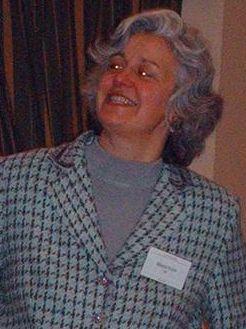
United Kingdom-based professor of Linguistics, Language and Diplomacy, Dr. Mrs. Biljana Scott, has advised online discussants on how to manage their time well.

Speaking at the on-going workshop on Information and Communications Technology in Contemporary Diplomacy in Malta, she said that online discussants must ensure that their contributions are concise and recipient identifiable, especially when it involves multi-stakeholders’ online chatting.

Multi-stakeholder online chat, entails more than two persons and could be upto 10 or even more in an electronic chat room deliberating on a given subject but at different speed.


“You must make your contributions very simple and directed at a
particular person’s comment,” she advised.


Dr. Scott pointed out that nowadays, members of these communities most of the times like to continue discussions, previously ended, especially when they missed out on an issue of important to them.

She noted that this kind of online engagement is being heavily deployed in academic and business related circles and in developed world of which developing countries are now gearing up, especially when participants are not coming from the same background.

Students, she said, “are guilty of always wanting to take the group back after missing out on a subject”.

Dr. Scott who also is the Project Manager for Language and Diplomacy for Diplo Foundation, therefore, advocated that when dealing or participating in a group online chat that the best practice is to ensure that comments or contributions are identified to specific recipient so as to avoid creating confusion on who should respond and who the comment is meant for.

This, she explained is because all the participants do not have equal computer typing skill, therefore everyone would not be able to respond simultaneously as expected and even before they could, another participant may have come up with another-related subject.

“Thereby creating gap between the first respondent and the second,” she said.

Opening the session earlier, the technical co-ordinator at DiploFoundation, Mr. Dejan Dincic, informed participants that there is a great deal of difference between chatting one-on-one and a group chatting in an online environment.

Hence, care must be taken to ensure that participants kept to the pace, just as he guided partakers on the use of Textus, which is a HyperText software specifically used by Diplo Foundation, mainly in dissemination of its educational contents.

Describing it as Information and Communication Technology (ICT) tools for communication, finding and disseminating information, Mr. Dincic said that the solution was to help users share perspectives, interact with pages on the web and save the knowledge thus created for future references.

Stressing that every one benefits discussions when things are looked at from various and new perspectives, mostly when information is shared, thus interaction around pages on the Internet increases value, creativity and building networks of knowledge, he submitted.

UBA Group adopts Finacle 7.0

IN efforts to consolidate the Information and Communications Technology (ICT) aspect of its integration following mergers and acquisition embarked upon last year, the United Bank for Africa (UBA) Plc, has adopted Finacle version 7.0.

Before now, ITRealms Online gathered that members of the new UBA Group were running on Finacle 6.2, Flexcube and BankMaster at various times among other banking applications in the nation’s software market.

UBA’s recent merger with the Standards Trust Bank (STB) and Chartered Trust Bank (CTB) positions the bank with a network of 428 branches in addition to the headquarters.

Disclosing the decision on Finacle 7.0 was the bank’s IT Integration
Consultant, Mr. Peter Mombaur, while addressing newsmen at the bank’s headquarters in Lagos.


Just as he noted that UBA is ready for a total switch over to Finacle version 7.0 by Monday, February 6, this year, even as the migration began last week Friday, January 27.

“By Monday February 6, the new improved Finacle installation must have been completed,” he asserted.

Explaining guiding principles for UBA Group’s fast integration, he also said that in the merger plans, every staff is equal.

“All staff is being treated equally and best solution are maintained independent of source,” he declared.

Throwing more lights on the bank’s choice of Finacle 7.0, the Project Director for Finacle and director, System Integration at UBA Group, Mr. Peter Iwegbu, said that Finacle emerged slightly over Flexcube during the evaluation conducted by the integration team set up by the management of the institution.

He said they used parameters of total costs, process efficiency, business flexibility, ease and speed of integration and risks.

Finacle 7.0, he noted, offers many new features including improved web architecture, electronic banking (e-banking), in-built treasury, customer relations management (CRM) alerts and audit manager among others.

“All these features enable ease of transaction and offer the customer greater convenience,” Mr. Iwegbu said.He further pointed out that the group decided against migrating to the existing Finacle 6.2 platform that STB was running, but to instead, upgrade to Finacle 7.0 at the same time.

Chinese bank boosts RelTel with N2.6b

Chinese Development Bank (CDB) has given Nigerian private telecom operator (PTO), Reliance Telecommunications Ltd, a boost with $20 million (about N2,602,100,000,000.00) financial support to assist the company in its bid to position.

Executive Vice-Chairman, Reltelwireless, Mr. Kenneth Aigbinode, disclosed this to newsmen in Lagos, saying that the firm was also at “the final stages of negotiations with an Indian company, wanting to invest about $55 million in Reltelwireless’’.

Mr. Aigbinode also said the financial support from CDB was facilitated by Huawei Technologies, the Chinese telecommunications giant, through a vendor-finance arrangement.

He said that the Indian firm had approved Mr. Vinoo Goyal, the Chief Operating Officer of Reltelwireless, facilitation of due diligence on the operator.

Mr. Aigbinode noted that Reltelwireless has also embarked on a major
capital-raising exercise, through private placement, targeted at discerning Nigerians to raise about N7.5 billion.

“We are targeting some major private-sector investors and we are not looking back in our determination to consolidate the position of Reltelwireless as the dominant fixed wireless operator in Nigeria,” he stated.

The newly appointed EVC for RelTelWireless, said that the latest initiatives of the firm’s management were aimed at positioning the company for the upcoming unified licensing regime, planned by the federal government.

He said, “The unified licensing regime suits the strategy adopted by the new management of Reltelwireless,” describing the company as a front-runner in the bid to make telecommunications services available and affordable to the populace.

Reltelwireless has deployed its services in major cities nationwide, including Lagos, Port Harcourt, Nnewi and Onitsha, with plans to commence operations in Abuja, Ibadan, Benin, Awka, Aba, Enugu and Abeokuta in the near future.

Reltelwireless, a national fixed wireless licence operator, has an installed capacity of about 1.2 million subscribers, making the company the biggest fixed wireless operator in the country.

Rao honoured with Siemens scientist of the year

Siemens AG President and CEO Dr. Klaus Kleinfeld recently presented an “Inventor of the Year” award to senior director, Engineering Research Development, Computer-Aided Diagnosis and Therapy Group, Siemens Medical Solutions, Dr. Bharat R. Rao.

Dr. Rao was recognized for his pioneering work in developing an automated data collection and analysis tool known as Reliable Extraction and Meaningful Inference from Nonstructured Data (REMIND), which enables caregivers to utilize disparate healthcare information to personalize patient care plans and enhance patient outcomes.

“Much of the data in the healthcare system is not in a format that could be readily accessed or applied at the point of care,” said Dr. Rao, who cited an example with the key clinical information, saying in clinics, “information is stored as written text in patient records, discharge summaries, progress notes and radiology reports”.

Without requiring any manual entry or change in workflow, REMIND, he explained integrates patient data with medical information and current treatment guidelines, and through a sophisticated algorithm, “REMIND then analyzes the data and extracts key nuggets of information that will help clinicians make more informed treatment decisions”.

This information, according to Donna Picciocchi in a press statement made available to ITRealms Online, could be utilized for applications such as alerts, case management, and adherence to treatment guidelines.

Dr. Rao’s vision, as said by Picciocchi, is to organize the vast amount of diagnostic images, patient records, best practices and treatment outcomes to help personalize care.

He also said, REMIND will provide ways to review years of data to find patterns of treatment, as well as identify people eligible for clinical trials.

“We are not replacing the doctor with computer-aided diagnosis. The word ‘aided’ is specifically important in healthcare. We’ve come to accept that other aspects of our lives, such as the cars we drive or the airplanes we travel in, will have some elements controlled by computers, but it is much harder to accept that computers can assist doctors so that they can provide better, more accurate care,” Dr. Rao enlightened.

President, Siemens Medical Solutions United States of America (USA)
Tom McCausland, Siemens recognition is given to one of most important competitive advantages the employees made to help the company to continuously maintain the tradition of innovation and with REMIND, Dr. Rao has developed a tool that will have a positive impact on the healthcare industry, and deliver significant advantages to our customers.

“Siemens has been a leader in developing healthcare information technology solutions for over 30 years, and we intend to maintain that leadership position into the future. Now with the global push for electronic health records, we will continue to deliver innovative tools that make implementation of these solutions seamless and beneficial to healthcare providers,” he said.

McCausland also said that REMIND has been successfully rolled out to a number of healthcare facilities and could be applied at all levels of complexity, from simple practice administration to patient management systems in large clinics, even as it is currently deployed across multiple disease areas for more than five million patients in the United States.

Dr. Rao received his undergraduate training from the Indian Institute of Technology, Madras, in his native India, and then earned master’s and doctoral degrees in electrical engineering from the University of Illinois, the doctorate focusing on machine learning.

Siemens Medical Solutions of Siemens AG with headquarters in Malvern, Pennsylvania and Erlangen, Germany, is one of the largest suppliers to the healthcare industry in the world.


The company is known for bringing together innovative medical technologies, healthcare information systems, management consulting, and support services, to help customers achieve tangible, sustainable, clinical and financial outcomes.

Employing 430,000 people in 192 countries, Siemens AG has submitted more than 8,800 invention reports and 5,700 patent applications in the past fiscal year alone. Overall, Siemens holds a total of 53,000 patents.

Since 1995, the “Inventor of the Year” award has been presented every year to 12 Siemens’ employees for outstanding contributions to improving the technical expertise and the economic success of the company.

ULR to engender consumer-centric choices - Ndukwe

Executive Vice Chairman (EVC) of the Nigerian Communications Commission, Dr. Ernest Ndukwe, has reiterated that the proposed introduction of the Unified Licensing Regime (ULR) would engender consumer-centric kind of services with multiple choices for the end-users.

He gave this indication at the 26th edition of the monthly Consumers’ Telecom Parliament held in the city of Oyo, capital of Ibadan, last weekend.

It would be recalled that ULR is due to take off soon at the end of exclusivity period granted the digital mobile operators otherwise known as Global System for Mobile communication (GSM) operators, due to expire in February 2005.

Held at Jogor Centre in Ibadan penultimate Friday, and attended by the likes of MTN, Vmobile, Glo mobile, MTel, NITEL and Oduatel, the event had a good consumer turnout.

He said, this would give telecom consumers in the country more choices as well as increase the vibrancy of the telecom sector.

Dr. Ndukwe also noted it would attract bigger players to the sector, improve quality of service and bring about customer friendly pricing.

He disclosed that the number of connected phone lines in the country have grown by 100 per cent last year from nearly 10 million at the end of 2004 to almost 20 million at the end of 2005.

And in order to sustain this growth, Dr. Ndukwe advised state governments, local governments, towns and communities to welcome operating companies by providing right of way to them for infrastructure build-out and restraining indigenes from vandalizing telecom equipment and engaging in unnecessary hostilities towards operators’ personnel and contractors.

He equally revealed that this year, the Commission would ensure that Internet services are pervasively extended to all states of the federation to empower Nigerians to fully tap the benefits of Information and Communication Technology (ICT).

On inefficacy of emergency numbers on the networks, the EVC noted that a broad-based national committee comprising of security agencies, the Ministry of Communications, the Fire Service and the Commission are currently working out the details and mechanism for deploying a state-of-the-art ICT infrastructure to take care of the problem.

He further prayed consumers to take their grievances to the Commission’s Consumer Affairs Bureau (CAB), in the case they are not satisfied with the responses of their service providers to complaints, pointing out that the bureau has resolved a good number of the complaints brought before it and on time too.

Digital Broadcasting forum gets dates

Commonwealth Telecommunication Organisation (CTO) has announced the dates for the Regional Radio Communication conference otherwise tagged ‘Digital Broadcasting Switchover Forum 2006,’ scheduled to hold at the Royal Horse Guards Hotel, London.

Information contact at CTO, Bhavna Kerai said that following on the success of last year’s forum in which over 80 delegates attended as far as from Botswana, Hungary, Mozambique down to Bahamas, that the event would hold between April 3 and 5.

The edition, which is the second of this forum, Kerai said, that preparations has been finalized for a successful take of the event.

This, the officer said, would enable participants to benchmark their plans in accordance with the International Telecommunication Union (ITU’s) Regional Radio Communication (RRC) conference for the year.

Confirmed participants include ITU, European Broadcasting Union
(EBU), Commonwealth Broadcasting Association (CBA) and the British Broadcasting Corporation (BBC).


Described as the a comprehensive and focused conference for technical briefing aimed at all those involved in the process of switching from analogue to digital broadcasting in Europe, Middle East and African (EMEA) region, Kerai noted that the event would also form a meeting point for the regulators, policy makers and senior level decision makers from region.

According to Kerai, there would be an expose on European positions on transitional plans for RRC ’06 and what the Digital Switchover is costing and how it is being funded, how to achieve and implement a successful switchover plan in practice and government incentives that are persuading broadcasters to migrate more quickly to digital broadcasting.

Other top on the agenda include different regulatory approaches to drive development of the digital broadcasting market, how to successfully solve regulatory issues by coordinating efforts across multiple decision centres, the impact new digital technologies are having on traditional broadcasting revenue, strategies to gain public acceptance and make digital technology affordable and technical options for digital broadcasting roll out.

Additionally, the organisers said that participants would benefit from a series of one-on-one intensive meetings, which could be facilitated in separate meeting rooms, throughout the conference, so as to focus on the coordination process that goes into achieving a successful migration plan into actual business.

Commendations for Globacom on CSR

Governor Olagunsoye Oyinlola of Osun State has commended Nigeria’s Second National Operator (SNO), Globacom, for its diligence in services rollout, just as an elder statesman, Pa Emmanuel Alayande, also lauded the company for bringing telecommunications services nearer to Nigerians as part of its Corporate Social Responsibility (CSR).

Governor Oyinlola who spoke in Osogbo, said Globacom has made so much impact that left indelible mark in the industry in the country with the various value-added services made possible by its enhanced second generation (2.5G) network.

“Globacom has set a trend for others in the industry to emulate”, he asserted, while eulogizing the company for the introduction of Per Second Billing (PSB), which had hitherto been deemed impossible.

He also extolled the company for its support to government at the state levels in their poverty alleviation drive.

“I must be emphatic that Globacom has been of immense help to us in Osun State with the support given our poverty alleviation programme. Globacom assisted through the provision of lines and other facilities, which we have deployed to reduce the population of the unemployed in the state. This has assisted us in putting food on the tables of some of our people” he said.

For him, though Globacom came two years after the two earlier entrants, but it has performed creditably.

“If you look at the coverage nationwide, Globacom is available in most parts of the nation and within this spate of time, people have become attracted to the network. If the company continues to be as efficient as it has been, I have no doubt that Globacom will overtake its competitors in no time”, he said.

He also declared that the series of social responsibility projects that Globacom embarked on showed that the company means so well for the country.

“I heard that Globacom gave out cars to some people; that is a way of restoring hope in the people of this nation. So many of those people who won cars never thought they could ride cars in their lives, let alone riding brand new cars”, he said.


Meanwhile Pa Emmanuel Alayande, has lauded Glo for being an example for other networks.

“The other networks really made life so miserable for Nigerians with their outrageous tariffs,” he declared.

Pa Alayande also said in Ibadan that it was Globacom that liberated the people from the oppressive tendencies of those other networks.

Praying for continued breakthroughs for the company and its Chairman, Dr. Mike Adenuga Jnr, Pa Alayande enjoined the company not to relent on its efforts towards empowering Nigerians.

WSIS Secretariat frozens web-pages for Geneva, Tunis phases

The Executive Secretariat of the World Summit on the Information Society (WSIS) has announced the frozen of the web-pages of both the Geneva and Tunis phases of the summit.

This is coming as it has taken a firm step in updating media professionals on the post-WSIS related information by maintaining its ‘WSIS E-Flash’ medium.

ITRealms Online, recalls that WSIS was held in two phases; in December 2003 in Geneva and Tunis in November 2005 spearheaded b y the International Telecommunication Union (ITU) Secretary-General, Mr. Yoshio Utsumi.

WSIS E-flash is a regular online ‘information dish’ for interested professionals in the Information and Communication Technology (ICT), especially the media who seek update from the secretariatInformation from the editorial team of WSIS e-Flash said that the decision was to continue the tradition of E-Flash to keep interested subscribers updated on events in the post-WSIS process.

This development came as the web-pages on Geneva and Tunis summit phases would soon be frozen.“We will also continue to update the official WSIS website. While the content of the web-pages regarding the Geneva and Tunis Summit will be ‘frozen’" the team stated.

The secretariat also said that other parts including basic information, stocktaking and the new chapter on "WSIS Implementation and follow-up" would be open and regularly updated.

As part of the activities in the post-summit period, the ITU Secretary-General has decided to maintain the WSIS Executive Secretariat, although on a smaller scale, to carry out the implementation tasks stipulated in the Geneva Action Plan and Tunis Agenda of WSIS.

These activities include the coordination cum facilitation of multi-stakeholder implementation and stocktaking, as well as other essential tasks.

Some of the post-WSIS meets include Internet Governance Forum (IGF) consultations on 16 - 17 and WSIS Action Lines Moderators cum Facilitators gathering on 24 this month of February respectively.

Pointing out the Tunis Agenda in paragraph 108-109, which stated that multi-stakeholder implementation at the international level should be organized taking into account the themes and action lines in the Geneva Plan of Action, and be moderated or facilitated by UN agencies when appropriate.

The experience of, and the activities undertaken by, UN agencies in the WSIS process notably via the ITU, United Nations Education, Scientific and Cultural Organisation (UNESCO) and United Nations Development Programme (UNDP); should continue to be used to their fullest extent.

These three agencies are expected to play leading facilitating roles in the implementation of the Geneva Plan of Action and organize a meeting of Moderators/Facilitators of Action Lines as well as the IGF.

MTN’s Obanewa for network optimisation

SENIOR Manager in-charge of Radio Frequency Planning and Optimization at MTN Nigeria, Olasoji Obanewa, has been named as a member of the 16 mobile operators representatives on the continent to make presentations at this year’s ‘Mobile Network Optimization - Africa,’ slated to hold in Cape Town, South Africa this month.

Senior Conference Producer at IIR Telecoms and Technology, organisers of the event, Ms Laura Marshall, said that the conference holding between February 27 through March 2, 2006 would focus purely on mobile network.

IIR is a leading knowledge and skills transfer company with a global network of 47 companies and 112 operating units.

Annually, IIR works with 650,000+ business executives providing them with knowledge and skills through training, conferences, seminars, e-Learning, blended solutions, exhibitions, consulting and mentoring.

“It is not a high-level strategic conference - instead it is filled with practical advice and strategies from 16 different mobile operators with real experience of optimising their networks,” Ms Marshall said.

Other confirmed speakers for the conference representing 16 mobile operators include Michiel Heyns, regional head, Planning and Optimisation at MTN South Africa, chief radio network planner at TeliaSonera Finland, Kari Junttila, National Planning and Optimisation Manager, Cell C, Lionel Chetty, and Mr. Jonathan Muwonge of Uganda Telecom among others.

She pointed out that it is not often that optimisation experts from mobile operators from around the world gather in Cape Town to share their experiences and offer solutions to the network problems their companies are facing today.

“The 16 African and European operators will be sharing their experience of optimising cell planning, frequency planning, indoor coverage and performance measurement for the Global System for Mobile communications (GSM), General Packet Radio Service (GPRS), Enhanced Data GSM Environment (EDGE) and third generation (3G) networks,” she said.

The conference officer also said that discussions would be focused on evaluating the key solutions for optimising radio networks in terms of capacity and coverage gains and cost-effectiveness, maximising cell capacity and coverage to minimise new base station deployment in rural areas, deploying Automated Cell Planning (ACP) for capacity and quality improvements.

Others topics also to deliberated upon include assessing the commercial viability and technical challenges of implementing dedicated indoor coverage solutions, examining the pros and cons of deploying GPRS and or EDGE for data service delivery as well as identifying and overcoming the technical and operational challenges of optimising a live 3G network.

Malta gears up for Schengen

Remmy Nweke in Malta

The Maltese government is eager to join Schengen community, just as it has advanced reasons it does not operate embassies in most African countries including Nigeria.

Joining Schengen community in Europe means that Maltese would be
able to travel round the European Union and members of the Schengen countries with one visa and even any body issued the same visa by Maltese government or its representatives stand to benefit equally.


Director, Multilateral Affairs, Mr. Giovanni Miceli told ITRealms Online exclusively, that major reason Maltese government do not operate its own counsel offices in most African nations including Nigeria is due to the economic wherewithal to sustain such operations.

He expressed optimism that very soon, Malta would join other European countries in issuance of popular Schengen visa to further empower her citizens, especially since the nation is strategically located within the Mediterranean.

Highlighting that Malta is working hard toward joining the Schengen nations, which is visible in the restructuring of her international policies to this effect including rebuilding of her international airport.

He also said that the Island of Malta, is a little over 400,000 in population and has only sand and sea as natural resources whilst most of the time the sand is not there to behold, hence leaving the country with only sea.

Additionally he attributed this to lack of manpower to operate such offices in different countries.

In the entire continent of Africa made up of 53 nations, he said, Malta has about four embassies, specifically in the northern Africa and none in the West Africa.

Mr. Miceli explained that in order to solve the problem of visa to visitors of his country, an arrangement is in place for British embassies to issue visas for intending visitors.

Also, Malta has established honourary offices in selected countries, which do not issue visas to foreigners.

Globally, he said, Malta has 25 embassies, noting that the nation is operating within its economic limits so as to make these embassies viable.

AfrISPA unveils UNGANA IXBase

African Internet Service Providers Association (AfrISPA) would today in Kenya at the beginning if a two-day workshop of the first African Internet Exchange Research group, unveil the Internet Exchange Point (IXP) application, known as UNGANA IXBase.

The workshop holding at the Kenyan School of Monetary Studies, is expected to end tomorrow, Friday, February 3, and would attended by representatives drawn from nine African countries that currently have IXPs and will provide them with the software and equipment to set up data collection nodes at each participating countries.

ITRealms Online gathered that the application is a result of the African Internet Exchange Point (IXP) Research Project funded by the International Development Research Centre (IDRC) to create systems and methodology in collecting, storing and analysing African Internet Exchange statistics.

Secretary-General of AfrISPA, Mr. Eric M.K Osiakwan while disclosing
this, said that name, UNGANA IXBase was taken from =EF=BF=BCUNGANA, which is a Swahili word that means "connect" and "join together".


Stressing that other meanings of the word include that 'ungana' also means combine in English when used as a verb as well as fit together.

While it equally means ‘joined’ when looked at as being derived from ‘unga V, even as it also means ‘mix together’ and ‘unite’ within the verb family usage.

He said that the essence of the software introduction is to help IXPs to have a common point at which to store traffic statistics with a central system to enable analysis and reporting on collected data.

This tool, he emphasised, would among other things help ISPs determine the rate of growth in the routing table, Internet Protocol (IP) address space, Internet traffic, degree of interconnectedness of networks and the relative volume of traffic flowing locally and internationally.

UNGANA IXBase, Mr. Osiakwan said, is an open-source software with its ongoing development coordinated via SourceForge.net.

He said each participating exchange point is encouraged to invite the local network engineers and developers to join in and contribute towards making UNGANA to serve Africa and the world better.

Disclosing that Messrs Brain Longwe and Mike Kwatampora of Inhand Limited were the brains behind this success based on leadership is its core development.

Wednesday, February 01, 2006

MTSFirst dangles car, free airtime @ Month of Love promo

MTSFirst has commenced a new promotion targeted at its subscribers known as MTS Month of Love to usher in the month of February for the Valentines’ season, dangling car and free airtime for subscribers.

The promotion, which took off yesterday, Wednesday, according to the Deputy General Manager, Corporate Affairs, Mr. Rebuen Muoka, offers participants the chance to win a new Kia Rio Car, which is the grand prize, dinner for two at selected restaurants for two couples every week, and movie tickets for five couples every Saturday for four weeks.

He explained that winners of the movie tickets and dinners, would be picked weekly and to qualify, participants are required to purchase and activate a Kyocera Slider phone on the network.

And to qualify for the grand prize, participants must purchase and activate a Kyocera slider phone as well as recharge with a minimum of N2,500 during the month of February, even as the first 100 customers will receive a free slider phone holder each.

Existing subscribers have also been rewarded with additional ten per cent on any recharge cards loaded in the month of February.

He quoted the Chief Marketing Officer (CMO), Ms Uche Ofodile, as
saying that the Month of Love promotion is part of the MTS initiative to expand their subscriber base as well as celebrate the Valentine season.

“We thought about what gift we could give to our customers and the MTS Month of Love offer was a way to say we care and appreciate their patronage as we continue to improve on our services to meet their communication needs,” she said.

Ms Ofodile further explained that the promotion is schedule to end on February 28, 2006, and the grand raffle draw for the brand new Kia Rio would be held on March 3, 2006.

MTSFirst is multi-services national telecoms operator in and is licensed to provide wireless telephony services, National Long Distance Communications Services, International Data Gateway services and Internet Services.

MTSFirst pioneered wireless telephony services in the country since 1992, and re-launched its wireless services port folio on a Code Division Multiple Access (CDMA 2000 1x) network in August 2004.

Tuesday, January 31, 2006

Workshop success to add value to diplomacy


Remmy Nweke in Malta


A ten-day workshop on Diplomacy and Information and Communications Technologies (ICTs) began Tuesday in Malta with the Director of Multilateral Affairs at the Ministry of Foreign Affairs, Valletta, Malta, Mr. Giovanni Miceli, declaring that the success of the seminar would add value to diplomatic engagements globally.

This workshop would be followed immediately with a three-day international conference with the theme, ‘Internet Governance: The Way Forward’ also to be held at Coastline Hotel, Malta.

The programme focuses on a broad spectrum of issues, including the work of diplomats in today’s world, new topics on diplomatic agendas and the use of information and communications technology (ICT) tools for diplomatic activities.

Participants were drawn from practicing diplomats, civil servants, and others who work in international relations, wishing to refresh or expand their knowledge under the guidance of experienced practitioners and academics as well as students of diplomacy or international relations wishing to study topics not offered through their university programmes or diplomatic academies in addition to Journalists, Non-Government Organisation’s (NGO) staff, international organization’s staff, translators, business people and others who work with diplomats interested in improving their understanding of diplomacy-related topics.

Welcoming participants to the event, Mr. Miceli in his address to
the occasion said that the success of the workshop would not only contribute to participants’ personal upliftment in their chosen careers, but would also add value to the building of global diplomatic emancipation and growth.


He enjoined participants to make good use of the period of the seminar while expressing Maltese gratitude to the organizers of the event, Diplo Foundation in collaboration with University of Malta, which he noted was heavily supported by the Commonwealth Secretariat.

Also speaking, Educational Programme Director at Diplo, Ms Hannah Slavik noted that the programme has online as its base, would be deliberating on introduction to post graduate diploma in contemporary diplomacy and textus learning, language and diplomacy, information management and time management.

She equally said that media skills and negotiation, diplomatic reporting, diplomatic protocol, and verbal communication would form part of the workshop topics.

The seminar heralds the beginning of Postgraduate Diploma in Contemporary Diplomacy (PGD) organized by Diplo Foundation and accredited by the University of Malta through its Faculty of Arts.

The workshop consists of a ten-day introductory workshop in Malta and participation in five online courses, each lasting ten weeks for selected participants from Libya, Bosnia and Herzegovian, Nigeria, Romania, Malawi, Peru, Samoa, Namibia, Bahamas, Burkina Faso, Barbados and Malta.

Whereas the conference on Internet Governance: The Way Forward comes up from Feburary 10 through 12, as the result of the World Summit on the Information Society (WSIS) which held in Tunis last December and demanded the establishment of an Internet Governance Forum (IGF).

The decision taken by parties at the WSIS last December, indicated according to organizers, what the forum should do and who should be involved especially through multi-stakeholder approach.

However, the organisers noted that there remains to be seen how the forum will be evolve, hence the conference aims to provide an initial mapping, through addressing questions such as how it could be structured appropriately to involve various stakeholders covering a wide range of issues.