" ITREALMS: 2005-11-13

Friday, November 18, 2005

Utsumi satisfied with Tunisia as WSIS ends


As the second phase of first ever UN summit ends in Tunis, Secretary General of ITU felt satisfied, despite non-resolution of many issues.

The second phase of the World Summit on the Information Society (WSIS-2005) ended Friday with the Secretary General of the International Telecommunication Union (ITU), Mr. Yoshio Utsumi expressing satisfaction over the organization of the phase in Tunisian capital, Friday.

First ever UN in phases
WSIS is the first United Nations summit to be held in two phases. The first was held two years ago in Geneva between December 10 and 12, 2003.
Addressing journalists to announce the end of the three-day second phase at the Kram PalExpo media center, Mr. Utsumi said that the host country made a lot of efforts to ensure that the phase was a success.

Satisfied with Tunisia
“Tunisia made a lot of effort and their work would be commended. I am sure all participants would appreciate their work. So I am very satisfied,” he declared.
Mr. Utsumi also called for more cool meetings devoid of rancour mostly concerning internet governance considering that stakeholders have various agenda as concerns this issue.

Unsolved divide
He accepted that though the summit was not enough to address all the burning issues in bridging the gap between the ‘haves and have nots’, and called for continuous networking among participants and stakeholders.
“This is not enough to improve the situation (digital divide), but a simple declaration on the use of ICT for these objectives, and I believe we would constantly work together to achieve these,” he said.

Affordable education
The scribe stressed that the need to use technologies for a better life is the thing that would make the difference, especially beginning with affordable education.
In terms of the outcome, he said, there are many references to education and it should be a co-operation and the summit alone cannot solve the issue of policy advancement to help government in developing countries in the implementation process.

West widening the gap
He pointed out that many political leaders from the west did not attend the summit, saying, but admitted that the highest political leaders from Western countries were quite limited in presence.
“But at the same time, at the first phase we did not have a lot of CEOs but at this second phase we have a lot of them and they come to this summit mostly at the parallel events. So the understanding by the private sector is increasing,” he said.
Mr. Utsumi noted, for instance, that the western countries consider grants as humanitarian activities maintaining that support for ICT is not the same as humanitarian activities, declaring “it is different.
He emphasised that the summit is a chance for developed and developing countries to have an equal opportunities.
He also said that there is no penalty for those countries that maybe indifferent to the Tunis commitment, but they have to catch up.

Nigeria to get Internet Exchange point soon

Imperative of Internet Exchange point was glaring to some political leaders as the second phase of summit ends in Tunis, including Nigeria.

Nigeria to get Internet Exchange soon

President Olusegun Obasanjo has directed the Nigerian Communications Commission (NCC) to ensure that the nation gets its own Internet Exchange as soon as possible.
This is coming as the London’s Internet Exchange (LINX), has thrown its weight behind the United Nations organized World Summit on the Information Society (WSIS) which ends in Tunis, Friday over creation of multi-internet exchange points.

No exchange point yet

President Obasanjo who was in Tunis for the second phase of WSIS gave this directive after a session on Internet Exchange point and infrastructural development.
According to the Executive Vice Chairman (EVC), NCC, Dr. Ernest Ndukwe, who disclosed this to newsmen in Tunis after a session on Global Symposium for Regulators, said his office would do every thing possible to meet with the presidential directive.
Although he did not give a definite date when this would take off, Ndukwe also said that the exchange would boost Internet usability in the country and lower the cost of access to the populace.
Nigeria has witnessed evolutions in various aspects of the Information and Communications Technologies in last five years, but has not Internet exchange point.

What is Internet Exchange point
Internet Exchange Point is defined as a physical network infrastructure operated by a single entity whose purpose is to facilitate the exchange of Internet traffic between ISPs and it entails a minimum of there ISPs connected to each other.

LINX
Meanwhile, one of the world’s largest peering points, with about 200 Internet Service Providers (ISPs) and content network providers (CNP), the London’s Internet Exchange, has given support to the resolution made on the management of the Internet at the WSIS.
LINX, which on October 19 this year, became the first Internet Exchange in history to carry 100 Giga bits (Gbs) of traffic, agreed with Article 50B of WSIS on “Tunis Agenda,” calling for the strategic development of Internet Exchange Points to ensure affordable global connectivity and to improve equitable access for all.

Reinforcement
Sales and Marketing Manager of LINX, Ms. Vanessa Evans, said her organization welcomed the recommendation for creating national, sub-regional and regional Internet Exchange Points (IXPs).
“It directly reinforces the importance of the LINX business model. LINX has a rich history, as a founding member of EuroIX for supporting and developing local Exchange Points,” she said.
Ms Evans noted that IXP development is critical in areas such as Eastern Europe and Africa, where Exchanges foster local markets and enables digital inclusion.

Very pleased
Also, Regulation Director at LINX, Mr. Malcolm Hutty, said they are pleased that the importance of IXP development has been recognised and reinforced by the Tunis Agenda.
“Over the coming months and beyond, we will continue our ongoing efforts to reach out to regional IXPs, in order to offer our mutual support, experience and technical expertise,” he said.

Thursday, November 17, 2005

NITDA to restrategise IT policy for WSIS outcome

Remmy Nweke in Tunis

Beyond WSIS, Nigeria is planning to re-orientate its stakeholders for implementation of outcome.
Head, National Information Technology Development Agency (NITDA) liaison office in Lagos and officer-in-charge of the Nigeria’s pavilion at the on-going second phase of the World Summit on the Information Society (WSIS-05), Mr. Vincent Olatunji, has said the nation would through the agency restrategise its Information Technology (IT) policy to ensure implementation according to the outcome of the summit.

Nigeria's IT Policy
NITDA is the parastatal of the Federal Ministry of Science and Technology overseeing the implementation of Nigeria’s IT policy which came into being since 2001.

Mr. Olatunji said that what his agency is trying to do is to act as catalyst by working closely with stakeholders in view of Information and Communication Technology (ICT) development in the country.

Collaboration
He also said that NITDA has been in close contact with the Ministry of Communications, even as there is a national committee on WSIS.

“What you are seeing at this pavilion is what we are trying to showcase as part of revolution happening in this area of ICT and that is what we are telling the whole world at WSIS” he declared.

He pointed out that the issue of ICT involves all stakeholders’ collaboration, hence NITDA is planning to restrategise by ways of getting stakeholders together at end of this summit to know who is doing what currently.

“We would also allocate duties to every organization among the stakeholders, both those in the private and public sectors respectively,” he said.

Only Nigerian company @ WSIS
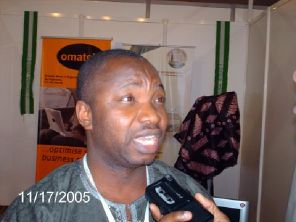
Also speaking, the General Manager of Omatek Computers Limited, the only Nigerian firm at the stand, Mr. Yomi Soyinka, tasked government to ensure continuous improvement on the enabling environment.

This, he said, would pave the way towards making Nigerian products compatible with foreign brands.

Stressing that why his firm is showcasing at WSIS-05 is to let delegates from other countries of the world know what efforts are being made by Nigerian firms towards bridging the divide and to enable them rank side-by-side with notable products in the world.

Wednesday, November 16, 2005

Nigeria, Egypt, four others lead benefactors of $100 laptop

Most populous nation in the black continent has been listed as first beneficiaries of the initiative to reduce the digital divide among developing countries through cheap laptops.

NIGERIA has been chosen along five other countries of the world, as the initial benefactors of the One-Laptop-One-Child initiative, says the chairman of the initiative, Prof. Nicholas Negroponte.

Other countries, according to him, are Egypt, India, Brazil/Argentina, China, and Thailand.
Making this disclosure at a media session Wednesday in Tunis, Prof. Negroponte accompanied by Mrs. MaryLov Jepsen and Mr. Alan Key, top members of the initiative, said that Nigeria is one of the six nations designated for the distribution of the initial $100 laptops through the governments.

Initial distribution of this model of laptops is expected by first quarter of next year, as he hoped that the Nigerian authorities would buy into the idea although interest has been shown by the government.

Why we partner with govts
Prof. Negroponte, who said he was in Nigeria last week, also noted though dealing with governments strictly is difficult, but the concept is because the laptops are slated for usage in improving standards of education mostly in developing countries.

“This is because education is a public good,” he said, stressing that it does not make sense to deal with people who are keen on making profits.

Emphasizing that open source is the best thing that could happen to the initiative as it would boost the project penetration.

UN support for $100 laptop
In his remarks on the initiative, the Secretary-General of the United Nations (UN), Mr. Kofi Annan, said that it is inspiring in many respects as much as it is impressive technical achievement.

“It is impressive technical achievement, able to do almost everything that larger, more expensive computers could do. It holds the promise of major advances in economic and social development,” he said.

He also lauded Prof. Negroponte and his team from the Massachusetts Institute of Technology (MIT), United States.

Nigeria’s interest
Speaking exclusively to correspondent, member of the board of the project in-charge of Nigeria’s phase from the Club of Rome, Mr. Roland Burger, revealed that President Olusegun Obasanjo had earlier on Wednesday accosted him, demanding to know when the laptops would be visible in Nigerian schools.

Mr. Burger accompanied by executive committee member of the Club, Prof. Raoul Weiler, said due to the interest shown by the president and his minister in Tunisia, at the second phase of World Summit on the Information Society (WSIS-05), a meeting has been scheduled between them and the Nigerian top government officials.

Strengthening the interest
This team, he said, would comprise the Minister of Science and Technology, Prof. Turner Isoun and Executive Vice Chairman (EVC) of the Nigerian Communications Commission (NCC), Dr. Ernest Ndukwe, and would be this Friday, to strengthen the drive for the computer which mass production is scheduled early next year.

“The president is active and has indicated interest that he would like to have the $100 laptops as soon as possible,” he said, even as the project team is expected in Nigeria next week to further discussion on the initiative.

Note for sale
Noteworthy, however, is that the $100 laptops is not yet in production and will not be available for sale to the public, but only be distributed to schools directly through large government initiatives.

No one has come to takeover ICANN’s role – Annan

Following pressures to know the fate of the Internet after the on-going three-day summit on Information Society in Tunis, the secretary general of United Nations (UN), Mr. Kofi Annan, has made it clear that no one has come to the second phase with intension to take-over the role of ICANN.

In a press conference Wednesday at the Kram PalExpo, Mr. Annan said that he did not envisage anyone has come to the summit with such notion in mind, especially the management of the internet.

“I don’t think that no one came to this summit to takeover the role of management of the Internet or that of the ICANN” he said.

Mr. Annan also thinks that the role of managing the technical aspect of the Internet root servers should be left to technical institutions.

“Lets assume that it is another country other than US, lets assume that it is Germany, do you think US would fold its hands. But what we are saying is that there should be a multi stakeholders’ participation,” he explained.

As for the likelihood of the Internet Governance coming up in the global summit, he said, that he would not give any definite answer to that, but “I think it should be given an opportunity to succeed”.

”As for the issue to come up again, I would not give you any answer but think it should be given an opportunity to succeed” he said.

On Internet access restriction in the host country of the second phase, Mr. Annan pointed out that the opportunity to host this event is an added advantage, because there is no longer doubts if Internet access is restricted in some countries, hence the summit is opening up this access via discussions.

“As I said earlier, that internet access is limited is of concern to every one here to discuss the issue because we are interested in internet access opening up” he said.

He maintained that since 2003, there has been some achievement in the area of deployment of Information and Communication Technologies (ICTs), which he listed to include improved number of access to internet, mobile telephone, tele-medicine and many others.

He did not foresee another summit on Information Society, at least, for now but there could be some review mechanism to be put in place, probably after five years.

“What is important is that your ideas and views are taken into consideration and it is the responsibility of those in government to fashion this views, otherwise there would be additional pressures,” he asserted.

Nigeria redeems pledge to DSF

Nigeria has redeemed its pledge to contribute the sum of 500,000 Euros (about N76,380,882.16), to the Digital Solidarity Fund (DSF), just as the nation is ready to provide office space for the regional office of DSF.

President Olusegun Obasanjo disclosed this while speaking at the DSF session held at the on-going World Summit on the Information Society (WSIS-2005), in Tunis.

Chief Obasanjo, who also is the chairman of the African Union (AU), said that the fund pledge was made in Geneva during the inauguration of DSF in March this year.

“During the inauguration of the DSF in Geneva, I pledged a
contribution of E500,000. This has been redeemed,” he declared.

In addition, his government has pledged to provide regional office for the DSF in Africa at the nation’s seat of power, Abuja and that office space to this effect, has been discussed with the President of DSF, Mr. Guy Olivier Segond, whom he noted, was in the country last week.

“I am happy to inform that Nigeria would provide the DSF with the assistance required for the immediate take-off of the regional office” he said.

He pointed out that the office when off the ground would have the task of mobilizing support for DSF in Africa as well as project monitoring and implementation.

According to him, the responses so far, on DSF has been on the increase and there is need for the board of governors to be constituted early and for more information on the objectives, funding sources, disbursement and management to be made available.

This is especially important to the rural communities that are the main targets of the fund’s project, who he said, would like to know to access the fund’s projects.

“I am confident that the DSF would be a catalyst and make significant contributions to help achieve a win-win situation for the goals and objectives we have set for ourselves at the Geneva and Tunis phases of the WSIS,” he said.

Meanwhile, one minute silent was observed to honour the Nigeria’s late first lady, Chief Mrs. Stella Obasanjo, who died recently in Spain during a surgery.

Utsumi optimistic about outcome of WSIS-05

Secretary General of the International Telecommunication Union (ITU), Mr. Yoshio Utsumi, has expressed optimism on the outcome of the second phase of the World Summit on the Information Society (WSIS-05) taking place in Tunis, the Tunisian capital.

Mr. Utsumi at a press conference Tuesday evening at the Kram PalExpo center in Tunis said that 173 countries’ ministers would be at the three-day event which begins Wednesday and last through Friday, November 18.

He said that the level of preparation is satisfactory, even as he expects the Digital Solidarity Fund (DSF) to succeed.

According to him, DSF is focused on supporting local government contributions which he expects to grow from its baby stage.

“We count on local governments to make contributions and its still a baby and must be nurtured to become a big tree,” he said.

Mr. Utsumi also recalls that about 70 per cent of the goals set at the beginning of the first phase have been achieved.

Stressing that when the idea of the summit started, it was hard to convince any of the heads of governments on the goals, saying he was glad that now the aims are being passionately proclaimed by these political leaders and even better than he could do.

“When ITU started this (process), no head of states want to listen, but now they speak about it eloquently more than me, meaning they are committed to this programme,” he explained.
On the raging fate of the Internet Governance, he said, that now IG is transparent because people are interested on how it is managed.

“May be like some opted, every one has to interconnect with each other like in the telecoms network,” he asserted.

Noting that over 8,000 villages are unconnected worldwide with Information and Communication Technology (ICT) and in order to connect them, a budget of about $1 billion is needed annually to support this course.

He also disclosed that about 50 heads of states are expected to grace the occasion, with estimated 30 coming from developing countries.

The scribe additionally said he look forward to a concrete mechanism, although many advanced countries were not keen on concrete implementation mechanism, but the least developing countries were concerned.

“I am expecting however, as much as possible a concrete mechanism,” he told newsmen, emphasizing that mere talking to each other by stakeholders, is very important to ITU.

Tuesday, November 15, 2005

‘Media needs funding … HA is beyond ICT coverage’

Internet as a new media is posing threats to the ‘old’ media with unpredictable future, reports Remmy Nweke at WSIS 2005 ground.

MEDIA as an agent of change would require public funding to survive in the next decades to come, says chief executive of Malaysiakini.com, Mr. Premesh Chandran.

Just as the motivator of the Highway Africa (HA) project at Rhodes University, Grahamstown-South Africa, Prof. Guy Berger, said that the initiative is not only interested in the coverage of Information and Communication Technologies (ICTs), through its Highway Africa News Agency (HANA).

Mr. Chandran and Prof. Berger made their views known as panelist in a session at the on-going second phase of the World Summit on the Information Society (WSIS 2005) holding in Tunis, the Tunisian capital.

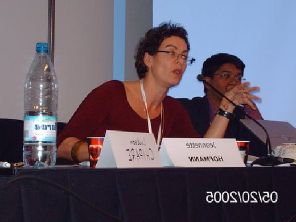
Other members of the panel included a German political scientist, Ms Jeanette Hofmann, who works for the Social Science Research Center Berlin and the founder of the Grassroots Media Inc based in the United States (US), Mr. Dan Gillmor.

Internet as threat
The Malaysian media chief said at the session tagged, “How does the Internet change journalism?” that the call has become pertinent due to the threat by the new media, pointing out that the Internet, for instance, has paved the way for both the old and new media to converge.

He noted that Internet journalism especially the ‘citizen journalism’ makes journalists to be responsible to their citizens.

This is because reactions to online stories could come in minutes rather than taking days as in the case of traditional media.

He also said at the event co-chaired by Messrs Luckson Chipare and Werner Eggert, that journalism is increasingly becoming a public good, which is confusing, but added that modern journalism is a shared space.

“Journalists need to be creative in order to be part of the media in convergence,” he said.
Therefore, he said, the media needs support to be able to deliver most of its expectations from the public.

Beyond ICT reporting
Prof. Guy Berger, on the other hand, said that HANA, is beyond reporting on ICT and Information Society (IS), emphasizing that the use of information for development also counts in the organisation’s priority.

Berger who was discussing the recent study of Highway Africa on African media coverage of ICT policies, lamented the anticipated absence of media in this area.

“African media websites are very weak, sometimes they are updated and some times it takes week,” he declared.

He stressed that journalists in the newsroom need to play catch-up to be able to compete with their colleagues in the coverage of international events, especially on ICT and information society.

Prof. Berger summed up by saying that African media also needs education, sensitization, access to the internet and skills.

Ms. Hofmann, said, Internet Governance requires cross national political solutions, even as Internet is the only media not controlled at the national levels.

Legitimacy
She called for legitimacy and accountability in practicing the profession, saying that only then would journalists live up to the expectation as one of the bridges between the people and technology.

“Journalists are those who would build on the Information Society,” she said, describing Information Society as “imagined communities”.

Self regulation
Mr. Gillmor in his contributions said that modern journalism should be based on the order of positive consciousness of individual practitioners.

He maintained that control over ‘citizen journalism’ otherwise known as bloggers has been generating heat and advocated that it be allowed to regulate itself, than government marshalling out regulations.

Taxi driver's impression of WSIS-05


Arriving Tunis from Berlin-Germany early on Sunday morning could pass for one of those flight’s odd timing which affords visitors only a short sleep before the day fully breaks.
It became more interesting when you discover that even a taxi driver has his own impression of foreigners and indeed the world gathering in the soil of Tunis.
And as the second phase of the World Summit on the Information Society (WSIS-2005) gains momentum in the host country’s capital, Tunis, most Taxi drivers in the city are also looking forward to a booming business week.
Taxi drivers in Tunis are very vibrant especially if you really want to see the city in and out, although their charges are costly when considering the exchange rate of the country’s Dinar currency, which is almost at par with the United Sates Dollar.
Most taxi drivers’, who spoke to correspondent on WSIS, said they were excited about the summit and what it would bring for the citizens of Tunisia.
One of them, Mr. Sadoq Ahmed informed that he learnt about the summit through the promotions given it on the state-owned electronic media such as television and radio.
The man in his 50s, said that he expects good business during the week, especially from 16 to 18 of November, 2005.
According to him, he heard about the summit from a local TV station.
He also said that the report indicated that about 17,000 participants from various countries of the world would be in Tunis for the summit.
Mr. Sadoq went on to say that the Tunisian Capital, has constant electricity and SIM cards for mobile phones, for instance, are cheap as they cost five Dinars.
Wearing smiles throughout the trip from Avenue Ouled Haffour to La Marsa in Gammarth it was undoubtedly excited as the summit takes offs Wednesday, November 16.
Mr. Sadoq further said, he hopes that the outcome would be beneficial to common man like himself, a taxi driver.
Some taxis in the city are decorated with the symbol of the World Summit on the Information Society.