" ITREALMS: 2006-01-08

Thursday, January 12, 2006

Blogging as a trend in Nigeria

Features of the week:

With the debut of the NigerianBloggers.com recently, Nigerians are catching the bloggers’ fever, reports REMMY NWEKE.

Second slavery
AFTER listening to the immediate past president of the Nigeria Internet Group (NIG), Dr. Emmanuel Ekuwem and his counterpart at the Information Technology (Industry) Association of Nigeria (ITAN), Mr. Chris Uwaje, and some other notables in the Information and Communication Technology (ICT) industry, on the need to minimize download of contents from the World Wide Web (www) and maximize upload of local contents for sometimes, a young Nigerian graduate, Mr. Isola Isiewu, was extremely worried.
His worries bordered on how he, in his late 20s could contribute to make this kind of change in the area that is of utmost need, a realty. Based on these experts’ preaching, continuous download would further endanger this generation into what all agreed would be ‘second slavery’ or ‘self enslavement’ of 21st century.
Escape from second slavery
And for such to be allowed to happen in this age of Information Society is not only unacceptable, but also unpardonable.
Thereafter, at a workshop in South Africa, he heard one of the young speakers talking excitedly about his blog and blogging, just three years into another century.
At the end of the workshop, Mr. Isiewu decided to search the Internet for what blog is all about and came around ‘blogit,’ he registered but due to lack of constant access to the Internet except at the cybercafe where the idea went to bed literally for another one year until he participated in yet a different workshop, where the issue of weblog re-echoed.
Boosting blogging
By now the advent of the Global System for Mobile communication (GSM) had aroused competition in the telecommunications industry for Private Telecom Operators (PTOs) especially for the Fixed Wireless Access (FWA) operators, to include Internet access on their networks as a Value Added Service (VAS), mostly, dial-up service.
Consequently, on return, he took a firm decision to have Internet access at home as a way of bridging his own digital divide by linking his family telephone at home to the Internet, resulting in a dial-up access, which is better than nothing.
Though, he has to deny himself some good clothing with the little income, less than a $100 monthly he earns as a System Administrator in a Lagos suburb. Mr. Isiewu, with the support of relatives, bought a second-hand desktop Personal Computer (PC) and soon after, he logged on to create his own weblog, where he has continued to raise issues of importance to his generation with his peers both locally and globally, even some of his friends have taken after him in creating their own weblogs, hosted somewhere in Asia or in any of the developed countries for f-r-e-e, and with already formatted webpage outlay; just feed in their text and post or publish; that’s your blog.
Weblog
According to the searchwebservices, a ‘weblog’ is often shortened to ‘blog’ or written as ‘web log’ or ‘weblog’, which refers to a personal website with initially non-commercial origin that uses a dated log format that is updated daily, or as frequent as possible, of course, with new information centering on individual thoughts streamlined into periodic articles normally in reverse chronological order, which could be accessible on a specific subject with some sub-themes, such as money, transport, communications, technology, education, travel, tourism, health, rental and books, just name it, there is a blog for it.
It may also contain recorded ideas of an individual like a personal diary or one open to others for commentaries, though it could be moderated. Also, noteworthy is that weblog is a name of a South Korean software that analyzes website’s access log and reports the number of visitors, views, hits, most frequently visited pages, and so on.
In the beginning
The first weblog was traced to the renowned father of the Internet, Mr. Tim Berners-Lee at the European Laboratory for Particle Physics (CERN), the first website, http://info.cern.ch/, which contents sooner than later, pointed at all new sites as they emerged.
Proprietor of the Scripting News weblog, acclaimed as the longest running weblog on the Internet, Mr. Dave Winer, notes that weblogs are usually updated sites that point to articles elsewhere on the web, often with comments and there is also friendship and politics between those who run blogs referred to as ‘bloggers’, they point to each other based on interest in all kinds of structures, graphs, loops, etcetera.
Mr. Winer was quoted by Weblogs.com news as saying that nowadays, hundreds of thousands weblogs exist and demand has continued to grow unprecedentedly, just as his firm UserLand manages two weblogs, namely Manila – a centralized server-based content management system; and Radio UserLand, which provides easy and powerful weblogging from the desktop.
He did his first weblog in February 1996 as part of the 24 Hours of Democracy website, which helped to create community with common interest and has kept them together, in addition to a long mailing list that was hosted by the American On-Line (AOL) and in April of the same year, metamorphosed into newspage for Frontier, which later migrated to Scripting News on April 1, 1997.
Other early weblogs include Robot Wisdom’s, Tomalek’s Realm and CamWorld managed by Cameron Barrett. By 1998, there exist about 23 weblogs, according to a collection of links made by Jesse James Garett, editor of Infosift, who in turn by November of that year offered it to Barrett for publication. This publication spurred other bloggers to send in their Uniform Resource Locators (URLs); short strings that identify resources in the web’s documents, for inclusion. These motivated Peter Merholz, contended by Rebecca Blood, editor of ‘Rebecca’s Pocket’ on ‘Weblogs: A history and perspective,” to suggest the word ‘wee-blog’.
By July of 1999, what was known as weblog – listing of contemporaries’ URLs advanced into an explosion as Pitas introduced the first known free build-your-own-weblog tool, then followed in August by the Pyra’s launch of Blogger and Groksoup influencing this bandwagon to really explode, even as Dave Winer introduced ‘Edit-This-Page” and Jeff Campbell’s Velocinews not excluded. All these were free and designed to encourage individuals to easily publish their own weblogs without much ado.
Although this trend of HyperText Markup Language (HTML) codes are fast changing even as those who are not masters of the codes now own and manage weblogs, which proprietors have continued to simplify its management system by making it another ‘Open Source’ benefit to the society, mostly with post-Bloggers’ explosion, which modules have become exemplary in nature.
Also history has it that the likes of Bloomberg, Boing-Boing started off as blogs, but today have been transformed into reliable news feeds and making their money coolly. Who says a Nigerian cannot do it?
Enter NigerianBloggers.com
This trend has persistently grown over the years in developing countries and Nigeria is not an exception as some web enthusiasts recently came up with the NigerianBloggers.com, a network founded by Mr. Kayode Muyibi, a young Nigerian student entrepreneur based in Cyberjaya Malaysia, in collaboration with the likes of the first Nigerian Information Technology Youth Ambassador, Mr. Gbenga Sesan, among others.
NigerianBloggers.com, is meant to increase and sustain blogs from this part of the globe, according to Mr. Muyibi. He informed that the network, http://www.nigerianblogers.com, is to act as the nation’s blog aggregator with different categories including technology, business, news, blog, search and a host of others.
He explained that the network was primarily developed as a venue to unite all Nigerian bloggers around the globe via syndicating their content and discussions through its forum.
“We’re really impressed by some Nigerian blogs and we decided to invite them to join our forum at http://forum.nigerianbloggers.com,” he said.
Stressing that the network encourages bloggers to invite their Nigerian friends too to join the network, even as the membership is free, bloggers must be over or exactly 13 years of age at the time of joining the network.
“Our main aim is to encourage Nigerians to start blogging about topics that interest them,” he declared, highlighting that this plan is expected to be achieved through aggregating and online forum, which offers the creation of an environment for everybody to read.
“This entails saving Nigerian blogs from isolation, which has been one of the main reason why Nigerians are discouraged to blog,” he noted.
Currently, he said, the network is open to suggestions and also volunteers as he looks forward to seeing Nigerians join the forum and to help encourage more Nigerians to start blogging.
“We need more Nigerian bloggers especially in the technology, culture, and arts department,” he said.
Membership of NigerianBloggers.com, as at the time of going to the press is over 50 as indicated in the forum, which cut across all professions globally.
Catching the fever
The beauty of it all as far as weblogging and the nation are concerned, is that Nigerians are making effort to catch up with the rest of the world and need support of the stakeholders, especially that of the Internet Service Providers Association of Nigeria (ISPAN) and PTOs who now list Internet service as their package, as well as via advert placement, even so, as the country prepares for unified licensing regime anticipated to bring about keener competition and probably better Internet connection at cheaper rate.
It is however, alarming that most Nigerian bloggers currently are resident outside the nation’s shores, an indication that something needed to be done with nation’s infrastructure.
In places like Asia, bloggers have grown to form a community of blogsphere and even organize awards annually to encourage members who toil daily sitting before their computers or systems as the case maybe, just as NigerianBloggers.com aims to ensure that not only the trend of download is changed to uploads, but equally to create a voice for Nigerians in diaspora to say it the way they feel about it in another format which is unusual from the norms, which is the news medium.
Best-of-Blogs
It could also be timely to begin the Best-of-Blogs (BOBs) awards for Africa, taking after BOB currently organized by Deutche Welle International in collaboration with Reporters Without Borders (RSF) with little or no attention given to Africa as a region, considering the continent’s peculiarity.
Although a journey of 1000 miles begins with a step, the step taken by NigerianBloggers.com is, no doubt a resounding initiative that should be sustained, especially with availability of relevant infrastructure locally in Nigeria – from cheap reliable PCs to constant power supply and telecom equipment to affordable Internet access.
Benefits
One good thing about the coming of blogs the way it is presently, is that apart from fronting frantically as an ‘Open Source’ for expression of oneself, it affords whoever cares to start blogging in a time as short as 10 minutes; it also cushions the effect of hosting charges for bloggers, in addition to eschewing cost of designing your web page as there are several, to choose from.So, just have Internet access and join the fray of bloggers like Isola Isiewu did recently, you would definitely enjoy it; keep blogging.

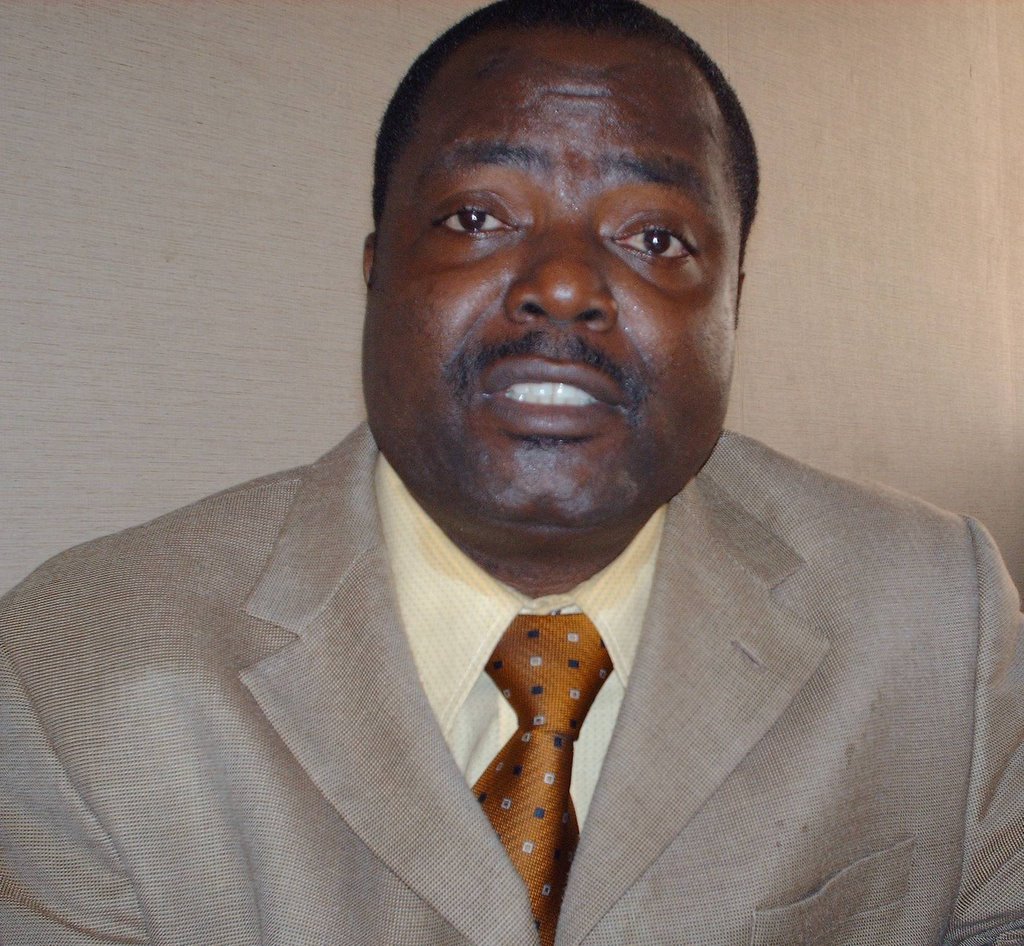
Africans should invest on submarine cable, satellite – Expert

AFRICAN entrepreneurs have been urged to invest on sub-marine cable and satellite so as to avail bandwidth competition in the Information and Communications Technologies (ICTs) sector, in the region, says the chief executive, eShekels Limited, Mr. Fola Odufuwa.
According to him, non-expression of interest on satellite or sub-marine cables by African entrepreneurs have influenced the cost of bandwidth to remain upward on the continent and particularly in the West Africa region.
Mr. Odufuwa in a chat with ITREALMS recently after a presentation at the Open Source Initiative for West Africa (OSIWA) organized workshop on ‘Affordable bandwidth for West and Central Africa’ in Sally, Senegal, said that inadequacies of bandwidth in Africa was due to lack of interest by African investors in taking lead by investing on satellite or the sub-marine cable infrastructure.
He noted partly that non-liberalisation of the sector has been an impediment to having sufficient bandwidth, just as lack of competition.
Pointing out that on the continent, there are just two sources of
providing bandwidth supply, namely through the sub-marine cable SAT-3 also known
as from Atlantis to Dakar and the rest are covered by
satellite.
Current situation, he said, is the one that has about six fleets of satellites all over Africa none is owned by an African businessman or woman.
The rate being paid for bandwidth on the continent for now, therefore, is several times above what is obtained in developed economies.
In Africa, Mr. Odufuwa, who heads a technology-based research firm, said, cost of bandwidth is very, very high, while in the developed countries, they pay quite low prices for Internet access.
“So, you find in developed economies or rich countries paying extremely low prices for Internet and poor countries such as found in Africa paying extremely high for bandwidth,” he asserted.
Emphasising that this anomaly is caused by what he described as suppliers power.
“Supplier has a power, and is exhibiting significant market power because there are few of them and there is no competition,” he said.
SAT-3, he cited as an instance, saying its just one and is even in the hands of incumbent operators, which is usually the national carriers.
“Who have no reason beyond social responsibilities for most of them,
who have no commercial reason to maximize the investment,” he
declared.

Mr. Odufuwa also said that by allowing consumer and offering lower prices in order to have high volume of people these incumbent operators could still have some margins or even better margins.
Africa, he pointed out, needs to liberalise the availability of bandwidth very quickly by fibre optic through authorizing and encouraging people who have the wherewithal to invest and install submarine cables.
“SAT-3 cost about $250 million connecting South Africa to Portugal, now you can install the same work with one-third of that price,” he said.Stressing that these are things Africans do not need to go source for donor funding or World Bank before embarking on such a project.

Submission on gTLDs policy extended

SUBMISSION of papers for the proposed introduction of new Generic Top Level Domains (gTLDs) names called by the Internet Corporation for Assigned Names and Numbers (ICANN) and Generic Names Supporting Organization (GNSO) council has been extended till January 31, 2006.
The call for public comment was in view of policy development for the introduction of new gTLDs process.
A generic top-level domain (gTLD) is a top-level domain used by a class of organizations. The generic top-level domains first implemented, in January 1985, were six but has increased to over 16 as at December 2005.
gTLDs are three or more letters long, and are named for the type of organization that they represent. Some of the gTLDs currently existing include .aero - for the air transport industry, .biz - for business use, .cat - for Catalan language/culture, .com - for commercial organizations, but unrestricted, .coop - for cooperatives, .edu - for educational establishments, and .gov - for governments and their agencies in the United States among others.
The GNSO council has voted to launch a policy development process on new gTLDs and to establish a work programme in consultation with the ICANN staff and the Board.
As part of this process, the GNSO council has extended the public comment process until January 31, 2006.
A press statement from ICANN said, that with the recently launched Policy Development Process (PDP) on new gTLDs, the GNSO is inviting organizations and individuals to submit substantive papers on the issue areas identified in the terms of reference for this PDP:
The reference states that if new generic top-level domain names should be introduced, and given the information provided and any other relevant information to the GNSO, the council should assess whether there is sufficient support within the Internet community to enable the introduction of new top-level domains.
If the above becomes the case, additional terms of reference are applicable including the selection criteria for new Top-Level Domains, which must take into account the existing selection criteria from previous top-level domain application processes and relevant criteria in registry services reallocations, develop modified or new criteria that specifically address ICANN’s goals of expanding the use and usability of the Internet.In particular, the council would examine ways in which the allocation of new top-level domains could meet demands for broader use of the Internet in developing countries.

AJAYI: Change agent in ICT

icon:

When the evolution of the worldwide web (www) embedded in the world of Internet began to emerge and attract public interest in the early 90s, especially in a developing country like Nigeria, Lanre Ajayi, had already started making names in the world of Information and Communication Technology (ICT).

Although a staff of the Nigerian Telecommunications Limited (NITEL) at that time, Ajayi was in the team selected to develop a Nigerian digital communication system as far back as 1992 at the Massachussette Institute of Technology (MIT) in the United States of America (USA) while he was undergoing his post gradute programme at home.

Currently presiding over PiNet Informatics as the Managing Director cum Chief Executive, since its establishment 11 years ago, Mr. Ajayi came up with a number of designs while working in NITEL’s Research and Develoment Department, which were patented by the company and on the strength of which he won several awards both locally and internationally.

He is also President, Nigeria Internet Group (NIG) just as he is a long standing advocate of Internet evolution, which ignited his desire to conceive the idea of forming the group to further educate and facilitate the Internet penetration and education in Nigeria.

He proposed the formation of the NIG in 1995, thus becoming a co-founder and in December 2005, barely 10 years later, he became the president.

He had served as the vice president, NIG since 2003, after also serving as the vice president, Internet Service Providers Association of Nigeria (ISPAN) between 2002 and 2004.

The PiNet chief while representing ISPAN at the continental level- the African Internet Service Providers Association (AfrISPA) he also emerged the vice chairman of the group where he is currently sitting on the board as well as that of ISPAN.

Ajayi represented Nigeria at the United Nations Economic Commission for Africa (ECA) at the National Information and Communication Infrastructure (NICI) meetings, which brought the essence of ICT implementation agency to the forefront and which eventually led to the establishment of the National Information Technology Development Agency (NITDA) in the country in 2001.

Having obtained both his Bachelors and Masters Degrees, in Electrical Engineering at the University of Lagos, (UNILAG), he worked for NITEL for 11 years before establishing PiNET Informatics, which is one of the first Internet Service Providers (ISPs) in Nigeria.

A member of the Nigeria Society of Engineers (NSE), Mr. Ajayi also belonged to a number of other professional groups such as the Internet Society (ISOC) and a fellow of the Nigeria Computer Society (NCS).

Being one of the earliest ISPs on the African continent, and having the foresight, PiNet Informations, pride itself, with a number of innovative offerings in order to boost the usage and acceptability of Internet across all levels of the society.

Some of these include the offer of regular dial-up pay-as-you-use Internet service branded as LogOn, the HostDirect which enables individuals and corporate organizations to implement adequately what is known as complex Internet projects which addressed the users’ specific needs in the areas and deployment of Local Area Network (LAN) and Wide Area Network, DomainDirect (DD), training and consultancy.

PiNet has expanded to focus beyond Internet solutions to include providing access to a large customer base and through Very Small Aperture Terminal (VSAT) implementations under the firm’s BroadbandDirect scheme.

Renowned for outstanding technical support provided by highly professional and courteous personnel, Ajayi’s PiNet has remained focused on its target of delivering optimal Internet services to Nigerians.

An advocate of cheap and affordable bandwidth on the continent, Mr. Ajayi spends most of his time designing services that would be favourable to the Nigerian economy for people of all stages in the society.

He was elected to lead NIG early in December 2005, and since then has been an outspoken professional, especially on issues of ICT and Internet in particular.

Mr. Ajayi, whose presence at most international ICT events on the continent is sought has as his latest passion, the drive to ensure that Nigeria Internet Exchange (NIX), begins especially now that the presidency has developed the interest and even come to understand its importance.

NB:icon also published in Daily Champion

Enter Firmswitch.com

Firmswitch.com, a high profile firm that renders online corresponding consultancy services to organizations, corporate executives and individuals proffering solution has commenced operations in the country.
The company’s chief executive, Mr. Davis Awanedi, made this known in Lagos, saying that their services are exceptional, innovative and structured to provide consistent relevant solution no matter the location of the client.
“Firmswitch.com has the sole goal of offering real corporate solutions,” he affirmed.
Established in response to the difficulties faced by some organizations, corporate executives and individuals without physical offices or avenues, he said, that with Firmswitch.com, such difficulties could now actually be overcome and meeting with their clients as scheduled possible, as his firm has the wherewithal to ensure transactions and services to both parties would be comfortable.
Mr. Awanedi emphasized that his company works to provide instant solutions to these problems for starters or big players that wish to save themselves resources of buying or renting a mega office with furniture and manpower needed by providing a platform and avenue where clients would be able to physically meet with their service providers and vice versa.
Also, he said, Firmswitch.com registers business names for corporate bodies and individuals without a registered business name with the Corporate Affairs Commission (CAC) of Nigeria.
“This online service is very convenient, as it enables your business to be processed for registration without you having to stress oneself going to the Corporate Affairs Commission,” he said.
This correspondence service provider also runs a background check service on companies, organizations, and corporate bodies to determine whether a company or entity exists and to provide basic information about the company in order to assure business men, corporate executives, organizations and individuals in and outside the country of genuineness and availability of such companies in the country.
This particular service, he said, would also help to allay the fears of corporate and business people who want to do business in Nigeria, about fraudsters.
Firmswitch further does business name reservation for people who wants to reserve a business name with CAC to be made available for you for use at anytime but for them specified period of two months.
Additionally, the chief executive said, the company runs a hotel booking and reservation service in excellent and reputable hotels for the same class of people in and outside Lagos.
Firmswitch provides cutting edge correspondence services with a focus on providing avenues and platforms for its clients and their customers to meet and make business schedules, appointments and business relations easy and convenient. Describing Firmswitch’s approach as very innovative, thus adding value by simplifying the multiple task of business networking for organizations, corporate executives, and businessmen and women.

Odinma tackles BPE on NITEL’s misery

Nigerian-born telecommunications consultant based in the United Kingdom (UK), Prof. Augustine Odinma has blamed the Bureau for Public Enterprise (BPE) over the current misery state the Nigerian Telecommunications Limited (NITEL), has found itself.
ITREALMS recalls that fortnight ago, efforts to privatize NITEL
hitted yet another rock, following drastically under-pricing of the organization
to the tune of $256.5 million by Orascom, which is less the amount the mobile
arm, Mtel, paid for its license in 2001, which was $258 million.

The failure to sale NITEL was also attributed to poor information management on the part of the BPE on the agency’s website, which was reportedly obsolete.
Reacting to the latest, Prof. Odinma said what the nation is witnessing in respect of the failure is the aftermath of mismanagement perpetuated by BPE in 2002.
He noted that in 2005, Nigerians, especially some expects were enthusiastic on the number of companies that showed interest on NITEL privatization bid.
“But I was skeptical because the condition that made the 2002 sale
to IIL to fail has not changed,” he declared. As said by him, the telecom
market has not improved since year 2002, but has merely become stable since
2004.

This much, Prof. Odinma said, was part of submission he made to the National Assembly on March 15, last year, in a study commissioned by the House Committee on rot perpetuated by the Pentascope International as management contractors to the entity.
Stressing that he equally updated the analyses and sent same to the President, Chief Olusegun Obasanjo, on May 3, 2005.
Emphasising that in the letter, he had suggested an alternative privatization approach due to the fact that he believed that the core investor’s approach to the sale of NITEL would not be optimized.
“If you look at the whole planning that took place, regarding telecom and the industry since 2001, it has been carried out by non-telecom professionals,” he decried.
Pointing out that the nation has just realized this fact in the Aviation industry, in that optimum results cannot be achieved if top managers are non-professionals or experts in that particular field.
This, he said, has been his clamour for the telecom industry over the years.
He specifically quoted section 9 of the report, which reads, “Could it not be that most of them, investors, think that NITEL is now a run down company, and as such could be acquired at a ridiculous price”.However, he insisted, “Yes, we have to privatize NITEL, but not at all cost”.

MTS’ base stations up @ Ketu, Onike

MTS First Wireless has announced the commissioning of some new base stations in Ketu and Onike areas of Lagos, last weekend.
First Wireless also said that with the commissioning, residents of Ketu and its environs areas like, Magodo, Ojota, Mile 12 and Owode Onirin as well as those of Onike, Adekunle, Ebute Metta, Iwaya, Akoka, and parts of Bariga become the latest additions to the MTS network.
Chief Marketing Officer at MTS, Ms. Uche Ofodile, said the commissioning of the base stations in Ketu and Onike is part of an overall plan to expand first class telecom services in the Lagos areas.
“We are really excited about this development, which is in line with the new zeal and aggressiveness of the new MTS team to build a robust network that would provide world-class services to its current and potential subscribers,” she said.
Ms Ofodile stressed that MTS would continue to improve, expand its services and offer value for money, while continuously listen to customers and respond to the needs of the market appropriately.
She also said the addition of Ketu and Onike into the fold was timely, coming at a time when the company was offering a special holiday promotion tagged “Jaara Mathematics”.
The Ketu and Onike cell sites, which come on the heels of the launch of the company’s second service area network in Abeokuta, Ogun State, is the sixth in the aggressive expansion drive of the new MTS management led by Mr. Dem Eleso, a telecom expert.
Meanwhile, the promotion tagged ‘Jaara Mathematics’, as said by Ms. Ofodile, afforrds customers to now buy a Dowtel desktop phone for N15,000 and get a ZTE X100 mobile phone for free.
MTSfirst is also offering a massive reduction on the ZTE X100 mobile phone which sells for N10,000 for one, now being bundled for N13,000, for two mobile lines, giving subscribers a saving of N7,000.
She explained that there is N500 worth of free credit for both the new phone bought and the free line respectively.
Subscribers, according to her, could top their credits with any denomination of recharge card from Mtsfirst during the promo and receive an automatic 10 per cent of additional credit.
This promotion, Ms. Ofodile said, would last till January 31, 2006.She further said dealers of Mtsfirst are not left out as any dealer who activates 100 Dowtel Desktop phones with the associated free mobile phones, or 200 ZTE X100, will get additional 10 ZTE mobile phones free.

LG’s PMC on display @ CES-06

The 2006 International Consumer Electronics Show (CES) ended Sunday with LG Electronics’ Portable Media Center (PMC) on display, attracted applause from participants.
The praises for PMC came at the keynote session held at the Hilton hotel Las Vegas, United States, and graced by Bill Gates and Intel’s chief, Paul Otellini.
Line up at CES 2006 from LG includes its 50-inch Viiv Plasma Digital Product (PDP) TV with Digital Living Network Alliance (DLNA)-based Intel digital home network standard (Viiv).

The future of Information Technology (IT) was visible in demonstration of these products at such world-class exhibitions, said the Chief Technical Officer (CTO) LG Electronics, Dr. H.G. Lee, just as the firm would continue to provide value to its customers, with differentiated technology.


Convergence, Dr. Lee noted, is taking place at a rapid pace, offering combined home appliance and IT tools.
The PMC demonstrated by Bill Gates is equipped with the second-edition platform from Microsoft, playing media files at stable high speeds and supports multimedia files with 30 GegaBit (GB) of memory.
PMC, LG further explained, works not only with audio and video files but also multi-format video files on 4.3-inch wide screen for 16:9 formats.
And in terms of TV-out functions, users could watch PMC video on TV and record their favourite TV shows on it and then play them back later, anywhere, and at anytime.
PM70 features a personal information management function, similar to those offered by a conventional Personal Digital Assistant (PDA).
It also accesses mail, address book and schedule from Personal Computer (PC) through Microsoft’s Outlook programme.
Also, speaking on the LG’s 50-inch Viiv PDP TV, unveiled by Intel’s chief executive, Mr. Paul Otellini, said it connects to Intel’s DLNA standard Viiv PC through not only wireline Ethernet but also through wireless Local Area Network (LAN) 802.11a/b/g.
The remote control, he said, allows consumers to play movies, music and view photos on a TV screen from a PC.
This also offers access to Video-on-Demand (VoD) and music streaming via the Internet.
The 50-inch Viiv PDP TV shares and controls data with a DLNA equipped PC, set top box, Digital Video Display (DVD) player and digital camera.
LG Electronics, is a quoted firm at the Korea Stock Exchange (KSE) and an acclaimed global leader in providing cutting-edge, convergent electronics, information and communications products designed to meet the diverse needs of fast-changing consumers.

Dowdell pleased with APC performance

President and chief executive of the American Power Conversion (APC), worldwide, Mr. Rodger B. Dowdell, Jr, has declared that he is pleased with the firm’s performance despite disappointing show for the third quarter 2005.
“Although the quarter came with some disappointments, I want to reiterate that overall, we are pleased with our performance and the progress we are making toward our goals,” he declared in the firm’s report for the third quarter released recently.
He said that APC was happy to see some leverage in its investments
as revenue growth outpaced operating expense growth, “we are not backing down
from spending and our plans call for continued investments in this area to meet
our long-term objectives and drive our top line”.

APC, he said, is focused on identifying ways to help drive waste and excess expense out of operations, and this is not something that will happen overnight.
“We are committed to operating as cost-effectively and efficiently as possible,” he told newsmen.
Some factors, such as product and segment mix, material costs, and currency, Mr. Dowdell said, would continue to be unpredictable but he expressed the believe that APC could do a better job with the areas within its control.
The company’s President also disclosed that APC revenue for the third quarter of 2005 was $512.3 million, which was, up by 16 per cent.
“Finally, as an example of the strategic investments we are making to build our business, we recently expanded our Network Critical Physical Infrastructure (NCPI) offerings with the purchase of NetBotz, Inc.,” Mr. Dowdell said.
According to him, the technology that NetBotz brought to APC is a perfect fit for enhancing security and management of NCPI applications, key platforms have been identified as essential components of a complete NCPI solution.
This acquisition, he explained, is an example of the commitment APC has to continuously deliver increased value to customers with the industry’s most complete and innovative offerings, and affirming, “we have already uncovered incremental potential opportunities”.
The company believes that the non- Generally Accepted Accounting Principles (GAAP) results, that is, results excluding certain charges or one-time events, described in this release for the third quarter, 2004, are useful for an understanding of its ongoing operations because GAAP results include financial results not expected to be part of the company’s ongoing business.He enlightened that APC does not currently believe the charge for excess inventories and the reduction in income tax recorded during the third quarter 2004, will reoccur in future quarters, declaring that non-GAAP results are not a substitute for GAAP results.

I was inspired to offer call services – Okechi

Interview:

Operating a call centre in a rural community of Awba-Ofemili in Awka-North local government area of Anambra State, may not be ideal for an average Nigerian graduate. Samuel Okechi, in this interview with Senior Reporter, REMMY NWEKE, says he has an inspiration to grow this service only if a help would come.
Excerpts:


How is the reception that you’re able to be making calls from this village? Also are there customers and are you making enough calls per day to sustain the business?
Well, providing a call centre service in a village like Awba-Ofemili, is just managing, because people do not normally make calls. They make calls once in a while, and even if they want to make a call it would be just a minute call, then they would now tell their relations to call them back.
So, they don’t make much calls and atimes before we finish a card, it would take up to two to three days.
How do you manage your customers’ demand to receive calls only, do they pay and if yes, how much?
We offer them such a service by giving them the opportunity to receive calls only, but they pay N10.00 only.
For you to have reception here, how did you go about it?
We’re connected to antenna because there is no service here. It is through this antenna, which boosts service that we now make calls. Without that antenna, we cannot make calls, because there is no base station around; it is far from our place.
Which means if you remove the antenna link from your phone, it would not have service at all?
There would be limited service, coming on and off.
What inspired you to start this business in a rural town like Awba-Ofemili?
Anyway, you know, a journey of 1,000 miles begins with a step. I looked at it as something inspired by the spirit of God. I believe it was the spirit of God that moved me to start the business because I know also that people have been doing it, so I know I could make it.
Do you find it encouraging offering a call centre service like this in a community?
Yes, it is encouraging because we have a lot of graduates who are not doing anything for a living.
It is encouraging also because one has to start from somewhere, especially for those who have not gotten any other work to do. And even for the ladies instead of staying idle. As you know an idle mind is a devil’s workshop. So they have to start up with something.
Do you think they’re embracing it, that’s, the youth like yourself embracing this kind of service here in Awba-Ofemili?
No, no, no! Most of the youth here and of today, need quick money. That’s a means that offer them money very fast. They don’t depend on this N10, N10 or N20 of a thing. They see it as waste of time and of somebody wasting his or her own generation.
So, why don’t you think the same way?
Anyway, it depends on individual differences. I believe that through that I can get connection through somebody, who would now help me to better my life from one business to another, maybe, from there I can now migrate.
Do you have any plan to expand this business into full rural communication centre kind of business, so that when people come, you can offer them phone services, typing or computer typesetting services among others?
Actually, if I have money I planned to establish this in a bigger way, thereby reducing the cost of calls in this community; making calls from villages like ours are very, very costly. We make calls here at N40, N30, depending on the network the customer chooses.
So, we plan that maybe, if I have money I would have computer and Internet at least, it would help people and they could come, browse and go. They would also call their relations outside and in the cities. It’s a nice idea of making it in a better way.
Do you have an electronic mail?
No, not yet, but I hope to have one some day.
But do you have any plan to approach any organization based on these plans of yours, so far for the expansion?
No, but if I have any link I would really appreciate it and would approach such people to assist, so that I would boost the chance. It is human beings that would still do it, especially in Nigeria, some day, sometime. So, if I get an organization that would assist me, in fact, I would appreciate it.
What of sending Short Messaging Service (SMS), do you offer it?
Yes, at the cost of N20 per page or N30 for two pages.
How much is a call here?
We charge N30 for Glo-to-Glo and then Glo-to-other network is N40 per minute.
Is it only Glo that you are using to make calls here?
No, I am using also MTN. You know here, we pay monthly Booster N2,500, though it has now been increased for MTN, that is why the price is like that, but we hope to reduce the price as soon as things get better.
How and where did you get the information concerning this call packages by MTN and Glo that you are using now?
Well, I got the information through the Nigerian dailies and television, then I told my elder brother that I have to start this and he gave his blessings. I started it, now I have up to three lines; two Glos and one MTN.
Which of these did you start with and when exactly?
I started with Glo premium and that was last year October (2004). I started with one line, which is the Premium, from there to ProfitMax and from ProfitMax to ProfitMax Plus. You know the operator started changing its packages and we have to change too to remain in business.
So, one year after you began this call service here, how would you rate your life?
As par what you asked, the issue is that the people are getting used to me and I have gained popularity in this type of business. I do also assist the villagers who are not privileged I do help them and it has even helped me because I have opened upto three centres.
There are two at Omo in Anyamelum local government and one here in Awba-Ofemili in Awka-North local government both in Anambra State, known as Better Communication Services.
How do you manage three of them considering the distance?
We are managing three of them and God has been helping us, at least in a month, we take the Booster and spend over N20,000. God has been too kind to us, because here in the rural community like Awba-Ofemili, there is nothing like electricity to charge our phone batteries. We buy fuel to charge our phones through the generating set and despite all the tears and wears, we are encouraged to continue.
What of the ones at Omo and do you have some people working for you there?
Yes, I have some people working there for me.
Do you pay them and how much per month?
Yes, I pay them N5,000 (about $50) per month each.
Do you recover such expenses at the end of the day?
No, I don’t recover them but I hope that one day I would. Just like I said earlier a journey of 1,000 miles starts in a day with a step. You know, when you start a business, you should not expect to make profit immediately, but after some months, people would get known to you, then you would get more customers and by getting more customers, your business would continue to grow and you have to reduce the price, because the lesser the price the more people would be coming.
Is it the same tariff you are charging here in Awba-Ofemili that you charge at Omo?
No, it is not the same. Omo is N20 or N25 now.
Why?
It was due to then, when we started, we were using public power supply.
So you have power supply there?
Yes, we do.
As it is now, what would be your message to other youths; your friends and those you left school the same time with who probably are still unemployed?
If they can, they can start some thing like this or better still, if they have younger ones they can start up this business, instead of them staying idle so that they would be doing it and growing gradually.
How did you learn about the antenna?
Somebody told me about it at Upper Iweka, from Okoh town, because they have a similar problem like ours in Awba-Ofemili.
What sort of antenna are you using?
I am using Yagi antenna 36 DB, although there are also 14 and 24 but 36 can boost the service very well, especially where the mast is very far.
Does it mean that each of your phone sets have an antenna?
Yes, each of them is connected to an antenna and different antennas at that and I use Yagi 36 throughout.
How much did you buy that and from where?
I bought it N12,000, about $100 each at Upper Iweka in Onitsha.
Who mounted them for you?
I mounted them by myself, I am an engineer by profession. I read Mechanical Engineering and in my fourth year we did electrical electronics, so the little knowledge I have in that I applied it. I attended the University of Nigeria Nsukka (UNN) and graduated in 2004.
What is your age?
Right now (December 24, 2005) I am 29 and by January 2006, I would be 30 years.
Congratulations in advance.
Thank you.

Alternative approach to privatize NITEL – Odinma

LONDON-based Nigerian Telecommunications expert, Prof. Augustine Odinma, has prescribed an alternative capsule to solve the hiccups in the efforts by the federal government to privatize the Nigerian Telecommunications Limited (NITEL).
He said, the antidote to the current failure to sale the organization in his views is to list NITEL in the nation’s stock market and then offer some of its shares for sale to the public.
“The government can begin by selling off about 30 to 40 per cent of NITEL equity to the public,” he suggested.
Prof. Odinma was proffering solutions on the inability of Bureau for Public Enterprise (BPE) to privatize the corporation as planned last year and attendant ridiculous under pricing by Orascom Consortium of Egypt to the tune of $256.5 million.
This amount is below what the Global System for Mobile communications (GSM) arm of NITEL, Mtel paid to get its license in 2001.
“Listing NITEL in the stock market and offering an Initial Public Offer (IPO) could achieve this,” he said, citing Telnor of Norway as a corporation, which seemingly suffered the same fate like NITEL but was eventually sold through the stock market.
Prof. Odinma also warned that the corporation should not be sold at any give away price for the sake of privatization.
He further called on the National Assembly not to allow the sale of NITEL to be anything below what the London-based Investors International Limited (IIL) bidded in year 2001, that is, $1.317 billion.
Recalling that NITEL is a national treasure, saying that posterity would not be kind to those at the helm of affairs if NITEL is sold as what is considered as scrap.
He urged the government to be ready to hands off NITEL, maintaining that engineering entities like NITEL and Power Holding Company of Nigeria also known as NEPA, should not be treated like other government agencies.
Emphasising that incessant dissolution of NITEL’S board of directors was indication that wrong people were made to serve in the board in the first place, this much government must realize now.Stressing that Telnor of Norway took the same approach by selling to the public and today, it is paying off and that there is nothing wrong replicating a good example.

AJAYI; Change agent in ICT

ICON:
When the evolution of the worldwide web (www) embedded in the world of Internet began to emerge and attract public interest in the early 90s, especially in a developing country like Nigeria, Lanre Ajayi, had already started making names in the world of Information and Communication Technology (ICT).
Although a staff of the Nigerian Telecommunications Limited (NITEL) at that time, Ajayi was in the team selected to develop a Nigerian digital communication system as far back as 1992 at the Massachussette Institute of Technology (MIT) in the United States of America (USA) while he was undergoing his post gradute programme at home.
Currently presiding over PiNet Informatics as the Managing Director cum Chief Executive, since its establishment 11 years ago, Mr. Ajayi came up with a number of designs while working in NITEL’s Research and Develoment Department, which were patented by the company and on the strength of which he won several awards both locally and internationally.
He is also President, Nigeria Internet Group (NIG) just as he is a long standing advocate of Internet evolution, which ignited his desire to conceive the idea of forming the group to further educate and facilitate the Internet penetration and education in Nigeria.
He proposed the formation of the NIG in 1995, thus becoming a co-founder and in December 2005, barely 10 years later, he became the president.
He had served as the vice president, NIG since 2003, after also serving as the vice president, Internet Service Providers Association of Nigeria (ISPAN) between 2002 and 2004.
The PiNet chief while representing ISPAN at the continental level- the African Internet Service Providers Association (AfrISPA) he also emerged the vice chairman of the group where he is currently sitting on the board as well as that of ISPAN.
Ajayi represented Nigeria at the United Nations Economic Commission for Africa (ECA) at the National Information and Communication Infrastructure (NICI) meetings, which brought the essence of ICT implementation agency to the forefront and which eventually led to the establishment of the National Information Technology Development Agency (NITDA) in the country in 2001.
Having obtained both his Bachelors and Masters Degrees, in Electrical Engineering at the University of Lagos, (UNILAG), he worked for NITEL for 11 years before establishing PiNET Informatics, which is one of the first Internet Service Providers (ISPs) in Nigeria.
A member of the Nigeria Society of Engineers (NSE), Mr. Ajayi also belonged to a number of other professional groups such as the Internet Society (ISOC) and a fellow of the Nigeria Computer Society (NCS).
Being one of the earliest ISPs on the African continent, and having the foresight, PiNet Informations, pride itself, with a number of innovative offerings in order to boost the usage and acceptability of Internet across all levels of the society.
Some of these include the offer of regular dial-up pay-as-you-use Internet service branded as LogOn, the HostDirect which enables individuals and corporate organizations to implement adequately what is known as complex Internet projects which addressed the users’ specific needs in the areas and deployment of Local Area Network (LAN) and Wide Area Network, DomainDirect (DD), training and consultancy.
PiNet has expanded to focus beyond Internet solutions to include providing access to a large customer base and through Very Small Aperture Terminal (VSAT) implementations under the firm’s BroadbandDirect scheme.
Renowned for outstanding technical support provided by highly professional and courteous personnel, Ajayi’s PiNet has remained focused on its target of delivering optimal Internet services to Nigerians.
An advocate of cheap and affordable bandwidth on the continent, Mr. Ajayi spends most of his time designing services that would be favourable to the Nigerian economy for people of all stages in the society.
He was elected to lead NIG early in December 2005, and since then has been an outspoken professional, especially on issues of ICT and Internet in particular.
Mr. Ajayi, whose presence at most international ICT events on the continent is sought has as his latest passion, the drive to ensure that Nigeria Internet Exchange (NIX), begins especially now that the presidency has developed the interest and even come to understand its importance.

Wednesday, January 11, 2006

LG’s PMC on display @ CES-06

The 2006 International Consumer Electronics Show (CES) ended Sunday with LG Electronics’ Portable Media Center (PMC) on display, attracted applause from participants.
The praises for PMC came at the keynote session held at the Hilton hotel Las Vegas, United States, and graced by Bill Gates and Intel’s chief, Paul Otellini.
Line up at CES 2006 from LG includes its 50-inch Viiv Plasma Digital Product (PDP) TV with Digital Living Network Alliance (DLNA)-based Intel digital home network standard (Viiv).

The future of Information Technology (IT) was visible in demonstration of these products at such world-class exhibitions, said the Chief Technical Officer (CTO) LG Electronics, Dr. H.G. Lee, just as the firm would continue to provide value to its customers, with differentiated technology.


Convergence, Dr. Lee noted, is taking place at a rapid pace, offering combined home appliance and IT tools.
The PMC demonstrated by Bill Gates is equipped with the second-edition platform from Microsoft, playing media files at stable high speeds and supports multimedia files with 30 GegaBit (GB) of memory.
PMC, LG further explained, works not only with audio and video files but also multi-format video files on 4.3-inch wide screen for 16:9 formats.
And in terms of TV-out functions, users could watch PMC video on TV and record their favourite TV shows on it and then play them back later, anywhere, and at anytime.
PM70 features a personal information management function, similar to those offered by a conventional Personal Digital Assistant (PDA).
It also accesses mail, address book and schedule from Personal Computer (PC) through Microsoft’s Outlook programme.
Also, speaking on the LG’s 50-inch Viiv PDP TV, unveiled by Intel’s chief executive, Mr. Paul Otellini, said it connects to Intel’s DLNA standard Viiv PC through not only wireline Ethernet but also through wireless Local Area Network (LAN) 802.11a/b/g.
The remote control, he said, allows consumers to play movies, music and view photos on a TV screen from a PC.
This also offers access to Video-on-Demand (VoD) and music streaming via the Internet.
The 50-inch Viiv PDP TV shares and controls data with a DLNA equipped PC, set top box, Digital Video Display (DVD) player and digital camera.
LG Electronics, is a quoted firm at the Korea Stock Exchange (KSE) and an acclaimed global leader in providing cutting-edge, convergent electronics, information and communications products designed to meet the diverse needs of fast-changing consumers.

Global Fleer chairman, Jimoh, eyes NITEL, pulls out of VGC

Indications are that an Ondo State-born business mogul and chairman of Global Fleet Group, Mr. Ibrahim Jimoh, is making moves to acquire the embattled national carrier, the Nigerian Telecommunications Limited (NITEL).
Daily Champion gathered that this target shifted Jimoh’s attention from the already advanced plan to buy over VGC Communications, which process was on course since last quarter and following the failure to sale NITEL, his chances seem bright.
VGC Communications, also known as VGCCL, is a limited liability company licensed by the Nigerian Communications Commission (NCC) to provide cabling and radio telephone services nationwide and has laid extensive fibre optic cables, and internet service provision.
Daily Champion recalls that last month, Orascom Consortium of Egypt under priced NITEL to the tune of $256.5 million which is far less what the carrier paid for its subsidiary, the Mobile Telecommunications (MTel) arm to acquire its Global System for Mobile communication (GSM) license five years ago.
This pull out, our source said, was a tactical manoeuvre to consolidate his resources for a successful challenge for the NITEL.
Also, the pull out was attributed to the suspected discovery by Global Fleet that VGC was actually over-valued as some of the claims on due diligence could not be supported by facts on the ground.
Efforts to contact the General Manager, VGC Communications, Mr. Gbenga Adebayo was not successful as all his telephone lines including mobile were not getting through at the time of going to the press.
It was also alleged that the business mogul have preference of NITEL to VGC, due to its position as a national carrier even as it claims proper due diligence had been carried on the teleco owned 51 per cent by the government, over and over.
"I have seen a few media reports suggesting that Global Fleet could not beat the December 31, 2005 deadline to make full payment for VGC, but as someone with inside knowledge of the transaction, I can tell you that that was far from the truth. Jimoh simply turned his attention to NITEL," our source said.
According to the source, Jimoh’s interest in NITEL was spurred by the realization that bids made so far were largely by foreign companies whose offers have not been quite impressive.
Global Fleet it was equally gathered has lined up a package to outweigh even government’s benchmark on its efforts to privatize NITEL.
Our source also said that Jimoh and company did not withdraw from the VGC deal due to lack of fund and inability to meet the December 31 deadline for pay-up.
Stressing that Mr. Jimoh realized that the amount involved in the VGC deal would be a better investment in NITEL.
It is on record that last year, Global Fleet had bought over the four star Meidan Hotel at the Victoria Garden City, Lagos, hitherto owned by the VGC Group, NICON Insurance Corporation and Great Nigeria Insurance (GNI) to name a few.

Adedeji leads New Horizons’ board

Information Technology (IT) entity, New Horizons Systems Solution Nigeria (NHSSN) Limited, has inaugurated a seven-man Board of Directors (BoDs) led by Prof. Adebayo Adedeji.
New Horizons is the proprietors of New Horizons Computer Learning Center, Ikeja Lagos.
Prof. Adedeji was a former Executive Secretary of the United Nations Economic Commission for Africa (ECA) based in Addis Ababa, Ethiopia between 1975 through 1993.
Announcing the appointments recently in Lagos, the firm in a press statement made available to Business Champion, said that the former managing director of Accenture Nigeria, Mr. Adedotun Sulaiman, was also appointed as the company’s vice chairman.
Equally, the company named Mr. Tim Kayode Akano as its managing director and chief executive.
Other members of the Board of Directors consist of Prof. Pat Utomi of the famous Lagos Business School (LBS), Mr. Chukwuemeka T. Awagu, Dr. Julius Bala and Alhaji Sadiq Yar’Adua, were appointed as non-executive directors.
The board used the inauguration meeting to ratify the appointment of Mr. Akano as the managing director cum chief executive.
Mr. Akano is the former senior executive, Nigerian Bottling Company (NBC) who graduated in 1987 from the University of Ife.
He served the Coca-Cola bottling Company for over nine years at several senior and strategic management positions including Divisional Operations Manager, East and West Operations.
Before then, he worked at the management level of Dunlop Group, where he spent seven years and handled several roles which included sales, public relations, strategic planning and marketing manager.
Also, an alumnus of Wits Business School (WBS) in South Africa and the prestigious Europe premier business school, the Institute of Management Development (IMD), Lausanne, Switzerland, he equally attended several management courses in Europe, United States of America and South Africa.
Mr. Akano’s area of specialization is in ‘strategy’ and usage of the ‘sixth sense’ in business transformation and ‘brand positioning’.

Tuesday, January 10, 2006

OMO-ETTU; Terrific teletrafficker

ICON:
AN ardent believer in the power of education at all levels, moreso, when it has the flavour of Information and Communications Technology (ICT), Mr. Titi Omo-Ettu, is no new person to the industry.
A seasoned consultant telecommunications engineer, his pioneering step to encourage the nation’s increasing number of chief executives who are computer illiterates to cross the digital divide, at the threshold of dot.com since the beginning of this century, made him to set up The Executive Cyberschuul (TEC), which has trained over 688 executives in various capacity building development programmes in Information Technology and Telecommunications Management since 2001.
He spurred a contest for the Nigerian youth known as Most Promising Web Developer Contest under the Cyberschuul Youths Development Programme (CYDP), which has produced two impressive youths as Nigerian Information Technology Ambassadors, namely, Gbenga Sesan and Edward Popoola.
Today, these youth IT ambassadors are making waves among youths locally and internationally.
Another distinguishing factor for Titi, as fondly called by pals, is of how to extend telecommunications infrastructure and gains beyond the cities to the rural people, the disabled and the poor.
If there is anything uppermost in his mind, it is to incorporate these three factors into the nation’s over-due review of the Telecom Act, which must be to accommodate changes in the ICT sector.
His vision for disabled made him to convince the Nigerian Society of Engineers (NSE) about three years ago at its national conference to invite a physically disabled but intellectually sound Nigerian residing abroad to deliver a lecture on how ICT has been of great advantage to the physically challenged in the developed world. This he also did for the Association of Telecom Companies of Nigeria (ATCON), two years ago.
Highly respected among his peers in the nation’s body of engineers, especially at core engineering and ICT events, Omo-Ettu has remained steadfast in serving the leadership of NSE at various stages.
It was not surprising therefore, that annually since 1992, there is no year he was not honoured professionally for one reason or the other, which made him stand out among equals.
An apparent believer in Napoleon Hill’s theory that knowledge paves the road to riches, mostly when you know which road to take, Omo-Ettu, at present spends most of his time developing training programmes in telecommunications for patronage of telecommunications’ firms. He is the managing partner of Telecom Answers Associates, a firm, which offers consultancy in telecommunications sector.
Few years ago, himself and his partners based in the United States were commissioned by the Federal Ministry of Communications to literarily switch-over the Nigerian Telecommunications Limited (NITEL’s) Training Centre, Oshodi-Lagos to an international centre of excellence for telecommunications education.
Recently also, he led a technical committee inaugurated by the Nigerian Communications Commission (NCC) to study and advise the agency on the policy framework in order to restrategise the agency for the regulation of the Voice over Internet Protocol (VoIP).
Last year, he also led a team of consultants that reviewed the guidelines to facilitate the conversion of NITEL’s Management Centre, Kano into an Institute for applied ICT.
Growing up as child in Ijebu-Ode, where he was born 56 years ago, and between 1963 and 1967, Omo-Ettu attended the Adeola Odutola College also located in Ijebu-Ode, before moving to Lagos in 1968 to study at the University of Lagos (UNILAG).
He graduated with Bachelor of Science (B.Sc) in electrical engineering in 1973 and in 1990 he proceeded to the Telecom Executive Management Institute of Canada, (TEMIC). As a registered telecommunications engineer, Omo-Ettu is a fellow of NSE and TEMIC respectively, even as he is a member of several professional groups, which include, Association of Consulting Engineers as well as Nigerian Institute of Management.
Before going into private practice in 1991, Omo-Ettu, a known ICT orator, joined NITEL on graduation in 1974 and rose through the ranks to become project engineer.
On retirement, Omo-Ettu came to town with The Executive Cyberschuul’s most popular Nigerian youth contest for those under 23 years of age, which endeared the Cyberschuul to the youthful enthusiasts in the country, as well as the larger ICT community.
Through Cyberschuul, Omo Ettu provides executive manpower training in telecommunications management and information, telecommunications technology, sales and marketing, engineering, computing, regulation, the market place and Internet applications. Whereas through his Telecom Answers Associates, he exhibits expertise on network design, planning and engineering, telecommunications business studies, project and maintenance management, training and professional development, and Private Branch Exchange (PABX) services.
With over 21 personal record portfolio, including the membership of Feasibility Study Group for the establishment of the Virtual Library in Nigeria coordinated by the United Nations Educational, Scientific and Cultural Organisation (UNESCO) in 2003 and consultant to NCC and Ministry of Communication, the respected engineer was a member of panel to re-organise NITEL in 1994 and a year later, he served in the Telecom Policy Drafting Committee and by 1996, he was nominated into the board of directors of Ogun State Broadcasting Corporation and Television (OGBC/TV). He is currently serving as a council member, Lead City University, Ibadan since 2003.
Some of the awards received by him lately include NIM’s TUYO awards for indigenous entrepreneurship, Association of Telecom Companies of Nigeria (ATCON)’s National Telecommunications Merit award, distinguished service medal for Electrical/Electronic Engineer, NSE’s presidential award for commitment to education of engineers as well as various awards by engineering students and youth clubs.
A member of the Isolo Lions Club, Omo-Ettu as the Secretary of the club picked an award for service in 1997, he had presided over an NSE’s Division that emerged the best and was honoured with the presidential award in 1996.
He is looked up to as a motivator for the youth of this country, mostly in the ICT educational development. This is in addition to serving as a member, Review Committee for netel@Africa specifically for development of training courses in telecommunications for African University for possible adoption by the local universities in the country.
The controversial issue of .ng, country code Top Level Domain (ccTLD) did not pass without his intervention as he represented NSE assiduously in all discussions and was key in brokering peace over the .ng feud that gave birth to the Nigerian Internet Registration Association (NIRA).
He is exceptional as a specialist in telecommunications switching, digital technology, tele-traffick engineering, network planning and management as well as network economics.
Like the Irish William Butler Yeats, of our time, Omo-Ettu, who speaks English and Yoruba fluently is a committed writer, which paved the way for his sustaining the CyberschuulNews, Shouts as well as the e-Review, and the latest addition of Cyberschuul Weekly slated as special publication.

Monday, January 09, 2006

Odufuwa warns on unified licensing regime

Chief Executive of a Lagos-based eShekels Limited, Mr. Fola Odufuwa, has cautioned that the nation and all stakeholders in the Information and Communications Technology (ICT) industry must ensure that the proposed unified licensing regime did not turn into a bad case study.
Unified licensing, which is the outcome of the post-exclusivity of the five-year Global System for Mobile communications (GSM) license was initially proposed by the industry regulatory, the Nigerian Communications Commission (NCC) since late 2004, is due to take off in March, this year.
Although a comprehensive modus of its implementation like the module of consolidation among the existing operators is yet to be made public, such as the number of services to be offered by the potential licensees given the avalanche of operators licensed in the past who are yet to optimize these licenses.
Speaking to Business Champion recently, chief executive of eShekels Limited, a technology industry specialized market research organization, Mr. Odufuwa, said that caution must be applied in implementing the unified licensing regime.
Apart from noting that this regime is yet to be fully introduced anywhere, Mr. Odufuwa said that if applied with caution and eventually becomes successful, the Nigeria experiment would be on the verge of making another history, just like it made with the auctioning of the GSM licenses in 2001.
He said that in essence, it’s success would boost the Foreign Direct Investment (FDI) as more investors would take interest in the nation’s large number of operators for stakes especially on the growing ones.
Though he described the proposal as a good development, but one that requires what he called ‘deep strategic thinking,’ because there would be a lot of fallouts.
He wondered if there would be any given number of operators expected to come out of the proposition, which definitely means unification of entities by the existing operators and increased competition.
"What would happen if an operator has a unified license, is it going to be required or mandated to offer the entire spectrum of services across the entire breathe of the country" he asked.
Additionally, he wondered if there would be regional players, city-wide players and village-wide players, would all of them have equal licensing power.
He also said that the relevant incentives for those who are ready to offer gamut of services should be made known to the industry in order to help decision makers, especially when previous licenses have not been optimized.
"So it requires a lot of deep strategic thinking, otherwise, what you would find if not carefully done is going to create a market distortion again and then the consolidation that is hopeful would now be in abyss," he declared.
Though optimistic about the regime, Mr. Odufuwa noted if it is well done, "it could actually lead to the consolidation of the industry and make both big and small operators co-habit without any problems."
This, he pointed out could also force reduction of the significant dominator currently existing, like NITEL, because "now you would have a level playing field for everybody, this would usher in full competition and growth".
Stressing it could also enhance the bargaining power of operators and even of consumers as well.
For the operators, Mr. Odufuwa noted that with their suppliers would have better bargain as well as for the consumers.