" ITREALMS: 2005-10-16

Thursday, October 20, 2005

HDTV, future viewers’ choice


Features of the week:

on technology is being introduced by manufacturers for the electronic consumers globally, reports REMMY NWEKE.

High Definition Television (HDTV) is gradually gaining grounds in the lives of electronic consumers nowadays.

This is more rampant in developed countries especially Europe and some parts of Asia Pacific, known for their electronic prowess.

HDTV has the ability to receive signals with a higher resolution than the traditional formats like the America’s National Television System Committee (NTSC) and the Phase-Alternating Line (PAL) or Sequential Couleur Avec Memorie - Sequential colour with memory – (SECAM), could allow, mostly in television broadcasting.

NTSC is responsible for setting television and video standards in the United States, while in Europe and the rest of the world, the dominant television standards are PAL and SECAM.

Popularly refer to as broadcast done digitally; HDTV introduction coincided with that of digital television, DTV. Although this term, HDTV, was used as far back as 1930s to connote the replacement of the early experiment systems, which difference depends on the module of broadcasting.

Broadcasting, therefore, as the distribution of audio and video signals – TV, is known as programmes to a number of recipients, identified as viewers, according to Wikipedia.

TV is a telecommunication system for broadcasting by way of receiving moving pictures and sound over a distance. The HDTV context stipulates that the formats of broadcasts be referred to using a notation description. That is, the number of lines in display resolution, progressive frames or interlaced fields and number of frames or fields per second.

And when compared with Standard Definition Television (SDTV), HDTV has at least, twice the resolution of SDTV, which allows it to show more detail pictures compared to an analog - non-digital television or even the regular Digital Video Displays (DVDs).

This is additional to the technical standards for broadcasting HDTV, which further have shown increased effect in its contents’ resolution. Thus it has four times resolution than SDTV according to experts.

With the aforesaid values, it was not surprising that manufacturers of electronic consumers’ products, like LG Electronics, Philips, Grundig, Samsung, are now battling at Information and Communications Technologies (ICTs) exhibitions and conferences to showcase their latest HDTV modules.

As at April this year, Samsung Electronics has concluded plans with Microsoft Corporation to infuse what was described as a revolutionary HDTV alliance by the Senior Vice President, Consumer Electronics at Samsung Electronics America Inc, Mr. Peter Weedfald.

The alliance would see Samsung exclusively marketing Microsoft’s next generation Xbox high definition gaming platform.

LG Electronics on the other hand is dazzling consumers with its high definition Liquid Crystal Display (LCD) and Plasma Digital Panel TVs, as the firm continues to dish out its 102-inch models which the company said boosts of full level HD and in essence doubling the existing level of HD of 1 million pixel – 1,365,768.

Chief executive of Philips Consumer Electronics, Mr. Rudy Provoost, told newsmen at this year’s Internationale Funkausstellung (IFA-05) held in Berlin recently, that research has shown the public is tired of not being able to record a programme on TV, and spending hours reading instruction manual.

“… We want simplicity in our relationship with technology … technology that gets the job done rather than drawing attention to itself” he asserted.

Noting that there is three fundamental huddles to cross before a product could meet this demand, namely designed around the user’s needs; two, it must be easy to experience and three, advanced and innovative.

All this he found in Philips’ HDTV anticipated to hit market before the year ends. He summed it up as a metamorphosis of the whole consumer electronics value chain that brings added benefits to consumers and forcing manufacturers to rethink.

“It forces our industry, broadcasters and content providers, operators, retailers and customers and even policy makers and regulators to wake up and see the wave of transformation it will bring,” Mr. Provoost declared.

Nonetheless, foreseen problem here centers on the readiness of developing nations like Nigeria and regulators of telecommunications and precisely those charged with core broadcasting; to wake up like Mr. Provoost pointed out, and rethink, because this would constitute another form of digital divide in the globalization drive, else such countries become a dumping ground for outdated electronics.

Nigeria needs data, telecom network policies – Odinma

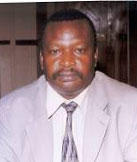
LEADING Nigerian telecommunications expert, Prof. Augustine Odinma has said the nation needs data and fail-over telecom network policies that must be all-inclusive.

Prof. Odinma, stated this in an address to this year’s International Conference and Exhibition on Power and Telecommunications (ICEPT 2005), organized by the Nigerian Society of Engineers (NSE’s) Electrical Division, as a special guest of honour in Ikeja-Lagos.

The three-day conference coincided with the Annual General Meeting (AGM) of the Electrical Division, has the theme: “Building Sustainable Capacities, Standards and Regulations in Power and Telecommunications Industries”.

He said that the data link policy should link all the ministries, parastatals and agencies in the first phase.

On the second phase, Prof. Odinma who is based in the United Kingdom (UK), said it would include the state governments.

This, he said, would become an avenue for revenue for the federal government, as the states would be expected to pay some royalties on a yearly bases for the maintenance of the networks.

“Most of the networks’ various arm of the government is constructing must of necessity be hosted by the federal government’s networks,” he said.

He condemned the policy of each ministry having its own networks segments that are not interconnected, saying it is not adequate.

Other initiatives such as e-government, tourism sites, he said, must be hosted on the Federal Government networks, stressing that all-inclusive network cannot be avoided, but a task that must be accomplished.

He also said that the government should commence plan towards the deployment of the network in a phased approach.

Prof. Odinma recommended that Ministry of Science and Technology (MST) or Ministry of Communications (MOC) should own the Government Data Intranet networks.

On the other hand, government, he said, should start to plan for a fail-over telecom network policy, which he explained should not wait until there is a major disaster in the telecom industry.

He further bemoaned the attitude that anybody could design a telecom network in the country. Pointing out that has been the reason some GSM networks have cross-talks most of the times.

“It is for this reason that you find GSM networks having cross-talks in most major cities. You can only expect substandard networks or network performance if you use non-telecom expert engineers to plan networks,” he asserted.

Warning that state cannot be entirely dependent on the private network operators for all its communication needs, thus it is risky, dangerous and disastrous.

“For the government not to have some form of Fail-Over Telecom Network,” he expert said.

The network, according to him, would be a secret network and owned by the States Security ‘Secret’ Service (SSS) and must be designed by indigenous telecom network experts.

LGE unwraps DMB Phone

This year’s Korea Electronics Show (KES) ended with LG Electronics unwrapping its time machine satellite Digital Mobile Broadcasting (DMB) phone.

The expo held at KINTEX in Goyang City between October 11 and 15, saw the Timemachine satellite unveiled, which affords users to continuously watch television (TV) even while speaking over the phone.

The phone’s technology stores broadcasts in the memory that have been received while one is speaking on the phone and then replays them after speaking, thereby allowing for continuous viewing, as said by the chief executive of LG Electronics, Mr. S.S. Kim.

He also said that the phone supports up to 60 minutes of Timemachine function and provides a multi-tasking function that allows users to send and receive short text messages while speaking over the phone or watching TV.

The Timemachine Phone, Mr. Kim believes supports virtual 5.1-channel and delivers third dimension (3D) quality stereo sounds.

The chief executive said that DMB phone equipped with the picture clarity enhancement chip Mobile-XD engine is based on its world-class digital TV technology; a 2.2-inch Quarter Video Graphics Array (QVGA) in 320X240 Liquid Crystal Display (LCD) and a home digital TV-level high-definition feature.

Additionally, the Timemachine Phone features a rotational T-style LCD backed by LG Electronics cutting-edge mobile phone technology, permit users to hold it with one hand and watch the DMB content in the horizontal slide-out mode.

Multi-channel mobile subscribers to benefit from TBS, ROK deal

Turner Broadcasting System (TBS) Europe Limited and United Kingdom-based ROK TV, has announced a deal that would benefit subscribers to ROK TV’s new multi-channel mobile TV service to watch CNN and Cartoon Network on their mobile phones.

Cartoon Network Mobile TV is Turner Broadcasting System’s service for mobile devices, which this year commenced to offer content based on its shows and characters. Cartoon Network, the all-animation channel is available in 22 languages across 25 separate feeds in 160 countries in 180 million homes worldwide.

CNN Mobile launched in 1999 as the first mobile telephone news and information service to be available globally.

Public Relations Manager at Pan & CEE Turner Entertainment Networks International Limited, Natalie Pritchard, said ROK TV, a British entity would this week as the world’s first independent multi-channel TV service provider for 2.5G and 3G mobile phones, offers a new way of delivering mobile television content in Europe.

Pritchard said that for Cartoon fans, subscribers will be able to watch two hour of constantly streamed hit shows from Cartoon Network including The Powerpuff Girls, Johnny Bravo, Dexter’s Laboratory, Ed, Edd and Eddy, Cow and Chicken and Courage the Cowardly Dog to name but a few.

A live stream of CNN International would also be available on the ROK TV service, delivering the world’s leading international news network direct to mobile handsets with the latest news headlines and reporting from around the world.

General Manager of Interactive, Wireless and Commercial Distribution Europe, Middle East and Africa (EMEA) at TBS, Casey Harwood, said the frim is committed to extending the reach of our channels on as many platforms as possible.

“This is a great opportunity to reach out to even more mobile users interested in making the most of the emerging opportunities arising with mobile television, ” he said.

Mr. Harwood also said "This launch highlights the rapid expansion of mobile television in the international marketplace. We are excited to extend Turner's channels to ROK TV subscribers and hope this will allow us to give viewers a simple and intuitive way to watch CNN and Cartoon Network on the go, anytime, anyplace."

Tuesday, October 18, 2005

Obasanjo may okay e-Voting

THE usage of the proposed electronic voting (e-voting) may have received some green light from the presidency, as the President, Chief Olusegun Obasanjo said weekend, that digitalising the ballot system would help minimise short comings associated with past elections.

The president said this in Abuja, just as Chairman of the Independent National Electoral Commission (INEC) Prof. Maurice Iwu, declared in Kano that those kicking against e-voting
were those who have for years been holding Nigeria to ransom through election rigging.

Iwu also denied saying he was happy with what is happening in the Peoples Democratic Party (PDP).

Receiving in audience members of the Imo State Council of Traditional Rulers at the State House, Abuja President Obasanjo stated that electronic voting would help reduce human errors and other types of vices that usually threaten the credibility of election results.

"The more we are able to take human error, either by omission or comission, away from the electoral porcess, the more our electoral process and the results will be less controvertible and controversial," Obasanjo said.

Besides, President Obasanjo maintained that the country could not afford to lag behind in revolutionalising the electoral process in this modern age especially "in these days when everybody is going digital and everything is going ditigal."
(SOURCE: Daily Champion)