" ITREALMS: 2005-12-25

Thursday, December 29, 2005

Anti-fraud; The Starcomms example

Features of the week:

Recent announcement that Starcomms shut 46 fraudsters, and unveiled anti-spam mechanism, is worthy of emulation among Internet Service Providers, reports REMMY NWEKE.

NOWADAYS, Internet access has become a major thirst and tool for the Internet savvy public. This tool in whatever way we may look at it has its positive and negative sides to the coin.

Two sides to the coin

On one side, Internet has liberated the much needed information chain by bringing people together in seconds as far as information dissemination and exchange are concerned, despite the distance whatsoever.

On the other hand, Internet has also become a thorn in the flesh, as many atrocities are now being perfected by fraudsters, who have since the massive acceptance of Internet in the 90s gone online, mostly in developing countries of the world.

Nigeria as case study

A case at hand is the Nigerian nation, whose heightened fraudsters’ related reports globally have forced the government to come up with some measures to checkmate this trend.

For instance, Section 419 (A) of the Nigerian Criminal Code drawn from the nation’s constitution of 1992, which stipulates among other things that ‘Any person who by any false pretence or by means of any other fraud obtains credit for himself or any other person; in incurring any debt or liability or by means of an entry in a debtor and creditor account between the person giving and the person receiving credit, is guilty of a felony and is liable to imprisonment for three years’.

Proliferation of online fraud

Before then, fraudsters specialize in the use of telefax machines to make contacts with their potential victims, most of which are targeted at foreigners, of which locally they were referred to as ‘Number people’.

Until late 90s when the Internet penetration continued to surge with the anticipated false millennium bug, these sets of ‘Number people’, always flaunting their ill-gotten wealth began to diversify into deploying Internet for their so called ‘business’. Nigeria no doubt got some ugly mentions with the Internet revolution.

Democratic Dividend

Hence, on coming to power in 1999, one big obstacle before the Olusegun Obasanjo’s regime was to clean the mess created by these online fraudsters, while it was spreading like a wild fire.

So came the setting up of the Economic and Financial Crime Commission (EFCC) and subsequently due to growing pressures from friendly international communities, the Presidency inaugurated a presidential committee on Anti-Online fraud with members spread across the law enforcement, Information and Communication Technology sector.

Subsequently, this committee proposed the birth of a National Working Group on Cyber Crime (NWGC), currently co-ordinated by a seasoned solicitor, Mr. Basil Udotia and co-chaired by the Ministers of Justice cum Attorney General of the Federation, Mr. Bayo Ojo, and that of Science and Technology, Prof. Turner Isoun.

Boosting FDI

One cardinal point in the assignment of NWGC is to come up with a draft law to combat the menace associated with Internet fraud, to boost electronic commerce and instill confidence on Foreign Direct Investment (FDI) in the country.

It was to also straighten the nation’s resolve to battle this monster, called online fraud.

Although investigations by our correspondent revealed that this crime seems to have taken increasingly new turn, as fraudsters perfect their act daily, by going to the extent of using the photograph, signature and Global System for Mobile Communications (GSM) number of the apex bank’s governor, Prof. Charles Soludo in their fraudulent endeavour.

Evidence abounds that the recent Katrina Hurricane, suffered the same fate as its online help website was adversely duplicated over a good number of times for the purposes of enticing donors to these fake websites.

Proxy websites

Also, there exist, what experts described as proxy websites which offer people the opportunity to convert their electronic mails and even website addresses known as Internet domain addresses into proxy and their identity remain unknown to the larger society.

The above has been heavily associated with open source metaphor, which means that the propelling software is not being charged for, if used. Opposite of which is simply ‘Microsoft’, which must be paid for before usage.

From one Internet Service Providers to the cafes, these fraudulent agents abound and with the banning recently by the Association of Telephone and Café Operators of Nigeria (ATCON), some of these fraudsters hitherto use café as their abode, mostly for night browsing. Now they are opening personal offices at their homes to thrive the trade and the offer of Internet Service as an added value service to the subscribers of Private Telephone Operators (PTOs) in the country.

The Starcomms' example

Hence, the recent shutting of its Internet access to 46 suspected fraudsters and unveiling of anti-spam mechanism in Lagos by Starcomms Limited, is a welcomed development.

Online spam is a terminology used to describe unsolicited electronic mails and that has been the methodology of ‘419ners’ in the system, mostly when they are shopping for potential victims.

But the coming of Starcomms’ mechanism to determine spam traffic would reduce fraudulent activities on its Internet service among subscribers.

With this, Starcomms assumed the first Private Telecommunication Operator (PTO) in the country to ever introduce such an online anti-fraud mechanism among the existing Internet Service Providers (ISPs).

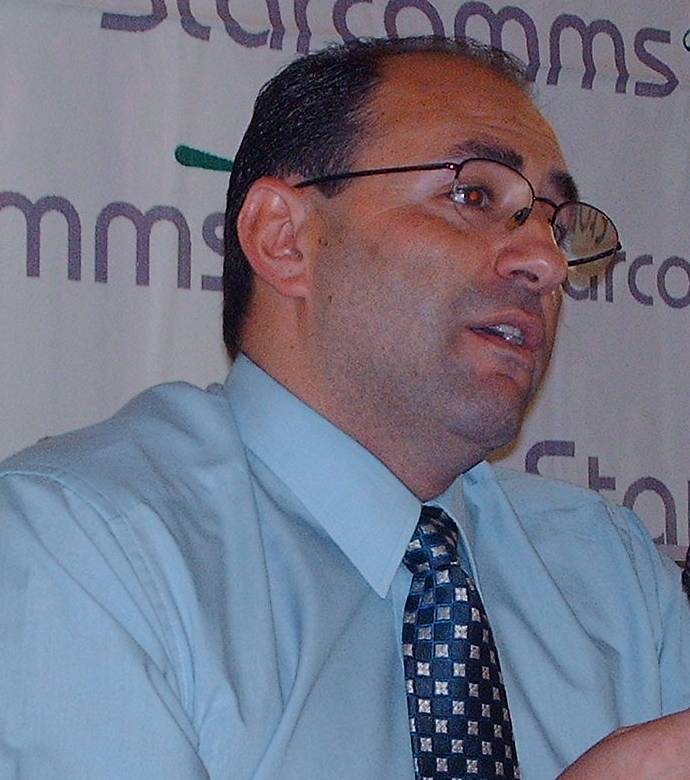
Marketing Director at Starcomms, Mr. Omar Lababidi, while introducing the mechanism, said, it would enhance the efforts aimed at reducing fraud on its internet service from this part of the world.

The mechanism, he said, was installed in co-operation with Huawei Technologies to monitor and tackle fraudulent use of the Internet.

This effort, which include creation of database of fraudulent accounts which will be reported to the Economic and Financial Crime Commission (EFCC) and other relevant law enforcement agencies, would equally afford the operator the chance to device means of warning the entire subscriber chain that spammers and fraudsters will not be tolerated on the network.

Mr. Lababidi also alerted that anybody found engaging in Internet fraud would automatically forego all rights and privileges as a customer on the Starcomms.

He further said that his company has, so far, shut down 46 spam and fraud users on the Starcomms account, adding that the gesture is aimed at protecting the innocent and improving the nation’s image in the international community.

NIG reacts

Reacting to this, newly elected President of the Nigeria Internet Group (NIG), Mr. Lanre Ajayi, told ITREALMS it is a welcome development.

“I think it is good as ISP to make it public. It is a smart way of sustaining its business and shunning intending spammers, because if eventually it’s network becomes notorious or key suspect of most spam origin, it could be blocked by other networks” he said.

Other ISPs, Mr. Ajayi said, may have the same strategy but are not making it open, but the idea to proclaim it is very good to fore warn whoever intends involving himself on such activities on the network. He was sure other ISPs also have similar strategy to block spammers.

Bold step

This step by Starcomms also has been described as pioneer among its peers in the bid to safe guide its network and subscribers alike.

One good thing is that the operator was very clear when it said that anybody caught instantly losses the right of a customer on the network.

Another good thing is that if the company’s figure of the affected fraudsters would be forwarded to relevant government agencies, which is a plus.

So, it is very important for other ISPs in the country to follow the Starcomms example, mostly as the unified licensing regime has less than one month to take off, by investing into this kind of solution.

Therefore, by heeding this call, the nation’s image would not only get better, it would show some seriousness on the need to collectively battle this sickness, which is invertible in this century.

Omatek ready to export ‘Made-in-Nigeria’ products

LEADING assembler of Information and Communication Technology (ICT) products in the country, Omatek Computers Limited, has announced its readiness to export some of its products beginning next year.

Chief executive, Omatek, Mrs. Florence Seriki, disclosed this at the end of year media chat in Lagos, saying the firm would begin with export of products to the West African countries before expanding gradually beyond the region.

She said, this is part of Omatek’s plan to aggressively market its products and brands in 2006.

Some of the Omatek’s products slated for export next year comprise Plasma Television, Citrix and Dura Laptops and Omatek desktop, Personal Computer (PC) speakers, among others.

Omatek, Mrs. Seriki noted has in recent months restructured for the export to take off and this has created some opening for Nigerians, such as the channel partner experts.

To this end, Mrs. Seriki, said, an experienced channel partner expert has been engaged and due to resume January 2006.

Maintaining that all Omatek brands were of international standard, she said, “All we have in Omatek is what you see in foreign brands”. Stressing that was why the firm recently won the Microsoft’s West and Central African (WACA) award.

She argued that Omatek delved into the Plasma television flat screen production, was not out of its preview to accelerate Information and Communications Technologies (ICTs) for development.

“The whole world is moving and we cannot continue to create gap between us and the rest of the world,” she declared.

Mrs. Seriki pointed out that her firm has repositioned Omatek Ventures to cater for the aggressive market plan.

This aggressiveness, she said, would be heightened for the local market presence and repackaging of its products for foreign market have advanced.

Reviewing 2005, Mrs. Seriki said, Omatek performed credibly to the extent it received about 25 awards within this year alone.

On the work force to support the export plans, she also said that currently Omatek has the capacity to produce completely within 10 days, a 40 feet container worth of PC peripheries.

“Technology is changing and we have to change,” the CEO who was accompanied by the General Manager, Mr. Yomi Soyinka and his deputy, Mr. Olumide Akinmutimi, said.

Internet increases security threats – Obi

INCREASE in the acceptance of Internet nowadays, has brought about increased security threats in the 21st century society, according to the immediate past president of the Computer Professionals Registration Council of Nigeria (CPN), Dr. Gabriel Obi.

He also lamented lack of manpower to contend with this and warned on the security implication of patronizing Commercial-off the (COT) shelf software vendors.

He gave this caution at the third annual convention of the Nigeria Internet Group (NIG) in Lagos, on security.

Dr. Obi defined security as a very vague field that cuts across network security, data security and national security.

“We need to be very careful,” he declared, warning that if the youth are not guided aright, it could jeopardize the future security in the Information Society.

He equally warned that if the system is allowed to be on the hands of COTs, the system would be put at risk.

Dr. Obi also said that most products from these software vendors usually become obsolete in matter of two to three years after introduction of any of their products.

Security consciousness, he said, needs to be inculcated into the system, especially for the youths, because it’s the new paradigm.

He noted that most of the time, security issues are exacerbated, when it affects content infrastructure based on confidentiality, integrity and availability.

According to him, Internet as a major tool for communications has introduced an era of survivability on the systems.

The new paradigm in security, Dr. Obi said, centers on the systems being unbounded, not visible to the administrator and having no central administration control.

Fortress model, Dr. Obi, who was a former director at the First Bank Plc, pointed out, must not be made to be responsive.

Stressing that in security, survivability entails recognition and resistance, pointing out that increased acceptance of Internet has adjusted the number of security threats upwards, yet the personnel are not there to contend this increase, especially in developing country like Nigeria.

He, therefore, enjoined the youths to grab this opportunity to becoming technology security experts with two hands.

“We can’t be competitive if we’re not creative,” he asserted.

400 delegates expected @ ICT4Gov

Fourth edition of the In-formation and Communication Technology (ICT) for Government (ICT4Gov) seminar and exhibition slated to hold in Accra is expecting about 400 delegates.

Organisers said that the event scheduled for the International Conference Centre from January 31 – February 2, 2006, look forward to receiving delegates from Nigeria and other parts of West Africa.

Participants, organisers also said, would be gathered at the first post World Summit for the Information Society (WSIS II) interactive session in the sub-region to seek ways at bringing government closer to the people deploying ICTs.

This is coming as one of the leading West Africa’s business technology outfit, IT Edge would be partnering with the organisers for the event.

For three days, according to the organisers, experts from the public and private sectors would be discussing how ICTs could be used to open up rural communities and the involvement of governments in driving the socio-economic changes deploying ICT resources.

A press statement made available from the organisers, said, Ghana’s Ministry of Communications is hosting the conference and exhibition with the theme ‘Mainstreaming ICT: Harmonising eGovernment and Development’ to stress the importance of building awareness and Capacity within the various arms of government.

The there-day event is a two-tracked workshop, consisting of eGovernment and ICT for Development.

Executive Director, CTN/Techgov, organisers of the event, Mr. Columbus K. Bruce, said, “Riding on the success of past editions, this event brings together various experts to help harness the potentials of ICT in the sub-region and bring to the sensitivity of stakeholders including decision makers in the private and public sectors, the crucial things that must be done in 2006 to move the economies and the people within the ECOWAS region forward.

PIR records 4m .org domains

Not-for-profit corporation based in Reston, Virginia and created by the Internet Society (ISOC) to manage the .org top-level domain, the Public Interest Registry (PIR), has announced the registration of four million .org domains.

ITREALMS recalls that PIR assumed control of the registry since January 1, 2003 with the mission to manage the .org domain in a manner that supports the continuing evolution of the Internet as a research, education and communications infrastructure, while educating and empowering the non-commercial community to most effectively utilize the Internet.

On the other hand, .org domain, is associated with noncommercial activities, and known as the Internet’s third largest “generic” or non-country specific top-level domain.

Official of PIR, Mr. Michael Ward, while announcing this development informed that the figure is a worldwide registration for .org usage, which he said, contributes to continued growth in the .org community.

This, Mr. Ward said, was the successful growth of the .org domain which is a direct result of the increase in global internet use, the credibility associated with the .org brand, as well as the success of over 180 .org resellers worldwide.

He quoted the President and chief executive of PIR, Mr. Edward G. Viltz saying, “We have reached a significant milestone within the .org community, its no longer considered to be the ‘other’ domain. It has become the established Internet home of the worldwide noncommercial community. The attainment of four million registered .org domains is a direct reflection of the increased awareness and demand for the .org domain.”

Mr. Viltz said this reaffirms PIR commitment to the continued management of the .org registry in the public interest and expressed appreciation for the support of registrars, resellers, Afilias Global Registry Services and the .org community.

He enlightened that .org was originally created in 1984, and has grown to be the third largest generic top level domain and the fifth largest when including country code top level domains.

PIR, the CEO said, is promoting the use of .org within the global nonprofit community through outreach programs targeting developing regions of the world.

In addition, Mr. Viltz disclosed that PIR has offered to .org registrars’ discounts aimed at Latin America, Africa, India, China and Southeast Asia in an effort to expand the Internet and promote the .org domain.

Dual PCI chipset from VIA

CHIPSET manufacturer, VIA Technologies, has introduced into the market its latest in stock, Dual PCI Express chipset, which supports two displays function from a motherboard for various functions enabled in the Central Processing Unit (CPU) of computers.

Described as a number of integrated circuits designed to perform one or more related functions. For instance, one chipset may provide the basic functions of a modem while another provides the CPU functions for a computer.

Latest chipsets generally include functions provided by two or more older chipsets and in some cases, older chipsets that required two or more physical chips could be replaced with a chipset on one chip, whereas this term is often used to refer to the core functionality of a motherboard.

VIA Technologies, through Mr. Richard Brown informed that the firm’s Dual PCI chipset is an express buses, which enable system builders to offer high-performance desktops that support two displays.

He said that K8T;900, has been on sampling since late November, and would be made available for market volume by January 2006.

This, he said, supports two x8 PCI Express graphics connections.

Mr. Brown also noted that through the systems of dual graphics support more than one monitor and have been available for years now, VIA’s dual PCI express optimizes new technology for better performance for today’s robust video requirements.

He explained that older systems with dual displays must squeeze graphics instructions for two displays through one bus and limiting throughput.

“The new technology, however, opens up two graphics buses that could support either multiple video streams or more robust graphics for high-end games,” he said.

Mr. Brown further disclosed that VIA is currently working with S3 Graphics to ensure the graphics chip manufacturer’s new chrome graphics cards will work with its new chipset.

VIA Technologies, Inc. quoted in the Taiwanese Stock Exchange (TSE) is the foremost fabless supplier of market-leading core logic chipsets, low power x86 processors, advanced connectivity, multimedia, networking and storage silicon and complete platform solutions.

Ndukwe, Utomi laud Glo double slam

•As Glo gives out 24th car

Chief Executive of the Nigerian Communications Commission (NCC), Dr. Ernest Ndukwe and Director of the Pan African University, Prof. Pat Utomi, have lauded the second national operator (SNO), Globacom on its double slam anniversary promotion, just as Glo dishes out the 24th car in the promo.

The duo who were guests at the presentation of four cars to Glo subscribers in Lagos weekend, said the SNO is a shinning example of what entrepreneurs should be like.

For Dr. Ndukwe, the SNO has been doing well despite being the last to launch its Global System for Mobile Communication (GSM) and implored the company to continue in the stride as he described the method of choosing the winners as transparent, not prearranged or discriminatory.

“There is no special arrangement so its very important to acknowledge Glo in this regard as they continue to expand its network,” Dr. Ndukwe asserted.

He also tasked operators to ensure that their services are based on quality as a means of keeping the subscribers on their networks.

Prof. Utomi in his comment, advised businesses to take seriously their branding as a way of attracting customers, but said that selling the brand to reach acceptance by the customers is an uphill task before any entrepreneur, while appealing to keep the light burning.

“I am here to witness the enterprise that’s committed to its customers and one challenge facing businesses is branding,” he said, emphasising that its great that the brand could go from nothing to something.

Globacom used the occasion to present cars to winners, namely Mrs. Taiwo Epe, Mrs. Jinadu Bolatilo, Mrs. Flora Azuka and Mr. Jimoh Ayuba.

While Dr. Ndukwe presented the key of Mercedes Benz E240 car to Mrs. Epe, Mrs. Bolatilo’s key of Kia Sorento Jeep was presented by Mrs. Ajoke Mohamed, wife of the former head of state, late Gen. Murtala Muhamed.

Presentation of Mrs. Azuka’s key for a brand new Kia Rio was performed by Barrister (Mrs) Grace Egbagbe of the Nigeria Television Authority (NTA) and Prof. Utomi honoured Mr. Ayuba with the keys of a Honda City.

This brings to eight the number of cars given to winners in Lagos, four in Enugu, four in Port Harcourt, four in Kano and four in Abuja Zones of the Promo draws

Meanwhile, another set of winners emerged weekend with GSM numbers 08055808163 and 080551987060, winning prizes of a Volkswagen Polo and Honda City cars respectively.

Earlier, the chief operating officer (COO), Mr. Mohammed Jameel, recalled that many Nigerians, especially operators did not believe the promo when it started.

He expressed gratitude to the Nigerian subscribers, which he said, have reached four million.

JACITAD shines @ Senate hearing on NITDA

NON-governmental organization (NGO), Joint Action Committee for Information and Communications Technology Awareness and Development (JACITAD), shined at the just concluded public hearing on the National IT Development Agency (NITDA) bill held in Abuja.

JACITAD, founded in 2003 and led at the hearing by its President, Mr. Bay Fasoyin, was among the selected groups representing greater stake in the ICT community, to make presentations to the proposed NITDA bill, currently before the Senate Committee on Science and Technology.

Chairman of the committee, Senator Saidu Dansadau informed that the first day was devoted to listening to the Federal Ministries of Science and Technology, Information and National Orientation and Education in that order.

Also to listed for the first day was the State Ministries of Science and Technology, Information and Technology as well as the Nigerian Communications Commission (NCC).

Day two, he explained, comprised the Nigerian Broadcasting Commission (NBC), Nigerian Cybercrime Working Group (NCWG), Nigerian Computer Society (NCS), Nigeria Internet Group (NIG) and the Nigerian Information Technology Professionals in the Americas (NITPA), Institute of Software Practitioners of Nigeria (ISPON), Internet Service Providers of Nigeria (ISPAN), and Information Technology Association of Nigeria (ITAN).

Plans in top gear for CSDMS’ Asia 2006

CENTER for Science, Development and Media Studies (CSDMS) based in Uttar Pradesh, India, has advanced plans for the successful hosting of the Digital Learning Asia 2006.

CSDMS said that the Information and Communications Technology (ICT) and education conference slated to hold in Bangkok, Thailand, come April is to take stock of the progress of the Asian countries in digital learning sphere.

Information endorsed by Himanshu Kalra and made available to Champion Infotel, said that Digital Learning Asia 2006, would focus on utilizing ICTs to enhance the quality and reach of education in the region.

“With a focus on building a human capital that responds to the needs of a globalised world,” Kalra noted.

The conference, according to CSDMS, would provide a platform for policy-makers, practitioners, industry leaders and academicians, to share experience, knowledge and perspective on integrating technologies at all levels of education.

It would also provide a forum for showcasing and learning from best practices, explore solutions to meet challenges and discuss issues and strategies for the best way of utilizing the potential, of ICT in education.

Highlights of the event, would be the gracing by eminent experts from the education system and senior government officials, from different parts of Asia and outside, would debate the current policies and trends in ICT in education in their respective countries.

This, organizers said would center on three core areas including national ICT and education strategies, ICT in education trends in Asian countries and best practices in ICT in education in Asia.

In addition, the conference focus would also touch on the public private partnership in ICT in education, education by informatics and communication technologies, monitoring and evaluation of ICT in education, as well as technologies for education and training and future trends in e-learning.

Wednesday, December 28, 2005

Nigeria is better than Germany, but – Ojukwu

Interview:

Mr. Kenneth Ojukwu is a Nigerian businessman from Mbaise, Imo State, but based in Vogel Hutten deich, a suburb of Hamburg-Germany, where he deals on fairly used Personal Computers (PCs), operates an Internet café and call-shop. He told Correspondent REMMY NWEKE, recently that Nigeria has a booming call centre business culture than in Hamburg, Germany.

Excerpts:

How would you describe life here in Germany?

Germany as part of greater Europe is nice to live in, but it has a complicated system. In the first instance, it is unlike English speaking European countries such as England or Ireland. Germany is a place where you either come as a student or a visitor.

And as a visitor, once your visa expires and you’re still here it becomes illegal. Then you have to go to the authorities to obtain your papers by seeking for asylum or whatever reason, after which you may be able to meet a woman whom you could marry, and that is the only way to stay.

But if you’re seeking asylum you must have enough evidence to that effect.

What of the racist issues, is it still very high and if yes, how do you as a Nigerian coping?

Racism is everywhere, but unfortunately it is no longer as it were during the time of Hitler. Presently, one can say it’s exists but not much pronounced like before.

I understand Nigerians here have a community, and how has this helped you to survive?

Well, theoretically, we have a Nigerian community branch here in Hamburg, but practically it is not functioning very well. In fact, it does not play much role, rather people are being united by their mush-room communities. We have our individual community meetings but the Nigerian community as a whole does not practically exist.

That brings us to the Igbo community, how well could you say this community is motivated?

For the Igbo community, I can say it’s moving very fine, especially at this part of Hamburg. Though the Igbo community consists now of all those mush-room communities I told you earlier. We have all states in Igbo land represented, but the Igbo community as a body is not active like the Nigerian community too. For example, the Abiriba, Orlu, Mbaise, Anambra among other communities are doing well, so Igbo meetings here are more powerful than the so-called enlarged community meetings.

Tell us about the New Yam festival here, who are those behind it?

Like the Abiriba community held theirs October 1, 2005. The Orlu community scheduled theirs the following Saturday, October 8 and other communities too are planning to hold something similar, but differently. But the Igbo community as a whole has not held such thing. We’re still planning to see how to organize it, that is, if we could be able to organize a party to accommodate every body.

You own telephone center and Internet café business in Hamburg, how would you rate it here and back home in Nigeria?

As matter of fact, if you compare here to Nigeria in this kind of business, Nigeria is better … (cuts in).

Why and how?

Yes, because Internet and call business needs customers, due to more people that come in you make more money. So, if you look at the population we have in Nigeria and fewness of call centers, you would understand my argument. Every call shop in Nigeria is always full. For instance, I have one at Owerri in Imo State and they are doing very fine, much better than what I am doing here at the call center.

What of the infrastructure, such as the power supply not being available all the time, unlike here you have power 24 hours in a day?

Then, we have to make improvise with generating set to supplement the national electrical power supply (Power Holding). You see, it’s unlike here too, the power supply is stable but costly. It’s stable but very costly, unlike Nigeria, our power supply over there (in Nigeria) is irregular but cheap comparatively.

What of the price of Internet access here and at home, how would you compare the two?

It’s almost the same, because, for instance, for you to browse an hour in Nigeria you have to pay between N150 and N200.

It is about N80 and N100 in some popular places …

If it is about N80 and N100, it is still okay, but to browse here you pay about E1.50 cents (about N280) and half an hour is 75 cents. So, if you compare the actual value of E1.50 cents and check the foreign exchange it is almost the same.

By setting up Internet café here, it means you’re providing Nigerians and other Afro communities the current tool to reach the world. What inspired you?

As matter of fact, it has been my utmost wish at a time, like I have been here for almost 15 years and I have been self employed for about 10 years now. I have tried several things; selling of cars, second hand items – fridges and all other stuff and now selling fairly used computers.

It was to be able to compensate my customers that I opened this communication center. As you can see, I combine the call shop with Afro shop and then a place where we sit and drink in the evenings – restaurant.

So, I planned it whereby it would accommodate a lot of other things and bring me nearer to the Nigerian people. That is, it has been my wish to have a set up that could bring us a bit closer to each other.

Like now, most Igbo people use to meet here and most meetings about the Igboland, Nigeria and Africa as a whole are usually held here. And you saw the young man that came in shortly, he would be having a child dedication on Sunday and would like to host people here.

You’re deploying some software to organize your telephone booths for call center operation, can you tell us about the software and the pricing here?

Actually, pricing here in recent times has become highly competitive, because we have a lot of companies or providers that bring a lot of software into the market place. Like what I am using now is called Elemeg. ICT call shop and costs on the whole subscription about E800 (N148,960.14) for the package.

And then, for the servicing, each time they come it would be about three to four hundred Euro, about (N74,480.07).

This is unlike Nigeria where one has to budget between N500,000 and N1 million for a software. So, you cannot compare the two. There are also some that are cheaper than what I am using now.

But is the call shop software serving you as expected?

Of course, it is serving me very well without any disturbance.

Taking a look at home, are you comfortable with the level of political development?

Politics at home, you can just forget it. Now, the problem with our politics is that Nigeria has everything we need except good leadership. If today, Nigeria is politically alright, then, we don’t have need being here in all facets. Politics at home is very dirty but we hope that with time, it would be alright. If you read the history of some of these European countries, there was a time problems like this occurred and today, they’re okay. If we have good governance, we would continue to progress.

You’re here during the German 2005 election last month, September, what’s your view?

You know that politics here is very far from what is witnessed during elections at home. Its better, more advanced, more peaceful than Nigeria. Even though the recent election was unresolved for sometimes, yet they were calm and it was handled very maturely, now is almost a month after, things are still moving on peacefully, without a Chancellor victually.

What would be your message to other Nigerians in Germany, who’re trying to earn a living here?

My advice to every Nigerian is that we have to first of all remember where we are coming from. We came from Nigeria in Africa and all of us who’re here is basically with a mission; a mission of how to survive and better our lives.

I want to tell those that are here, that if they take their time and run away from crime, they would reach their target no matter how long it takes. But they must first of all regularize their stay, by that I mean, they must find a way of getting their residence here in Germany, find a job to do and with time get what they want.