" ITREALMS: fiber
Showing posts with label fiber. Show all posts

Wednesday, December 03, 2025

Right of Way (RoW) & Fiber Deployment Transparency: Who Sets Prices and Why? Asks Remmy Nweke - Telecoms Clinic@ITREALMS

Telecoms Clinic@ITREALMS ... making leadership SENSE with digital news!

In this edition of Telecoms Clinic@ITREALMS with REMMY NWEKE, he probes Nigeria’s spectrum licensing and renewal transparency (2015–2025), asking who got what, at what price, and why openness still matters.
For years, the Right of Way (RoW) debate has lingered as one of Nigeria’s most persistent bottlenecks to affordable broadband and nationwide fiber deployment. Although the conversation often circles around “high charges” and “state levies,” beneath this fiscal friction lies a deeper transparency deficit; a question of who actually determines RoW pricing, how those decisions are made, and what accountability framework exists for public resources that should empower, not encumber, connectivity.
Right of Way (RoW) & Fiber Deployment Transparency: Who Sets Prices and Why? Asks Remmy Nweke - Telecoms Clinic@ITREALMS
When the National Economic Council (NEC) agreed in 2013 to peg RoW charges at ₦145 per linear meter across Nigeria, the consensus was hailed as a historic step toward harmonizing infrastructure costs and accelerating broadband penetration. Yet, more than a decade later, the disparity between federal ambition and state practice has only widened. 

Tuesday, September 20, 2022

Harmonic, Hitron Tech partner on sustainable fiber solution - ITREALMS

ITREALMS ... making leadership SENSE with digital news!


Harmonic has announced that its offering a powerful new fiber solution for cable operators in collaboration with Hitron Technologies, the fastest-growing DOCSIS customer premise equipment manufacturer in North America.

The joint offering combines Harmonic's CableOS FTTx solution with Hitron's NOVA-2002 and NOVA-2004 optical network units (ONUs), creating a flexible, cloud-native infrastructure for sustainable delivery of 10G symmetrical services.

Saturday, March 26, 2022

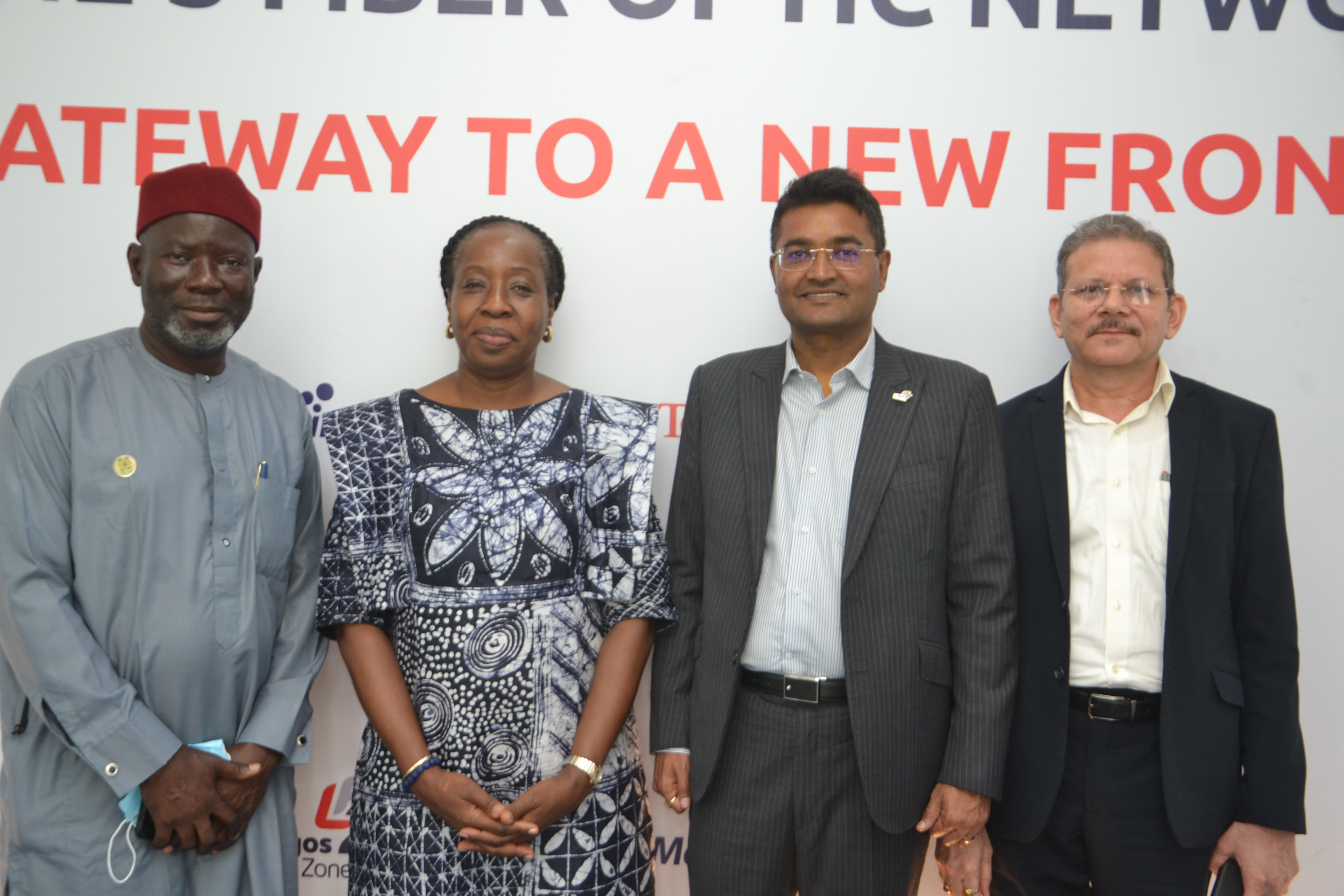
MainOne launches Fiber Infrastructure at the Lagos Free Zone - ITREALMS

Sponsored@ITREALMS ... making leadership SENSE with digital news!
L-R: Zonal Administrator, Nigeria Export Processing Zones Authority (NEPZA), Garba Hayatu; Chief Executive Officer, MainOne, Funke Opeke; Chief Executive Officer, Lagos Free Zone, Dinesh Rathi and Chief Technical Officer, Anil Verma during the official launch of MainOne, Lagos Free Zone Connectivity Center in Lagos on…Thursday
MainOne, West Africa’s leading connectivity and data center solutions provider, has announced the expansion of its fiber optic network infrastructure to the Lagos Free Zone in Lekki.

Wednesday, February 15, 2017

Iskratel counsels operators: Ignore cable upgrades, focus on fiber

Cable operators in need of upgrades of their networks have been advised to look beyond latest cable upgrades and deploy fiber sooner rather than later to remain competitive, according to Iskratel’s latest executive white paper, reports ITRealms.

Giving this council at the Fibre-To-The-Home (FTTH) conference in France, the Iskratel through its Chief Architect, Simon Cimzar said, there is an increasing number of considerations that operators must make when looking to upgrade their existing networks 
Speaking on “GPON vs. DOCSIS 3.1 in Six Simple Points” Cimzar, insisted the customer should always be number one, which might mean that cable operators who don’t deploy fiber might be left behind.

“In the current market, cable operators are faced with an increasing number of competitors offering fiber-to-the-home (FTTH) broadband services through gigabit-capable Passive Optical Networks (GPON. By using the DOSCIS 3.0 standard today, operators can theoretically offer gigabit services in the downstream, but find themselves limited by the upstream throughput it provides,” he said.

Equally, Cimza ssiad, this leaves operators with the quandary of whether to remain with the standard coax network and upgrade to the newer DOCSIS 3.1 standard, or make the leap and become FTTH operators themselves, just as he acknowledged that operators must perform a balancing act when choosing between the two options, a decision which the white paper further explores.

“The main question operators must ask themselves is whether the service disruptions of the move make changing from the coax network to a fiber-based solution unfeasible,” said Cimzar, stressing, there are many facets to this decision, but the business motivation is clear. Fiber deployments come at a lower Total Cost of Ownership and provide a better return on the initial investment than DOCSIS 3.1, which can be migrated to at the same cost but requires further, continued investment.

“Another important factor to bear in mind is the potential for symmetrical upload and download speeds that GPON offers – something which isn’t possible with cable,” he said, insisting that once the operators take into account the higher ongoing maintenance costs, smaller range of services offered and disruptive migration to DOSCIS 3.1, it becomes clear that GPON provides an option that makes sense for businesses and end-users alike.

 “Customers’ perception is simple: fiber is the future,” he added. “Cable operators are at a crucial juncture when it comes to network evolution and those who try to move forward without fiber may find themselves being left behind,” he submitted.

Remmy Nweke/ED, Ops


ITREALMS ... everything news digitally!