" ITREALMS

Thursday, March 30, 2006

GSM operators can carry third-party gateway

REMMY NWEKE, in Abuja

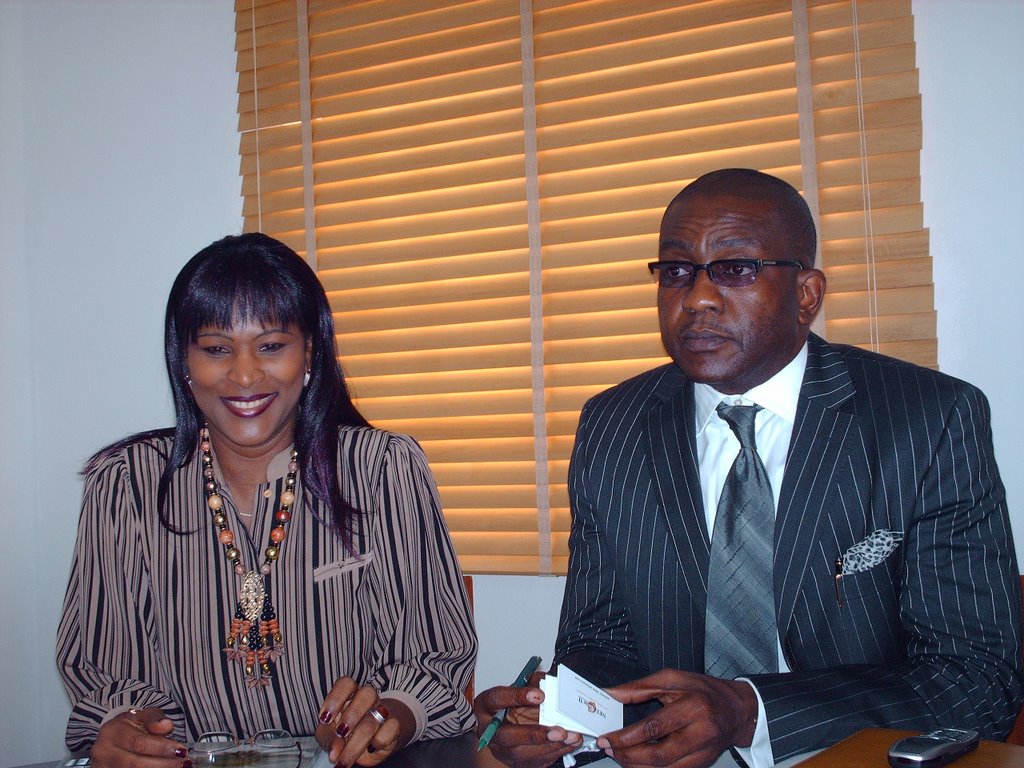
CHIEF executive, Nigerian Communications Commission (NCC), Dr. Ernest Ndukwe, has reassured the Global System for Mobile communications (GSM) operators in the country that they are free to carry third-party gateway.

He made this clarification at the first ever GSM Africa Association’s conference and exhibitions holding at the International Conference Center, Abuja.

Responding to a request by the Vice Chairman, GSM Africa Association, Mr. Ogugua Chioke in his address to the occasion Tuesday, said that even in the published details of the Unified Licensing Regime (ULR) on March 1, this year, it was also indicated that GSM operators could carry third-party gateway.

Third-party gateway enables GSM operators to carry tariffs in quantity for other operators both locally and internationally.

Dr. Ndukwe who gave a keynote presentation on “The Convergence of Regulation: Moving from the Traditional Model towards Multi-service regulation,” said that the main concern of NCC presently is to make full services available to Nigerians and even operators as well.

Stressing that was why his office came up with the ULR to facilitate convergence in the system, which he said, involves freedom to innovative and expand networks as well as freedom to react fast to technology and market changes.

Extending services, he said, mostly to the rural and underserved part of the country is of very important to the government.

Emphasising that Africa does not have legacy networks, hence justifying the velocity of deregulation evolutions in the Nigerian telecom sector.

“Because Africa do not have legacy networks we need faster changes” to catch up.

According to him, the ULR has in it enough information indicating that GSM operators can offer third party services in the country and on their platform.

Just as he expressed hope that the new licensing era will achieve the desired empowerment of operators which is access to Information and Communication Technologies (ICTs).

In his keynote address, Communications Minister, Chief Cornelius Adebayo, said that there are about 1.8 billion mobile subscribers across 860 networks in 220 countries and regions of the world.

He noted that by 2010 more than 3 billion people, almost half the world’s population, will have access to mobile phones.

“Evidently, the growth of mobile lines have now out growth the fixed lines especially in developing countries where some 58 per cent of all mobile subscribers were located” he said.

Mobile market worldwide is forecast to generate over $529 billion in service revenue by 2010 and $80 billion in device revenue.

“This is partly because mobile telephony has now become an indispensable tool used by the rich and the poor, the young and elderly and for business as well as for leisure” the minister said.

The good news according to him, is that in every country on the continent, this gap of digital divide is closing fast.

Indeed, he said, whereas the United Nations (UN) has set a goal of 50 per cent mobile access by 2015, a new report from the world notes that 77 per cent of the world’s population already live within the range of mobile networks.

Mtel may take NITEL to court over link cut

REMMY NWEKE, in Abuja

Mobile Telecommunications Limited (MTel) may soon take its parent company, the Nigerian Telecommunications Limited (NITEL) to court over its inability to deliver its part of the bargain in facilitating the kind of quality of service (QoS) due to some of its link have been cutted by Globacom and MTN Nigeria.

Chief executive, Mtel, Mr. Edwin Moore Momife disclosed this Tuesday at a strategic session at the Global System for Mobile communications (GSM) Africa Association conference and exhibition holding in Abuja.

He recalled that at the formation of Mtel it was agreed that Mtel, which is the GSM arm of NITEL should anchor on NITEL infrastructure to deliver prompt and quality services to subscribers.

Mtel he said, has commenced a legal suit against NTEL to claim damages over what he described as cut of its links by MTN and Glo while installing their own infrastructure.

Mr. Momife lamented that this promise is being jeopardized because the Second National Operator (SNO) Globacom and MTN Nigeria destroyed NITEL’s fibre optic in the process.

This, he said, has affected the growth of Mtel immensely, hence Mtel is contemplating taking NITEL to court so as to prompt the first national operator to be proactive by taking action on its infrastructure destroyed by these operators or take them to court for appropriate measures to be meted on them by the regulatory authorities.

Pointing out that this disruption has forced Mtel to rethink by evolving a new way of carrying its tariff, especially as some areas affected.

Despite all these, Mr. Momife said that there is hope for Mtel as his administration is trying all it could to reposition the telco for sale as its mandate stipulated, mostly since the sacking of the Dutch Management Contractors, Pentascope.

He also said that Mtel has grown its subscriber-base to 1.2 million currently and that anybody buying Mtel as of today would not buy it along with mere 1.2m but about 4 million potential subscribers on its network.

Although government still has 100 per cent share of Mtel, he stressed that its infrastructure value has gone beyond that figure.

“However, there are some good news,” he declared, pointing out that since he took over the management last year, “there have been some improvement on the network offering” even as Ericsson has been engaged to expand its brand.

There are also some switches commissioned three years ago, yet it have not offered any service because of this link cut, he noted.

Expressing optimism over the future of Mtel, he said, some of the handicapped mentioned above affected its vowed marketing strategy, thus it was suspended.

Additionally, he said, there are 840 base stations and soft switches to help in overcoming transmission hiccups.

“We are in a race but hopes to get the great bride (Mtel) ready soon” Momife said.

NetnearU leverages on Glo GPRS

•To offer WiMax

In continuation of its Internet access everywhere campaign, the Lagos-based technology solution provider, NetnearU, is leveraging on the Globacom’s General Packet Radio Service (GPRS) to penetrate the homes in the country.

Managing Director, NetnearU, Mr. Kaycee A. Kennedy, disclosed this to newsmen on Monday in Lagos, just as the firm has deployed 300 WiMax hotspots nationwide.

A standards-based wireless technology, WiMax provides high-throughput broadband connections over long distances and could be used for a number of applications, including “last mile” broadband connections, hotspots and cellular backhaul, and high-speed enterprise connectivity for business.

This is coming as the President of the Nigeria Internet Group (NIG), Mr. Lanre Ajayi, recently declared that WiMax is reasonably priced than Very Small Aperture Terminal (VSAT), which currently is largely in use in the country.

Deployment of 300 hotspots, Mr. Kennedy said, is in desire of his firm to venture into this territory so as to make Internet access closer and affordable to Nigerians.

In this quest to provide Internet access especially at home, he said, NetnearU is collaborating with the Second National Operator (SNO) on its GPRS.

“We’re partnering with Glo’s GPRS on access to the hotspots and we’are deploying it in commercial quantity” he declared.

He explained that the offer his company is dangling, which is the offer of Laptop for N9,999 monthly installment comes with two years warranty and Internet access at hotspots in addition to two-year insurance cover, in addition to Glo’s GPRS.

Mr. Kaycee, accompanied by Chief Operating Officer, Ms Maureen Chukura and Head, Business Development Ms Patricia Leon, said, the partnership with Glo is to enable end-users who may have Laptops or even interested on the offer nationwide based on Glo’s massive coverage of the country.

photo and story: Remmy Nweke

Nigeria must reap dividends of WSIS -Sesan

FEW months after the finale and second phase of the two-phased World Summit on the Information Society (WSIS) ended in capital city of Tunisia, Tunis, Programme Manager for the Lagos Digital Village, Mr. Gbenga Sesan, has tasked the nation on how best to reap the dividends of the summit.

Speaking at the launch of the “Nigeria Rocks” project in Lagos recently sponsored by the Heinrich Boll Foundation office in Lagos.

Nigeria Rocks is a compilation of the Nigerian WSIS’ youths caucus experiences under the aegis of Nigerian Youth ICT4D Network (NYIN), during the two-phased summit produced in a book form and Compact Disc (CD) format.

In an address entitled “Beyond Tunis: Reaping the Dividends of WSIS in Nigeria” Gbenga, who also is the first Nigerian Information Technology (IT) Youth Ambassador, said that it is very essential that Nigeria as a nation fashion its Information and Communication Technology (ICT) policy to induce development at the community levels.

He noted that people remained critical resources for this key challenge of achieving Nigeria’s aim of becoming “an IT capable country in Africa and a key player in the Information Society by the year 2005, using IT as the engine for sustainable development and global competitiveness.”

Pointing out that though the nation may have missed the last digit in the year of target, but the decade should be made to remain the same, meaning that Nigeria has only 10 years to meet up to the targets set for 2015.

Emphasising that Nigeria should be in safe hands but the task of producing a conducive environment and appropriate policy frameworks remain with the government.

“Through the specialized agencies that have been saddled with the responsibility of developing Nigeria’s ICT sector.

Nigeria, the ambassador said, do not have the luxury of many options, but as it is popularly said, “We either shape up or ship out”.

He advised that Nigeria must shape up by doing the right and reaping the dividends of WSIS in the country.

While praising HBF for its support to NYIN, Gbenga recalled the journey from prepcoms in Bamako in 2002 to Tunis in 2005, saying that WSIS no doubt provided a unique networking and communication opportunity on a multi-stakeholder platform for Africa and Nigeria precisely.

According to him, the youth caucus made a good case for what young people could do when there is a meeting point between preparation and opportunities.

“Right from Bamako through to Tunis including all the preparatory committee meetings (prepcoms) and inter-sessional meetings, youth presence was felt” he asserted.

He did not forget so soon, the incident of the youth being entangled in the war that broke in Togo on their return from Accra after the African regional prepcom for the second phase early last year.

Describing it as a ‘miracle of Accra’, Sesan said that the collaboration with HBF changed the speed of action and participation for the ICT4D Nigeria, thus giving about 21 young Nigerians the opportunity to take part in the process in Accra.

“These vibrant young people led discussions, facilitated meetings, produced newsletters, met with dignitaries, resolved issues, matched words with action” he said.

Negroponte leads speakers @ WCIT-06

Renowned technologist and co-founding chairman emeritus of the Massachusetts Institute of Technology (MIT) Media Laboratory, Dr. Nicholas Negroponte, has been confirmed as a guest speaker at this year’s World Congress on Information Technology (WCIT-06).

Slated to hold on May 4 in Austin Texas, WCIT will also have the Minister of State of Taiwan, Ferng-Ching Lin, Governor of Texas, Rick Perry, Vice President of Argentina, Daniel Scioli, Prime Minister of Malaysia, Datuk Seri Abdullah Ahmad Badawi, and many other distinguished foreign officials and well-known ICT leaders.

Dr. Negroponte, who is to lead other special guest at the occasion, is a founder of WiReD magazine and chairman, One Laptop Per Child (OLPC), a non-profit organization dedicated to creating and distributing the $100 laptop.

He is billed to present an update on the progress of One Laptop per Child and lead a lively discussion on the provision of hardware and digital access to children around the world.

Another fascinating aspect of WCIT-06 is that delegates will come and go, but free wireless access in downtown Austin is being deployed by Cisco Systems, Inc.

The City of Austin, and WCIT 2006 would serve as legacy on Austin city afterwards.

Work, however, have advanced according to the organizers in building a wireless internet network that will cover downtown and other large corners of the city.

“The digital “cloud” will remain available to Austinites in perpetuity after the closure of the 15th World Congress” WCIT official said.

Also there would be on May 3, a welcome party for delegates which would have in attendance some notables from the Texas business community.

A special welcome would be accorded newest delegations from eight countries including El Salvador, Israel, Kazakhstan, Mali, Taiwan, Trinidad & Tobago, The Republic of the Congo, and Vietnam.

Portal for SMEs from Commonwealth

Commonwealth Secretariat (CS) has announced the debut of a new electronic portal dedicated to Small and Medium-Sized Enterprises (SMEs).

The portal could be accessed through the secretariat’s website, www.thecommonwealth.org/investment.

A portal is a site featuring a suite of commonly used services, serving as a starting point and frequent gateway to the Web (Web portal) or a niche topic (vertical portal).

Director, Economic Affairs Division at the secretariat, Dr. Indrajit Coomaraswamy, said the portal provides easy access to useful information and materials of special interest to SMEs under one roof.

He also said, these include regularly updated descriptions of, and access to, SME-dedicated institutions and funds, by sector, region, size, and type of financial product offered.

According to the director, there are also background documents relating to SME financing and development, and a schedule of upcoming meetings and events of interest to SMEs, by region and by theme.

Explaining further, Dr. Coomaraswamy said, the portal enables online discussions and a question-and-answer section through a discussion forum.

Interested parties, the director advised, are encouraged to register and participate in the forum at http://forums.thecommonwealth.org/forumdisplay.php?f=8.

The SME investment forum could also be accessed by following the link to ‘Discussion Forum’ from the Investment portal page.

The portal designed and managed by the Commonwealth Secretariat, the director said, is user-friendly Information and Communication Technology (ICT) platform that would soon become a key business tool in identifying opportunities and partners. “An opportunity to exchange views and experiences, and a vehicle to disseminate and share information for SMEs and SME partners alike,” asserted the director.

Tuesday, March 28, 2006

Esogbue: Scientific eyes on the first

ICON

ONE fact about Nigerians in the Information and Communication Technologies (ICTs) beyond the shores of the nation is that they are doing marvelously well and unsung most of the times.

And one of those doing extremely well is the current Director, Intelligent Systems and Controls Laboratory (ISCL), School of Industrial and Systems Engineering, Georgia Institute of Technology (Georgia Tech), United States (US), Prof. Augustine Esogbue.

With his scientific eyes on the first, Prof. Esogbue who joined the faculty in June 1972 as an Associate Professor under a joint port folio with the Health System Research Center, until becoming full professor five years later, has held several leadership positions including founding director of ISCL, Minority Undergraduate Scholars Engineering Research Programme (MUSERP) at Georgia Tech as well as founding faculty advisor, chapter of the National Society of Black Engineers at the same institute since 1976.

A honorary professor at the Chinese Daqing Petroleum Institute, Heilongjiang Province, Prof. Esogbue is known for taking the first positions in all his years at the St. John’s College, Kaduna, Kaduna State, where he graduated in flying colours.

Just last April 29, he was honoured by group of students from Georgia Tech as the “Most Likely To Win a Nobel Prize” 2005 via the school’s Dean Griffin’s Day award. In a congratulatory message from the institute signed by Dean, Students Affairs, Ms Gail A. DiSabatino, who said, “Up with the White and Gold awards. I hope you would agree that being recoginised by students is one of the most important honours that could be conferred upon a member of our academic community.”

She expressed hope that he would continue work to make an impact on campus, and Prof. Esogbue thus, “You are an outstanding role model for the students as well as your peers. Thank you for the many contributions, which you have made to the Georgia Tech Community.”

Six months later, on October 2005, received certificate of appreciation from the Nigerian-American Chamber of Commerce (NACC) for his demonstrated dedication to the cause of ethical enterprise, regionally and internationally, which was presented by National President of NACC, Chief (Dr) I. O. Dada.

Prof. Esogbue, the first African to obtain a Ph.D in Industry and Systems Engineering sphere, is also the first and longest serving black don at Georgia Tech, even as he is the pioneer African to be elevated to full professor in engineering in a core research university in the United States.

A fellow of six reputable international industry groups, namely the American Association for the Advancement of Science (AAAS), Institute of Electrical and Electronic Engineers (IEEE), Nigerian Academy of Sciences (NAS), and pioneer African elected into the Institute for Research Management Sciences (INFORMS) as well as fellow Kerr L. White Institute for Health Services Research (KLWI).

In 1999, Esogbue was the first recipient of the Golden Torch Award for Lifetime Achievement in Education given by the National Society of Black Engineers and is premier award for African Americans in science, engineering and technology. Just as he was a pioneer recipient of the Andrew P. Sage Best paper of the Year award by IEEE-Systems, MAN and Cybernetics society, the same year.

Honoured in 2004 by the City Council of the City of Altanta, Prof. Esogbue as director of ISCL is lead investigator on hybrid approach to intelligent control via fuzzy sets, neural networks. And as the chancellor’s distinguished professor of Industrial Engineering and Operations Research and Management Sciences at the University of California, Berkeley, Esogbue is also an assistant professor, Operations Research and Member of the Systems Research Center at Case Western Reserve University in Cleveland Ohio.

This is in addition to his having held honorary appointments as adjunct professor of Community Medicine, Morehouse School of Medicine and in the Department of Mathematical and Computer Sciences at Atlanta University, Columbia University Seminars in Water Resources and Pollution Faculty, and Professor in Residence at Howard University.

Author of five books, 20 book chapters, with over 150 technical publications and nearly 300 technical presentations at conferences and research meetings globally, Prof. Esogbue has broad and revolutionary trace of service to various communities, nationally and internationally, at Georgia Tech and the Greater Atlanta area.

These have earned him accolades as National Advisor since 1989 to the National Society of Black Engineers where he is the longest serving advisor and the only African; Atlanta Sister Cities Commission, Commissioner since 1975-longest serving Commissioner, Leadership Atlanta Development Corporation - Leadership Atlanta, 1979-first African, Trustee of Georgia Council on International Visitors since 2001; Outstanding Citizen Award, 2001 of Georgia Goodwill Ambassador Corps; Member, Advisory Council on International Relations of Atlanta City Council; member of the Georgia Tech Athletic Board of Trustees, 2000 till date and the 100 Black Men of America. In 1990, he began to preside over the Collegiate 100 and is the first African.

Founding chairman of both the Lagos Atlanta Sister Cities Committee since 1975 till date and Board of Trustees, American-Nigerian International Chamber of Commerce, Prof. Esogbue as a commissioner for the City of Atlanta’s Sister Cities Commission has received numerous citations from various Mayors of the City of Atlanta including one for “dedication and service to the City of Atlanta and being a Pillar of Exemplary Strength in our Community” in 1995 and another for valuable contributions to bringing together the City of Lagos, Nigeria and the City of Atlanta, Georgia as the Chairman of the since 1975, in the spirit of cooperation, friendship, and international understanding.

His firm commitment and dedication to world diplomacy and unity is greatly appreciated and honored as indicative of Mayor Bill Campbell statement of 1997. He presided over the Technology Transfer Committee for the 2000 Presidential Dialog with Nigerians in the Diaspora and subsequently served on the founding Board of Trustees, Nigerians in the Diaspora Organization of the Americas (NIDO-Americas).

In 1979 he authored a proposal written jointly with the City of Atlanta which he carried directly to the Shagari administration, leading to the founding of the Nigerian Consulate General in Atlanta a year later.

Equally, a founding member of the Nigerian Information Technology Professionals in the Americas (NITPA), where he is serving on the governing council, Prof. Esogbue is a founding member of the Nigerian Peoples Forum (NPF) as well as that of Advisory board even as a member of the International Technical Programme Committee for the USA-Africa conference on Manufacturing Technology.

A member of the advisory committee of the Nigerian Economic Development Council, Prof. Esogbue served on the Steering Committee of the 1998 South Eastern Regional Summit on Africa and was elected delegate to the US National Summit on Africa held in Washington in February 2000.

This summit, ITREALMS Online learnt was charged with developing the basis for the formation of a US Policy for Africa, just as he is the global Coordinator of Academicians in Universities and Research Institutes for the Brain Drain-Brain Gain, Inc. an organization of Africans working to reverse the well-known brain drain challenges.

A key note speaker at the 8th International Conference and Annual General Meeting of the Nigeria Computer Society with the theme: Information Capacity Building-The Future of Nigeria’s Economic Growth, last June, he lately served as the Chairman of the Global Diaspora Science and Technology Committee that saw to the success of last year’s Conference on “Bridging the Science and Technology Gap between Nigeria and the Diaspora” held in Abuja in July 2005.

He also served as the key note speaker at the 2005 annual conference of the Nigerian Defense Academy (NDA) with the topic “Space Technology and National Security”.

The Delta-born professor has been honored by several African organizations for his leadership and community involvement, just as he was the 2002 honoree of the Consulate General Leadership and Service Award. Esogbue who holds the traditional honorary chieftaincy title of the Ozorkilolo of Ibusa, no doubt is a man with the first as his goal as he is currently being touted for the prestigious NASA medal award; NASA, the National Aeronautics and Space Administration, the largest agency in the world for promoting all aspects of space systems, from exploration to navigation missions, and ensures U.S supremacy in space systems. This is billed for later this year in US and is tagged as premium from the globally renowned technological organization.

NB: Also published in Daily Champion as: Esogbue: A thoroughbread engineer, the same date.

Monday, March 27, 2006

Power supply: Frustrating ICT diffusion

Special report

Unpredictable poor electricity supply is discouraging the penetration and usage of Information and Communication Technology (ICT) tools for development, writes REMMY NWEKE.

AT a launch of Information and Communication Technology (ICT) product recently in the highbrow area of Lagos State, the Victoria Island, a power outage was experienced suddenly there was a black out in the densely populated conference hall. And what took over was unpleasant screams of all sorts from participants casting aspersions on 'NEPA' despite its change of name recently to Power Holding Company of Nigeria Limited (PHCNL).

NEPA stood for National Electric Power Authority, an agency of the federal government before its recent renaming to PHCN.

Then the voice of the Master of the Ceremony (MC) came up in darkness, "Please remain seated wherever you are. Reports reaching us from Minister of Power and Steal, Senator Liyel Imoke, is that power would soon be restored,” he jokingly assured.

But then, the same MC sensing frustration of the participants took on 'NEPA' with his joke antics; "We thought that NEPA would improve with its new name – Power Holding, but it seems they are living up their new name to the letter – Holding Power”.

In the next five minutes when eventually power was restored obviously by a generating set, participants were already sweating.

Five minutes of business hour is a lot to modern day business professionals, especially upcoming ICT enthusiasts who usually depend on electricity to power their Personal Computers (PCs), laptops, Personal Digital Assistant (PDA), as well as wireless telephones which basically have to operate on rechargeable batteries.

Then, a Microsoft Certified Engineer (MCE) Mr. Ife Ikeazo, literarily went crazy recently when his mobile phone battery went dead in the middle of an important international business conversation, because he recalled the inability to recharge for a few days now at home where the handset cable is kept.

Unfortunately for him none of his colleagues in the office use the same handset and the kind of deal he was trying to secure was a personal one that could leap-frog him into another grade of the society, if successful, but see what lack of power at home has caused him. By the time he got back to his partners, the deal has been sealed with someone else as he could not be reached.

Ever since that incident, Mr. Ikeazo, had resolved to always have two private mobile phones with him, waiting for a second chance. And it does not stop there as these handsets require regular recharging in an environment such as Nigeria where power supply cannot be predicted, hence, he was forced to buy a Yamaha generating set for personal use at home.

As if this was not enough, he was advised to get an Uninterrupted Power Supply (UPS) to enable him shut down the system (PC), whenever Power Holding decides otherwise at his section of Lagos, which has been a reoccurring scene. In addition to safeguarding his gadgets from unsteady power voltage, which had earlier blown his first handset.

According to experts at the American Power Conversion (APC), end-to-end power solution provider, the UPS would afford Mr. Ikeazo to shut down properly and allow its handset to even last about 5 minutes for him to put on a generating set, depending on the capacity of the UPS.

For Ikeazo, there was no need waiting for ‘Power Holding’ to struck if one has to grow in this environment because everything is going digital and digital tools are powered by rechargeable batteries of different sizes. That is why in his home, every other electrical equipment has a rechargeable features, which enables it to function even for a while without 'NEPA' since the name has refused to 'die' in the minds of saturated Nigerians.

For the GSM operators, deploying about two generating sets per base station to power their services nationwide is a key reason for the high call tariffs.

It would be recalled that last year, during the defunct National Political Reform Conference (NPRC), a group of worried Information and Communication Technologies (ICTs) experts also called Group of 22 (G-22) in its memoranda had as number one of section three, the issue of having constant electricity supply in the system.

They also posited that for the nation to achieve any significant development within the global context, there should be an un-interruptible electricity supply at all points and at all times.

According to them, “We used to hear that knowledge is power (electricity) will then become the real knowledge tool for engaging 21st century global competitiveness,” the group said, pointing out that by their submission, the group has deactivated the wheel of progressive development, which grossly contributed to the under-development of the nation.

The group which had renowned ICT experts as members, including Titi Omo-Ettu, Chris Uwaje, Dr. Aluko Mobalji, Alhaji Ajijola Abdul-Hakeem, Dr. Bada Abiodun, Messrs Reuben Muoka, Kolawole Ogunlana, Uche Onwudiwe, and Seni Williams to name but a few; insisted that it is now time to reconcile governance with the industry and academia, through a science, technology and knowledge-supported Public-Private Partnership (PPP) initiative as a strategic vehicle for national development and global competitiveness.

Speaking to Business Champion recently, Managing Director, Gafunk Nigeria Limited, Mr. Ganiyu Alimi, noted that ICT entrepreneurs in the country, equally picked as the number one, the problem of poor electricity supply, which has forced most of them to power their electricity by themselves through generating sets.

Hence it has become a draining pipe on entrepreneurs, as he observed, for instance, that the steps taken by Lagos State government, to establish its own Independent Power Generation Plant (IPGP), was sadly politicized between the State and federal government, to the detriment of citizens, especially Lagosians.

He called for the urgent privatization of the power sector, otherwise, "we may not see tangible development in the country.” Emphasizing that as he was speaking to Business Champion, Gafunk operates on generating set most of the 24 hours in a day, together with persistent high rising cost of diesel, which currently sells at about N72 per litre.

The Gafunk boss, described power as very essential to development of any nation, just as he decried, “Power is very important but not any where available for use and now you have to generate it at a very high cost”.

All these, Gafunk boss, said puts the cost of ICT tools such as computers high, as well as life span of such equipment and for the nation to witness dramatic change in the industrial development, the government should give power generation high priority.

Former President, Nigeria Internet Group (NIG) and Executive Vice Chairman (EVC), Teledom Group of Companies, Dr. Emmanuel Ekuwem, blamed this power problems on poor management of public-owned institutions just as the renaming may not after all be the solution to power supply in the country.

He upheld that for industrial development to take root in the country, government at all levels have no business being in business, emphasizing that any government’s public owned institution such as PHCNL, should not only be in the hands of the Organized Private Sector (OPS) but privatized in order to have the management structured in a way that private people manage it, with little per cent if relevant to be owned by the government, as well as avoiding undue interference.

Dismissing PHCNL, Teledom boss, said it has become a national disgrace and is at the root of non-development of the country, because even those who want to contribute to the development are frustrated out, due to non-availability of power and even where available it is not stable.

A lady Commercial Telephone Operator (CTO) Mrs. Tonia N. Umah, told Business Champion that aside from having lost a GSM set to unpredictable electricity surge, that she spend an average of N1,500 weekly on powering generating set for charging of her handsets.

She therefore, called for an urgent action by the federal government to assist small entrepreneurs in growing their businesses, stressing that it is disgraceful that Nigeria is even supplying electricity to some West African countries, yet epileptic electricity is the order of the day in the country.

IPDC to fund 14 new projects with N109m

FOURTEEN new projects related to International Programme for the Development of Communication (IPDC) in developing countries have received funding worth US$850,000, about N109,246,250 million.

Although details of the new projects are still sketchy, most of the beneficiaries are among the Least Developing Countries (LDCs), the development came as IPDC, an intergovernmental council of the United Nations Education, Scientific and Cultural Organisation (UNESCO) ended its three-day meeting in Paris.

The meeting, which is 25th session of IPDC also saw the re-election of IPDC Bureau chief, Torben Krogh, just as the prize for Rural Communication was presented to Malayala Manorama, a mainstream daily newspaper published in Kerala, India.

The US$ 20,000 Prize was attributed in recognition of Malayala Manorama’s innovative communication campaign, “Pala Thulli”, aimed at raising awareness among the people of Kerala on the importance of water conservation as a solution to the problem of droughts in the region.
IPDC also is planning to launch a broad consultation to develop indicators for media development.

This, UNESCO said, will enable media professionals, policy makers, development agencies, implementers and project proponents to analyze the various elements of a media system and to identify areas where support is essentially required.

The IPDC Council held its 25th session at UNESCO headquarters from 21 to 23 March, equally provided an occasion for the representatives of the 39 member states to discuss the activities of the programme, assess its achievements, and appreciate the important reforms that the programme has undergone in recent years.

According to the UN body, the report evaluating these reforms, conducted by a team of researchers from the University of Oslo, was presented to the members of council. Member states are however, expressed their satisfaction with the results of the evaluation and praised the progress made by the IPDC, which according to the report, “has put a remarkable effort in implementing the reforms of working methods”.

In addition, they reiterated the crucial role played by the programme in contributing to sustainable development, democracy and good governance through the strengthening of media capacities in the developing countries.

UNESCO noted that the 25th council session confirmed once again IPDC’s role as a forum for reflexion and discussion among its members, experts and professional organizations.

A thematic debate was organized in cooperation with UNESCO’s Information for All Programme (IFAP) on “Giving Voice to Local Communities: From Community Radio to Blogs”.

Among the invited panelists were: Jo Tacchi, Senior Research Fellow at the Queensland University of Technology, Steve Buckley, President of the World Association of Community radio Broadcasters, Alexander Neville, Director of the Project for the Study of Alternative Education in South Africa (PRAESA), and Daniel Simmons, of Article 19.

Commonwealth releases 10th annual data for small states

The Commonwealth Secretariat (CS) has released the 10th annual collection of key economic and statistical data on the world’s small states.

The publication, which formerly comes as, ‘Basic Statistical Data on Selected Countries’ with populations less five million, is to assist economists, planners and policy makers.

Published in two parts previously, the collection has its current first part focusing on the recent economic performance of Commonwealth small states, examining its growth, employment, inflation and economic policy issues, and offering a deeper understanding of developments behind the statistics.

This part also contains two feature articles authored by eminent scholars, like Prof. Andrew S. Downess of the University of West Indies, and Ms Virginia Horscroft.

While Prof. Downess dwelt on ‘Progress Towards Achieving the Millennium Development Goals (MDGs) in the Small States of the Commonwealth’, Ms Horscroft took on ‘Small Economies and
Special and Differential Treatment: Strengthening the Evidence, Countering the Fallacies’.

Prof. Downess’ piece examined the basic features of the Commonwealth small states and discusses progress made towards achieving the eight MDGs in the 32 small states of the Commonwealth.

The second feature, Ms Horscroft took on squabbles surrounding peculiar characteristics of small economies such as in their sizes, vulnerability and governance capacity.

This, CS said she combined the constrained their ability to benefit from the globalisation of markets under current trade rules.

The article challenged the assertion that it is necessarily the case that currently agreed and emerging international trade rules are beneficial for all states.

The second part of the book further provides social and economic data on small states. There were 51 tables and 11 charts covering selected economic and social indicators culled from international and national sources, and presenting information unavailable elsewhere.

Although priced at £25.00, about N5,566.21, the 178 pages, Commonwealth Secretariat said a full catalogue of CS publications could be viewed on the website, which provides a secure online buying facility.