ITREALMS ... making leadership SENSE with digital news!
I am Igbo.
I am greatness forged in fire,
The embodiment of perseverance.
I rise, not because the world is kind,
But because I refuse to kneel.
No setback can break me,
No hardship can silence me.
My spirit is carved from resilience,
My path lit by the relentless pursuit of success.
Show me an obstacle,
And I will show you how an Igbo person turns it into an opportunity.I am Igbo.
My ancestors traded in truth long before they traded in wealth.
My word is a contract,
My reputation my greatest currency.
I do not beg for respect, I command it.
My kings are heroes,
Standing tall in honor.
Dignity is our wealth,
And honor is our crown.
Featured post @ITREALMS
The Complicit Screen: Midnight Feast @TikTok by Remmy Nweke — Telecoms Clinic@ITREALMS
Telecoms Clinic@ITREALMS ... making leadership SENSE with digital news! Part I of a Three-Part ITREALMS Investigative Series under Telecom...
Showing posts with label - ITREALMS. Show all posts
Sunday, July 20, 2025
Thursday, April 17, 2025
Like CBEX like ADK: Collapse of ponzi schemes - ITREALMS
ITREALMS ... making leadership SENSE with digital news!
Like the Crypto Bank Exchange (CBEX). a cryptocurrency platform that promised high returns on investments, but have been accused of being a Ponzi scheme, ADK Services has apparently collapsed too.
The ADK Services on the other hand, which has apparently collapsed too, has been accused of being a Ponzi scheme, and reportedly collapsed, leaving thousands of Nigerians with significant financial losses.
Wednesday, January 10, 2024
Future Africa awards"23: Sierra-Leonean Mariam Gendemeh emerges star winner - ITREALMS
ITREALMS ... making leadership SENSE with digital news!
The Future Africa Leaders Awards (FALA) 2023 Grand Finale which held in Lagos, Nigeria, saw the emergence of 23-year-old Mariam Gendemeh from Sierra Leone as the star prize winner of the year. She came tops out of thousands of entries reviewed from all 54 countries on the continent.
The yearly event recognises and empowers young Africans between the ages of 16 and 23, who have effectively initiated multifaceted projects and initiatives, that have brought about positive change and innovative advancement in their communities throughout the continent.
The Future Africa Leaders Awards (FALA) 2023 Grand Finale which held in Lagos, Nigeria, saw the emergence of 23-year-old Mariam Gendemeh from Sierra Leone as the star prize winner of the year. She came tops out of thousands of entries reviewed from all 54 countries on the continent.
The yearly event recognises and empowers young Africans between the ages of 16 and 23, who have effectively initiated multifaceted projects and initiatives, that have brought about positive change and innovative advancement in their communities throughout the continent.
Wednesday, September 06, 2023
NCC implementing requisite reforms to strengthen telecoms sector - ITREALMS
ITREALMS ... making leadership SENSE with digital news!
Telecommunications regulator, the Nigerian Communications Commission (NCC) has said it remains committed to its regulatory role of continually implementing requisite reforms to strengthen the communications sector in Nigeria.
Labels:
- ITREALMS,
implementing,
NCC,
reforms,
requisite,
sector,
strengthen,
telecoms
Thursday, July 27, 2023
Oluremi Tinubu receives UN Resident coordinator, seeks more women in decision making - ITREALMS
ITREALMS ... making leadership SENSE with digital news!
Senator Oluremi Tinubu, has expressed readiness to partner with the United Nations and its sister agencies to address various concerns, including role of women in public life, increased participation in economy, ending gender based violence, child labor and the scourge of out school children, reports ITREALMS.This was when the UN Resident and Humanitarian Coordinator in Nigeria, Mr. Matthias Schmale and his team paid her a courtesy visit at the State House Abuja.
Thursday, May 04, 2023
Airtel Africa appoints Carl Cruz, MD/CEO Airtel Nigeria - ITREALMS
ITREALMS ... making leadership SENSE with digital news!
Leading provider of telecommunications and mobile money services, with a presence in 14 countries across Africa, Airtel has appointed Mr. Carl Cruz as the Managing Director and Chief Executive Officer of Airtel Networks Limited (Nigeria), reports ITREALMS.
Labels:
- ITREALMS,
Airtel,
Airtel Africa,
appoints,
Carl Cruz,
MD/CEO,
Nigeria
Tuesday, May 02, 2023
Fake employment letters: HEDA petitions ICPC - ITREALMS
ITREALMS ... making leadership SENSE with digital news!
The Human and Environmental Development Agenda (HEDA Resource Centre), a leading anti-corruption organization, has written a petition to the Chairman of the Independent Corrupt Practices and Other Related Offences Commission (ICPC), expressing its concern about the Federal Civil Service Commission employing staff with fake employment letters.
Saturday, March 11, 2023
Obi denies report 'he will bleed to death over mandate' - ITREALMS
ITREALMS ... making leadership SENSE with digital news!
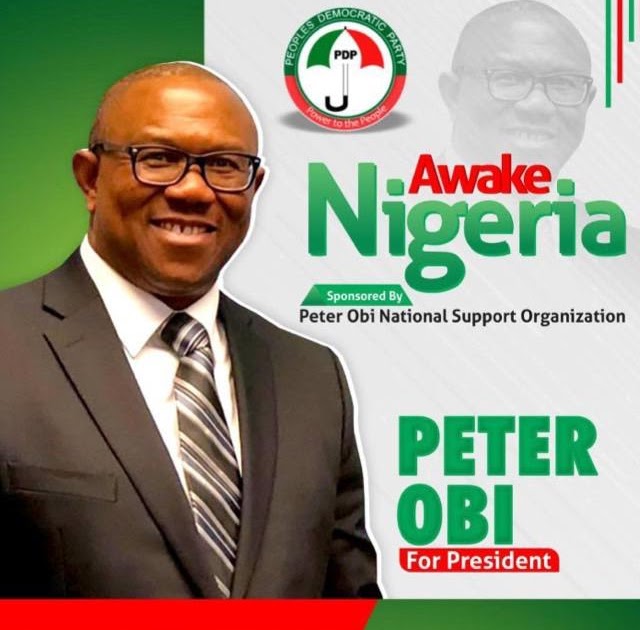
The Presidential Candidate of the Labour Party, Mr. Peter Obi, has denied reports on social media alleging he will bleed to death until his mandate is restored, reports ITREALMS.
He also urged all “Obidient” family and all men and women of goodwill to remain calm, prayerful and alert to the events in the country.
The Presidential Candidate of the Labour Party, Mr. Peter Obi, has denied reports on social media alleging he will bleed to death until his mandate is restored, reports ITREALMS.
He also urged all “Obidient” family and all men and women of goodwill to remain calm, prayerful and alert to the events in the country.
Friday, February 17, 2023
Uncovered! Plot to scuttle take off of University of Ilesa - ITREALMS
ITREALMS ... making leadership SENSE with digital news!
The move to scuttle the take of academic and administrative activities of the newly approved University of Ilesa, Osun State has been uncovered, following investigation which revealed the alleged involvement of some suspected highly placed individual behind the plot.
Tuesday, September 06, 2022
TD Africa partners Classera, expands access to e-learning in Nigeria - ITREALMS
Sponsored@ITREALMS ... making leadership SENSE with digital news!
TD Africa, Sub-Saharan Africa’s leading distributor of tech, services and lifestyle products has partnered with Classera, a globally renowned learning management platform to further expand access to virtual learning for millions of users across Nigeria.
The recently signed partnership will see Classera leverage TD Africa’s growing database, network of resellers/partners as well as its considerable reach across Nigeria to grow adoption of its bouquet of e-
learning solutions.
TD Africa, Sub-Saharan Africa’s leading distributor of tech, services and lifestyle products has partnered with Classera, a globally renowned learning management platform to further expand access to virtual learning for millions of users across Nigeria.
The recently signed partnership will see Classera leverage TD Africa’s growing database, network of resellers/partners as well as its considerable reach across Nigeria to grow adoption of its bouquet of e-
learning solutions.
Labels:
- ITREALMS,
access,
Classera,
e-learning,
expands,
Nigeria,
partners,
TD Africa
Wednesday, July 13, 2022
@40: St. Maria Goretti Old Girls urge Edo govt, return school to catholic mission - ITREALMS
PressRelease@ITREALMS ... making leadership SENSE with digital news!
The Class of 1982 of Saint Maria Goretti Girls Grammar School Benin City have pleaded with the Edo State Government to consider returning the School to the Catholic Mission to enhance the education of the girl child.
Monday, November 11, 2019
The imperative of ‘people’s manifesto’ - ITREALMS
In the 20 months since I wrote “Drafting a people’s manifesto” and “Further notes on the people’s manifesto” (February/March, 2018), a sufficient number of significant things have happened and are happening in our country, Nigeria, in the Nigerian Left, to the Nigerian Left and in the world to raise the level of the urgency of the broad suggestion I alternately called “draft” and “notes”. The use of these terms to describe my attempt was a cautious way of indicating that I was not, and could not be, publishing a manifesto on behalf of the Nigerian Left. I could only suggest, propose and urge—not as a detached outsider, but as an active insider.
One possible manner of appearance of an authentic “people’s manifesto” is clear to me and I expressed it in my piece, “Preliminary notes on RevolutionNow” (August 15, 2019). What I said then can be re-stated, perhaps more clearly: Variants of RevolutionNow (August 5, 2019) may be attempted again and again until a particular attempt initiates a popular revolt which will simultaneously produce an authentic “people’s manifesto” and a substantial and effective unity of Left forces.
This follow-up piece is also not a manifesto, nor can it be. And it is not a call for revolution. The preceding paragraph is a statement of possibility informed by history and experience: distant, recent and current. Having said this we should also quickly add and emphasise that no serious Left formation or serious Left programme can be based—solely or even substantially—on the possibility of popular political eruptions.
You only have to recognize that possibility of spontaneous revolts while struggling, campaigning, mobilizing and organizing. History and experience have sufficiently shown us that the absence of this recognition of possibility and therefore, the need for “sideline” preparations for it—is the dominant reason for “betrayals” and “hijackings” of popular political upheavals when they occur. Put differently, “betrayals” and “hijackings” of popular revolts are indicators of the level of organization of the Left. Most of the present seemingly chronic and insurmountable obstacles in the path of Left unity will evaporate at a revolutionary conjuncture we may not be able to predict.
The “manifesto of the Nigerian people”, or the “people’s manifesto”, as indicated in an earlier piece, and now being strengthened, has a double character or two forms. In the first place, it is a Nigerian Left’s manifesto in the ordinary sense of the term, “manifesto”: a “public declaration of intentions, motives or views”, of what it intends to do, at the very least, if it comes to power or office.
In the second place, it is a Nigerian People’s Charter of Demands presented to the Nigerian state by the Nigerian Left, in the name of the Nigerian people (popular masses). Hence the people’s manifesto, or distillations from it, can be used for elections as (campaign platform) and for general popular struggle. History shows us that this dual character of the “people’s manifesto” lies at the roots of its popular acceptance, its power and its resilience. These are primary tests of a “people’s manifesto”.
The events or “things” to which I referred in the opening sentence of this piece include Elections 2019 and the recent Supreme Court’s effective “closure” of the exercise; the steady decline of the state of the country’s physical infrastructure; the steady rise in the levels of unemployment, poverty and “insecurity”; the steady increase of the burden of living and reproducing life imposed by the Nigerian state on the masses of the Nigerian people; intensifying violent struggles within the ruling class for the control of political power and the economic surpluses extracted from the labour of the working and toiling masses—struggles in which the same masses are foot-soldiers and primary victims; and, generally, the steady decline of the quality of life of the broad masses of the Nigerian people - the “minimum wage” and its politics notwithstanding.
The significant events of the last 20 months also include the successful holding of a Conference of Marxism—resulting, among other things, in the establishment of a vibrant discussion platform for Marxists. This came as a qualitative addition to older but not-too-vibrant platforms for socialists and Leftists. Also appearing as a significant event is RevolutionNow and the current trial of its leader and a number of its lead partisans; the increasing fascist encroachment on the Nigerian people’s civil and democratic rights; the appearance of new popular-democratic platforms with credible leaderships—at the same time as the appearance of potentially-willing foot soldiers of full-scale fascism.
Finally, the significant events include the current world-wide popular protests in virtually all the continents and regions of the world. Here it is unnecessarily scholastic to start classifying the protests as “revolutionary”, “democratic”, “progressive”, “reactionary”, etc. The first task is to determine whether a protest is popular or not. Then identify and determine the “specific weight” of each ideological tendency in the protest. For the Left, that is where the lessons reside. Do not expect a “pure” protest.
The central message of the “people’s manifesto” at this point in history should be that the various negative and undesirable aspects of Nigeria’s current reality—as partially sketched above—can be arrested and reversed by the efforts of the Nigerian masses acting directly (that is, spontaneously), and as mobilized through their popular-democratic formations and coordinated by the Nigerian Left. But, then, who or what is the Nigerian Left? What are its antecedents and credentials? How does it intend to carry out its promise? How is its message, together with the description of the reality on which it is based, different from what the masses have been hearing over the years, since independence, from regime to regime?
These questions must be answered in the “people’s manifesto”. But before they are answered in the manifesto the Nigerian Left must answer them to itself. The latter is a condition for the former. And if it cannot answer anyone of them convincingly to itself, then it has to return to the drawing board. And in returning to the drawing-board, the identified three forms of struggle (direct, popular-democratic and Left) and their coordination should be more thoroughly interrogated. And remember: “Without a guiding organization the energy of the masses would dissipate like steam not enclosed in a piston box. But, nevertheless, what moves things is not the piston or the box, but the steam”.
Since the “people’s manifesto” will be a formal document it has to be appropriately structured, with a “table of contents”. The following six-point structure is an illustration: Who are the Nigerian Left? What country do Nigerian people now have?; What country do Nigerian people desire and deserve to have?; For a popular-democratic Nigeria: How the desirable will become the realizable; Immediate steps to be taken on coming to power or office; and Exhortation on the essential continuity of the struggle until victory, and beyond victory.
So, what should be done? I recall what I proposed about 10 months ago: “The next qualitative step (for the Nigerian Left) is not the formation of new parties or groups, or renewed attempts to register those already in existence, but the establishment of a Centre for coordination, ideological education, research, documentation and publicity.” But two questions now emerge: Can there be more than one Coordinating Centre? Yes, there can be. But I believe that the Nigerian Left is tired of the futility of multiplicity of formations. How many successful conferences on Marxism or similar efforts have we had in the last decade? And, can be there be more than one “people’s manifesto”? Yes, there can be. But how many Left declarations and platforms have we had in the last decade and how many have survived? From the Nigerian Left history now demands a qualitative step forward - to save the nation.
*Edwin Madunagu, mathematician and journalist, writes from Calabar, Cross River State, Nigeria.
*JOIN our alert's group | Share stories with us | Advert placement: WhatsApp | SMS: +2348033592762 *Twitter: @ITREALMS *Email: itrealms.dsa@gmail.com*
One possible manner of appearance of an authentic “people’s manifesto” is clear to me and I expressed it in my piece, “Preliminary notes on RevolutionNow” (August 15, 2019). What I said then can be re-stated, perhaps more clearly: Variants of RevolutionNow (August 5, 2019) may be attempted again and again until a particular attempt initiates a popular revolt which will simultaneously produce an authentic “people’s manifesto” and a substantial and effective unity of Left forces.
This follow-up piece is also not a manifesto, nor can it be. And it is not a call for revolution. The preceding paragraph is a statement of possibility informed by history and experience: distant, recent and current. Having said this we should also quickly add and emphasise that no serious Left formation or serious Left programme can be based—solely or even substantially—on the possibility of popular political eruptions.
You only have to recognize that possibility of spontaneous revolts while struggling, campaigning, mobilizing and organizing. History and experience have sufficiently shown us that the absence of this recognition of possibility and therefore, the need for “sideline” preparations for it—is the dominant reason for “betrayals” and “hijackings” of popular political upheavals when they occur. Put differently, “betrayals” and “hijackings” of popular revolts are indicators of the level of organization of the Left. Most of the present seemingly chronic and insurmountable obstacles in the path of Left unity will evaporate at a revolutionary conjuncture we may not be able to predict.
The “manifesto of the Nigerian people”, or the “people’s manifesto”, as indicated in an earlier piece, and now being strengthened, has a double character or two forms. In the first place, it is a Nigerian Left’s manifesto in the ordinary sense of the term, “manifesto”: a “public declaration of intentions, motives or views”, of what it intends to do, at the very least, if it comes to power or office.
In the second place, it is a Nigerian People’s Charter of Demands presented to the Nigerian state by the Nigerian Left, in the name of the Nigerian people (popular masses). Hence the people’s manifesto, or distillations from it, can be used for elections as (campaign platform) and for general popular struggle. History shows us that this dual character of the “people’s manifesto” lies at the roots of its popular acceptance, its power and its resilience. These are primary tests of a “people’s manifesto”.
The events or “things” to which I referred in the opening sentence of this piece include Elections 2019 and the recent Supreme Court’s effective “closure” of the exercise; the steady decline of the state of the country’s physical infrastructure; the steady rise in the levels of unemployment, poverty and “insecurity”; the steady increase of the burden of living and reproducing life imposed by the Nigerian state on the masses of the Nigerian people; intensifying violent struggles within the ruling class for the control of political power and the economic surpluses extracted from the labour of the working and toiling masses—struggles in which the same masses are foot-soldiers and primary victims; and, generally, the steady decline of the quality of life of the broad masses of the Nigerian people - the “minimum wage” and its politics notwithstanding.
The significant events of the last 20 months also include the successful holding of a Conference of Marxism—resulting, among other things, in the establishment of a vibrant discussion platform for Marxists. This came as a qualitative addition to older but not-too-vibrant platforms for socialists and Leftists. Also appearing as a significant event is RevolutionNow and the current trial of its leader and a number of its lead partisans; the increasing fascist encroachment on the Nigerian people’s civil and democratic rights; the appearance of new popular-democratic platforms with credible leaderships—at the same time as the appearance of potentially-willing foot soldiers of full-scale fascism.
Finally, the significant events include the current world-wide popular protests in virtually all the continents and regions of the world. Here it is unnecessarily scholastic to start classifying the protests as “revolutionary”, “democratic”, “progressive”, “reactionary”, etc. The first task is to determine whether a protest is popular or not. Then identify and determine the “specific weight” of each ideological tendency in the protest. For the Left, that is where the lessons reside. Do not expect a “pure” protest.
The central message of the “people’s manifesto” at this point in history should be that the various negative and undesirable aspects of Nigeria’s current reality—as partially sketched above—can be arrested and reversed by the efforts of the Nigerian masses acting directly (that is, spontaneously), and as mobilized through their popular-democratic formations and coordinated by the Nigerian Left. But, then, who or what is the Nigerian Left? What are its antecedents and credentials? How does it intend to carry out its promise? How is its message, together with the description of the reality on which it is based, different from what the masses have been hearing over the years, since independence, from regime to regime?
These questions must be answered in the “people’s manifesto”. But before they are answered in the manifesto the Nigerian Left must answer them to itself. The latter is a condition for the former. And if it cannot answer anyone of them convincingly to itself, then it has to return to the drawing board. And in returning to the drawing-board, the identified three forms of struggle (direct, popular-democratic and Left) and their coordination should be more thoroughly interrogated. And remember: “Without a guiding organization the energy of the masses would dissipate like steam not enclosed in a piston box. But, nevertheless, what moves things is not the piston or the box, but the steam”.
Since the “people’s manifesto” will be a formal document it has to be appropriately structured, with a “table of contents”. The following six-point structure is an illustration: Who are the Nigerian Left? What country do Nigerian people now have?; What country do Nigerian people desire and deserve to have?; For a popular-democratic Nigeria: How the desirable will become the realizable; Immediate steps to be taken on coming to power or office; and Exhortation on the essential continuity of the struggle until victory, and beyond victory.
So, what should be done? I recall what I proposed about 10 months ago: “The next qualitative step (for the Nigerian Left) is not the formation of new parties or groups, or renewed attempts to register those already in existence, but the establishment of a Centre for coordination, ideological education, research, documentation and publicity.” But two questions now emerge: Can there be more than one Coordinating Centre? Yes, there can be. But I believe that the Nigerian Left is tired of the futility of multiplicity of formations. How many successful conferences on Marxism or similar efforts have we had in the last decade? And, can be there be more than one “people’s manifesto”? Yes, there can be. But how many Left declarations and platforms have we had in the last decade and how many have survived? From the Nigerian Left history now demands a qualitative step forward - to save the nation.
*Edwin Madunagu, mathematician and journalist, writes from Calabar, Cross River State, Nigeria.
*JOIN our alert's group | Share stories with us | Advert placement: WhatsApp | SMS: +2348033592762 *Twitter: @ITREALMS *Email: itrealms.dsa@gmail.com*
Friday, August 24, 2018
MRA, KICTANet partner on AU Guide for Human Rights Defenders - ITREALMS
The Media Rights Agenda (MRA) and the Kenya ICT Action
Network (KICTANet) are partnering on "The African Union: A guide for human
rights defenders in the digital age," an advocacy tool designed to enhance
civil society engagement with the African Union system on digital policy
issues, reports ITREALMS.
In a joint statement, the two organizations hinged the
publication of the advocacy guide on the fact that the AU is an important
political actor on the African continent and a regional interlocutor in the
international arena, which makes it imperative that organizations seeking to
advance respect for human rights in digital policy have the right knowledge and
skills to engage the AU.
They explained that the aim of the 43-page guide is to help
civil society organisations who are conducting or intend to conduct policy
advocacy within the African Union system on the human rights aspects of any ICT
or digital policy issues at the AU, including for example network disruptions.
Mr. Edetaen Ojo, MRA’s Executive Director and Ms Grace
Githaiga, Co-Convenor of KICTANet, said: “Whether you have experience of
engaging with the AU but are lacking ideas on how to use the AU to advocate for
human rights in the digital age, or an experienced digital rights defender
unfamiliar with the AU, this guide is for you!”
The guide presents an overview of relevant organs,
departments and agencies of the African Union, outlines how they operate and
provides guidance on the opportunities that exist for civil society as well as
strategies for ensuring effective advocacy engagement on relevant digital
policy issues.
Uboshe Uboshe/GEE
Subscribe to:
Posts (Atom)