" ITREALMS: ensure
Showing posts with label ensure. Show all posts

Friday, September 12, 2025

How to ensure AI doesn’t overlook your brand by Reuben Kalu - ITREALMS

Commentary@ITREALMS ... making leadership SENSE with digital news!

Marketing is changing fast. The way people search, ask questions, and discover brands is no longer confined to search engines and typed queries.
How to ensure AI doesn’t overlook your brand by Reuben Kalu - ITREALMS
The future of marketing is not typed — it’s AI-powered and conversational.

Tuesday, January 31, 2023

INEC to NNPC on Election Day: Ensure availability of petroleum products to ease movement - ITREALMS

ITREALMS ... making leadership SENSE with digital news! 

The Independent National Electoral Commission (INEC) has appealed to the leadership of the Nigerian National Petroleum Company (NNPC) to ensure supply of petroleum products to facilitate the movement of of men and materials during the election days for the 2023 general elections, reports ITREALMS.
the Chairman of INEC, Prof. Mahmood Yakubu, with Group CEO at NNPC, Kyari
Making this appeal on Tuesday at joint management meeting with the leadership of Nigerian National Petroleum Company, the Chairman of INEC, Prof. Mahmood Yakubu, said that it has become necessary to mobilise every national institution to give Nigerians a pleasant experience on the 2023 election days.

Tuesday, October 25, 2022

NLNG calls for more investment to ensure reliable LPG supply - ITREALMS

ITREALMS ... making leadership SENSE with digital news!

Nigeria LNG Limited (NLNG) has called on stakeholders in the domestic Liquified Petroleum Gas (LPG) value chain to invest in the supply of the product to ensure a reliable and steady stream of supply to the market, reports ITREALMS.
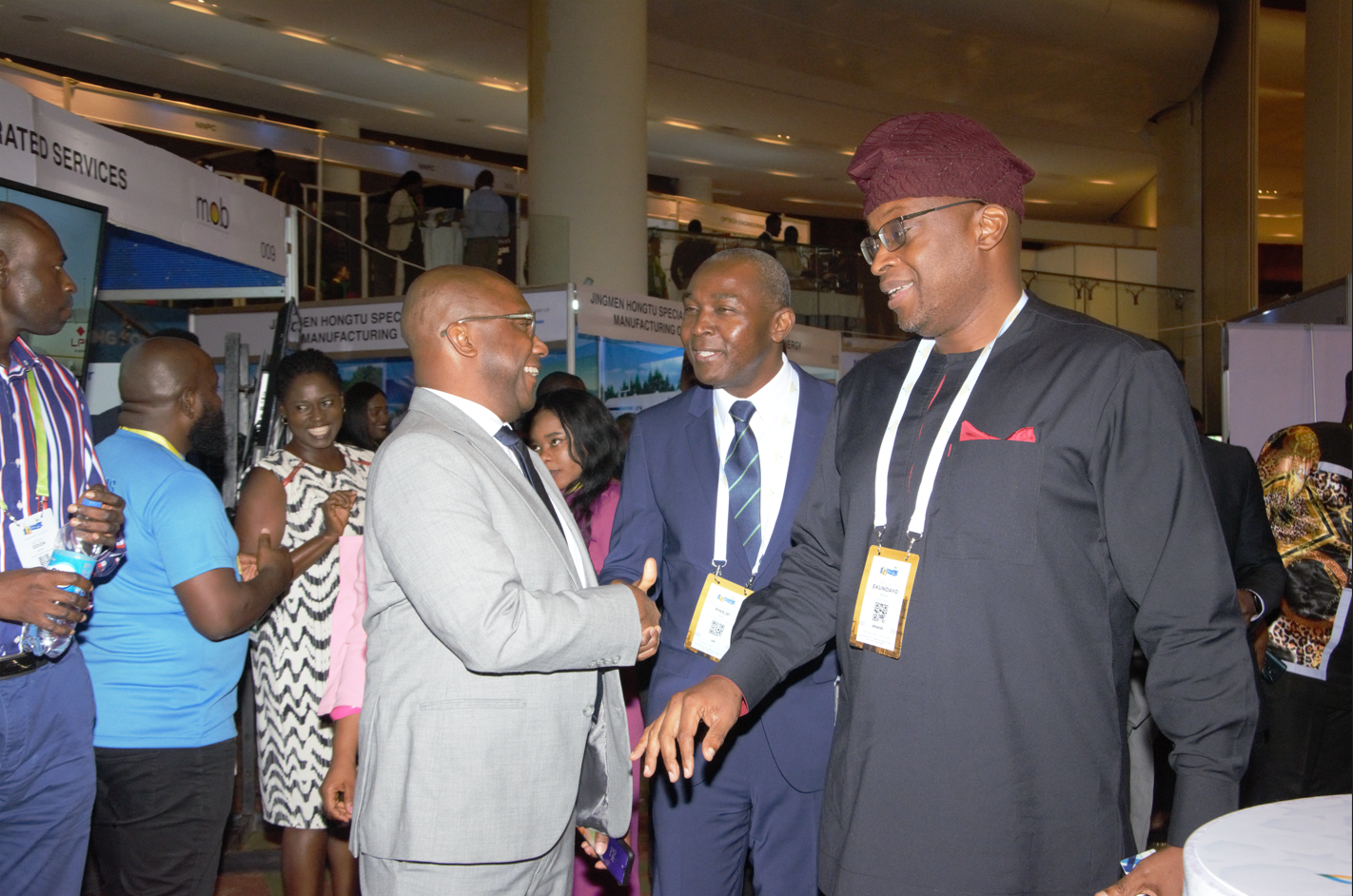
Deputy President, Nigerian LPG Association (NLPGA), Mr. Ladi Falola; NLNG MD, Dr. Philip Mshebilia; and NLPGA President, Felix Ekundayo at the NLPGA conference to celebrate 15 years of domestic LPG supply into the Nigerian market in Lagos…Tuesday
Marking 15 years of domestic LPG supply in conjunction with the Nigerian LPG Association (NLPGA) at a conference in Lagos, NLNG’s Managing Director and Chief Executive Officer, Dr. Philip Mshelbila, said the investment in supply would intentionally spark commitment along the value chain, including vertical integrations. He stated that NLNG was doing this through its further investment in Train 7, which will add about 35% to its current capacity when completed, subject to gas supply and gas quality. He added that other domestic producers of LPG would need to make investments to enable their product to become available to the domestic market, rather than exporting it.

Monday, January 07, 2019

Kwara Politics: Minister charges grassroots canvassers to ensure victory for APC - ITREALMS

Over 2,500 grassroots canvassers were inaugurated in Kwara State on Friday to engage in massive mobilisation of people from all the wards and polling units in the state to ensure victory for the All Progressives Congress (APC) at all levels in this year’s general elections, reports ITREALMS.

“These canvassers will be our victory army, the army that will dismantle the gargantuan edifice of corruption and misgovernance that has held our dear state down for too long,'' the Minister of Information and Culture, Alhaji Lai Mohammed, who is also the leader of the party in the state, said at the inauguration of the canvassers at the Buhari/Osinbajo Project 2019 Office in Ilorin.

''This unprecedented move is our most potent weapon against the enemies of the state and the oppressors of the people,” he said.

Alhaji Mohammed said the 'well-recruited, tested and trusted canvassers' will go from house to house in each of the 1,872 polling units in the state to tell the people why they must vote for President Muhammadu Buhari and all the candidates of the APC in Kwara State in the 2019 general elections.

“Gathered here today are 1,872 canvassers representing the 18,720 canvasses. That is one canvasser per each polling unit across the 193 wards in Kwara State. We are also inaugurating today 193 ward coordinators, 193 ward secretaries, 193 ward women leaders and 193 ward youth leaders,'' he said.

The Minister said the stellar performance of President Buhari in reinventing governance and his pro-poor policies have made the job of the canvassers much easier.

“To the canvassers, if they ask you why President Buhari deserves a second term, tell them it is because he has leveraged his legendary integrity and acclaimed management of resources, human and material, to reinvent governance and make a difference in the lives of Nigerians. Therefore, he needs another four years to consolidate his great achievements,” he said.

Alhaji Mohammed then went ahead to reel out the Administration's achievements, starting with the Social Investment Programme (SIP) which, he said, is benefiting a total of 10 million people directly nationwide.

He said the Buhari Administration is feeding 9.3 million pupils in 45,394 schools in 26 states and employing 100,000 cooks under the Home Grown School Feeding Programme; that the Administration is paying conditional cash transfer of N5,000 monthly to about 300,000 most vulnerable households and that over 1.5 million people nationwide have benefited from the interest-free loans to petty traders under the TraderMoni Scheme.

“The Administration has retaken every inch of Nigeria's territory from insurgents, flushedv them out of their safe havens and put them on the run. Road projects are ongoing across very state of the country, turning the country into one huge construction site. Kwara is a beneficiary, as those who have travelled on the Ilorin-Jebba-Mokwa and the Ajase-Ipo-Offa road can testify,” the Minister said.

Alhaji Mohammed used the occasion to assure all the APC candidates for this year's elections that the recent court judgment in respect of the state executive council of the party has not affected the validity of their candidature.

''They remain the authentic candidates of our great party and should go about their campaigns without any fear of being disqualified,'' he said.

In his remark, the Minister of Transportation, Mr. Rotimi Amaechi, said the 2019 general election represents the struggle by the poor in Nigeria to take back the country from the rich.

He commended the people of Kwara for kick-starting the political revolution that will dismantle the self-serving structures of the rich in the country.

“What you are seeing is the modern day Tunisia. You know the Arab Spring started from Tunisia, when a poor man just set himself on fire and the revolution started all over the country. Today, Kwara is leading the revolution to change Nigeria. Power must return to the people.

“We are gathered here today to peacefully take back power from the rich and handover to the poor. That’s what APC stands for,” he said.

He charged the people to rise up and defend the APC from the gang-up by the elite, who will always prefer to hold down the poor from attaining self-fulfillment in life.

*JOIN our alert's group | Share stories with us | Advert placement: WhatsApp | SMS: +2348033592762 *Twitter: @ITREALMS *Email: itrealms.dsa@gmail.com*

Tuesday, October 24, 2017

Education: Government must ensure rules are followed

No matter your job, you need standards to ensure that you are working to meet your objectives. Unfortunately, where education and schools are concerned, these standards sometimes do not exist. Or, more often, they are not enforced. Schools are decidedly sub-standard in some places, with those in sub-Saharan Africa facing particularly strong challenges. Many teachers are not sufficiently prepared in the region, classrooms are often overcrowded, infrastructure is crumbling and learning is suffering.

More than one in four young people cannot read in sub-Saharan Africa today, while by some other recent estimate nine in ten children do not acquire minimum reading skills. Standards are slipping where they could be applied, which is putting our global education goal at risk.

Even though the number of children not in school globally has stagnated between 2008 and 2015, this doesn’t mean that the number going to school is stagnating too. During the same period, 30 million more children enrolled in primary school in sub-Saharan Africa alone - that’s more than all the children enrolled in primary school in the United States. Is it any wonder that standards are slipping?

Depending on what side of the fence you sit, the diversification of education providers, often in the form of low-fee private schools, can be a blessing or a curse. Many of these schools sprouted in densely populated slums, including in Kibera, Kenya, where governments did not wish to set foot. They attracted families aspiring to improve the education of their children. But oftentimes these schools have not lived up to expectations.

What the newest Global Education Monitoring (GEM) Report, Accountability in education: meeting our commitments, shows us is that governments must establish standards and regulations that lay down the law for all education providers, public and private. If they do not, negative practices quickly take hold.

At present, governments may not have standards in place even for public schools. We found that there are no regulations on class sizes in primary school in 10 countries in sub-Saharan Africa, including Liberia, Sierra Leone, Mali and Togo. This is a major challenge for teachers and a big contributor to low learning outcomes. Less than half of low and middle income countries reviewed by the World Bank had established standards for early childhood education – and even fewer monitored and enforced those regulations.

When governments relinquish control of education to private providers, it is equally if not more important that standards be in place to regulate them. By 2021, it is expected that one in four primary school age pupils in sub-Saharan Africa will be in private schools, up from 13.5 per cent in 2015. If these schools’ way of working does not meet the aspirations of our global education goal, SDG 4, it is highly unlikely we will achieve it.

The reality, we found, is that regulations are not being created or streamlined to adjust to the fast rate with which education systems are expanding. The very first step of accrediting schools in the first place is often cumbersome, prone to corruption, and therefore slow, leaving many operating without meeting even minimum safety and infrastructure standards. In 2010/11, for example, only 26 per cent of private schools in Lagos had been approved by the Ministry of Education. In Kenya and Uganda, some private schools were operating without qualified teachers and with inadequate infrastructure before regulations were put in place and courts shut them down.

An education system is not the work of just one person or body. An education system of good quality is a shared responsibility between multiple actors, governments, teachers, schools, parents and the private sector. But governments need to set the example, and introduce clear regulations that lead towards the global education goal. They are the missing link for restoring trust in the education system.

*Contributed by Dr. Manos Antoninis, Director, Global Education Monitoring Repor at  UNESCO


ITREALMS ... everything news digitally!