" ITREALMS: Understanding
Showing posts with label Understanding. Show all posts

Thursday, July 06, 2023

Understanding realities of direct selling by Biram Fall - ITREALMS

Commentary@ITREALMS ... making leadership SENSE with digital news!


In a region where traditional job markets can be limited, direct selling offers a flexible and accessible pathway to entrepreneurship. In the traditional retail model, shop owners buy goods from manufacturers and mark them up to pay for their business costs such as rent, before selling them on to the end consumer. In the direct selling model, distributors sell high-quality goods directly to the customers outside of the store environment, reducing business costs and eliminating the need to raise prices on their goods.
Understanding realities of direct selling by Biram Fall - ITREALMS
In addition to providing unique, life-enhancing products to consumers, the direct selling industry has had a significant impact on Sub-Saharan economies. 

Friday, September 02, 2022

UNCTAD, Commonwealth Secretariat expand development cooperation - ITREALMS

ITREALMS ... making leadership SENSE with digital news!

The two organizations will broaden their existing cooperation to promote the ocean economy, curb plastic pollution, support least developed countries, bolster the digital economy and boost gender equality.
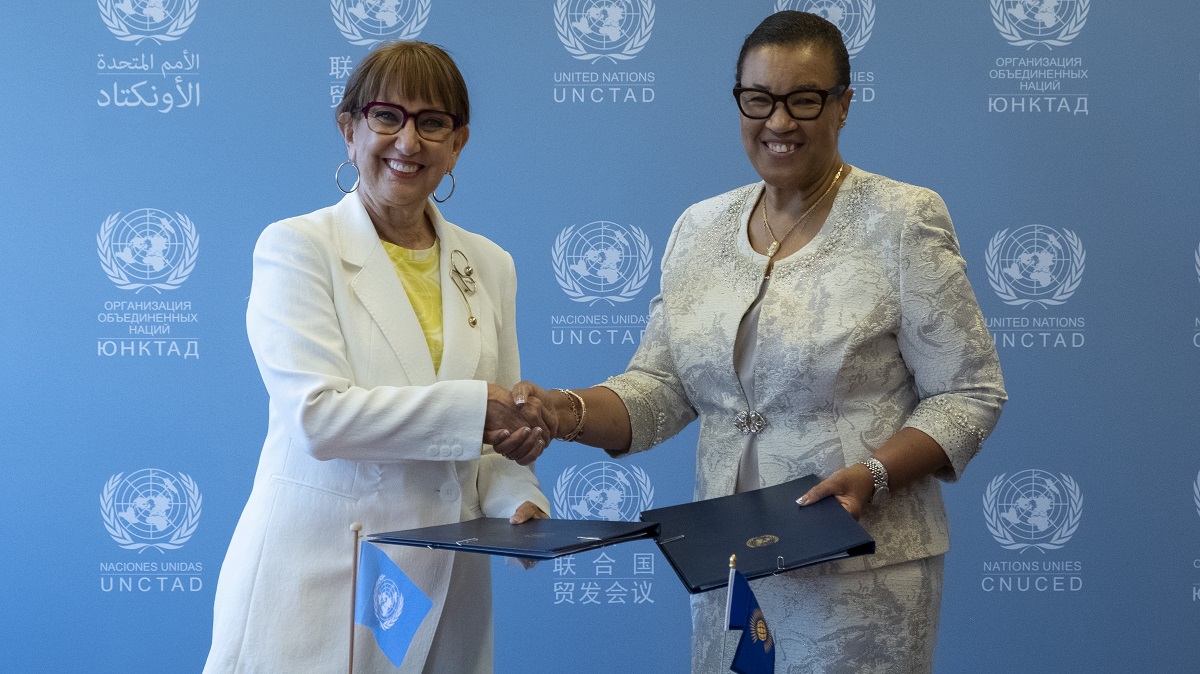
UNCTAD Secretary-General Rebeca Grynspan and her Commonwealth Secretariat counterpart Patricia Scotland signed a memorandum of understanding (MoU) on 31 August
The heads of UNCTAD and the Commonwealth, Rebeca Grynspan (left) and Patricia Scotland (right), at the Palais des Nations on 31 August 2022.

UNCTAD Secretary-General Rebeca Grynspan and her Commonwealth Secretariat counterpart Patricia Scotland signed a memorandum of understanding (MoU) on 31 August to strengthen cooperation in various areas of work.Secretary-General Grynspan said stronger collaboration would enable the two organizations to contribute more to global efforts to tackle the multiple crises facing the world.

Tuesday, December 25, 2018

Understanding bitcoin in festive season - ITREALMS

Commentary@ITREALMS:
Bitcoin concept was conceived barely a decade ago, and it remains as one of the most misunderstood yet widely known cryptocurrency. Reluctance to embrace this electronic financial transaction system locally is based on misinformation and controversies whose basis is ignorance about bitcoins. This comfort is not new because the world had to overcome a financial system, which tied gold to the dollar. The festive season comes with a fair share of smiles and economic strain. This is an opportunity to enjoy while managing finances well. Bitcoins not only enable users to create this balance, but it is also an excellent moment to explore inexhaustible options this festive season.

Bitcoin is decentralized and is controlled by its users

One of the most interesting bits about bitcoins is that the digital currency is not controlled by any government or banking system. Transactions can be done over the internet anywhere in the world. The decentralized system gives users the freedom to control their finances. Paxful, (https://bit.ly/2EHx8cM) a global peer-to-peer bitcoin marketplace, boasts more than 6 million trades in Africa for 2018 and reports that African users are leading on the website’s activity. “Overall Africa is still our fastest growing market and it’s amazing to see despite the challenges that the African people are going through politically and socially, they are still leading the adaption of P2PFinance,” says Ray Youssef, CEO, and Co-founder of Paxful.

You can use bitcoins to buy things that matter

Bitcoin is digital cash that you can use to purchase products both at physical or at online stores. Gift cards account for 64% of Paxful’s trade. You can purchase gift cards and surprise someone with an “Ugly Sweater”. Alternatively, Xbox fanatics can explore the existing products on Microsoft stores by getting discounted gift cards on the platform. Put a smile on someone’s face with bitcoins! There are more than 300 payment methods to buy and sell bitcoins in Paxful. This means users can shop gifts for themselves and their loved ones at their convenience using bitcoins or the money acquired from the trade.

Bitcoin can be used for payment locally and globally


Bitcoin should be treated as an emerging concept in e-commerce. The rationale is to showcase a transparent alternative to the traditional banking systems that have additional fees. According to Paxful COO and Co-Founder, Artur Schaback, “We have a global user base which opens up the opportunity to our users to do business with anyone and anywhere. People buy bitcoin in order to facilitate commerce with it locally or globally. Our job is to make Paxful a platform where users can invest in bitcoin easily and securely wherever they are based.”

Give the gift that keeps on giving

Bitcoin is one of the best things that you can give your family and loved ones this holiday season. The mathematical algorithms on which they were founded should not be used to describe the transactions. Also, terms such as blockchains, mining, bitcoin wallet, (https://bit.ly/2P52Z7X) and cryptocurrency should not scare anyone. A good sign is that financial literacy institutions are taking time to train people and organize workshops that will continue to enlighten the local Mwananchi about bitcoins. From peer-to-peer marketplaces like Paxful to bitcoin exchanges, everyone can enjoy the benefits bitcoins can bring. If researched properly and looked into with enough enthusiasm and open-mindedness, bitcoin can be the perfect gift and currency to send and spend through the festivities.

*Contributed by 
Paxful:

*JOIN our alert's group | Share stories with us | Advert placement: WhatsApp | SMS: +2348033592762 *Twitter: @ITREALMS *Email: itrealms.dsa@gmail.com*

Friday, February 23, 2018

Nigerian media commended for understanding dangers of hate speech

The Nigerian media have been commended for their understanding of the dangers of hate speech, reports ITRealms.

This commendation is coming from the Minister of Information and Culture, Alhaji Lai Mohammed while declaring open the workshop on ‘Hate Communication in Nigeria: Identifying its roots and remedies’ held in Abuja Thursday.

He noted that it’s a fact that media takes this issue seriously is very encouraging, stressing that in most cases, the media wittingly or unwittingly provides the platform for the dissemination of hate speech.

“But I can say here, unequivocally, that the Nigerian media understands the dangers of hate speech,” he declared.

He reiterated that hate speech is not free speech.

“For example, while the Nigerian constitution guarantees freedom of speech, it does not guarantee freedom of hate speech. That's because hate speech could be the precursor of violence, of genocide,” he said.

He pointed out that in the 1994 genocide in Rwanda, which left at least 800,000 people dead, remains fresh in the memory of the world.

Insisting that hate speech, or what later became known as 'Hate Media', was a major catalyst of that genocide.

This, he said, the International Criminal Tribunal for Rwanda confirmed that when it sentenced two Rwandan journalists to life in prison and a third to 35 years in jail for their roles in fueling the genocide.

At the trial of the journalists, Mohammed said the tribunal was told how the media played a major role in inciting extremists from the Hutu majority to slaughter of ethnic Tutsis and politically moderate Hutus.

The lesson here, he said, is that journalists must never offer their platforms for use to communicate hate speech.
“They must say NO to hate speech. That's one of the fastest ways to nip the dangers of hate speech in the bud,” Mohammed said.


This, he said, is why this workshop is very important, stressing that with the quality of the resource persons who have been assembled for this workshop, it will achieve its purpose and also go a long way in stemming the tide of hate speech in our country.

Nonye Dom/GEE

ITREALMS ... everything news digitally!

Sunday, November 12, 2017

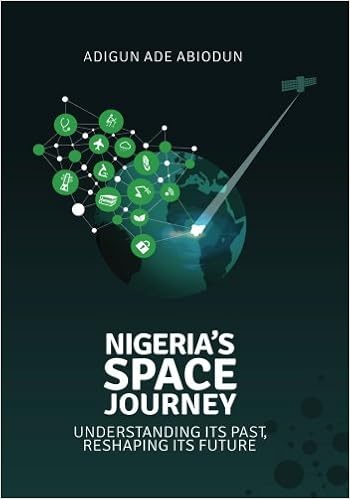
Nigeria’s Space Journey – Understanding its Past, Reshaping its Future

Book Review:
1.        While the following may not be new to several of the esteemed and distinguished academics in the audience, they amazed me:

a.     The first ever live satellite telephone conversation between chiefs of state, was between J. F. Kennedy of the USA and Abubakar Tafawa-Balewa of Nigeria. This is a testimony to the respectable and esteemed past of our Nation.

b.  Within the first month of our independence in 1960, Nigeria and the USA signed an MoU on space vehicle tracking.

c.    A hypersensitive ground tracking unit was installed at the now University of Ibadan in 1957/ 58, as part of the USA Explorer-1 satellite which contributed discovery of the Van-Allen Radiation belt, It is believed to protect Earth's atmosphere from destruction by Solar-winds.

d.   The first satellite earth station in Nigeria, that the Americans called NASA Tracking Station 5, was installed in 1960/ 61 in Kano with support from NASA for monitoring the impending USA Gemini and Apollo space missions. As you are all aware, it was the Apollo missions that placed mankind on the moon. At the time, the locals called it “the place the Sardauna built to get the message from the stars.”

e.     In 1962, an over 18-kilogram meteorite from Mars landed in Zagami, present day Katsina State, Nigeria, and it was a significant space encounter for the nation. Today pieces of that stone are scattered in various museums and with private “dealers” around the world. The location of the remains of the core, which is our collective national heritage, your heritage and my heritage, are uncertain. Morality and natural justice demands that such finds are a public commons and heritage, like the air, rivers, oceans and frequency spectrum, which the state keeps in trust for, and on behalf of, the people.

Introduction:

2.     Nigeria’s Space Journey – Understanding its Past, Reshaping its Future is a fascinating yet sobering, 400 page, record of Nigeria’s historical relationship with modern Science and Technology, as manifested in activities related to outer-space. The book is also an account of the authors activities in the “Court” of Obasanjo.

3.     The book evoked mixed feelings for me, as it recounts several missteps, missed opportunities and inexplicably bad decisions that Nigeria has taken from Independence to date. However, we must focus on:

a.     What did Nigeria and its decision-makers do right, and

b.     What could we have done better.

c.     This is a better way forward so that we can avoid getting bogged down in blame games instead of, concentrating on learning our lessons and moving forward.

4.     The Author explores space and its impact on Nigeria. The author focuses on the steps Nigeria has taken to achieve its space related goals and the steps it should take for the future. It is divided into six main sections, namely:

a.     Space in Human lives;

b.     Space efforts in Nigeria;

c.     Reawakening of Nigeria;

d.    Nigeria’s space priorities;

e.    Contributions to the Resolution of Global Concern; and lastly

f.     Moving ahead.

5.    In 2001, Nigeria articulated its Space Policy and Programme with the vision “To make Nigeria build indigenous competence in developing, designing and building appropriate hardware and software in space technology as an essential tool for its socio-economic development and enhancement of the quality of life of its people.”

However, instead of pursuing the above objective, Nigeria swallowed the bait of the satellite merchants that touted the acquisition of micro-satellites as the quickest and cheapest way to space for the developing countries. With a focus on the upstream-end of the technology, a string of such acquisitions soon became the centrepiece of the nation’s space programme.

6.    The author examines and analyses the lessons Nigeria has learned on our space journey, to-date. It concludes that the nation’s space efforts have not delivered as promised, and that the nation’s space journey should be redefined and redesigned, for Nigeria to attain its space related goals. As Nigeria looks to the future, it must effectively utilise its natural endowments to earn its place as a respected space capable country. This can be done with an initial focus on the downstream impact of technology. Thus, it would need to retool its own science and technology capabilities, and utilise these assets to enhance its economic development and improve the wellbeing of its people.

Section 1 - “Space in Human Lives”

7.     This section recounts the launch of Sputnik-1, the first human artificial satellite by the Union of Soviet Socialist Republics (USSR) in October 1957, that marked the beginning of the space age; followed by the launch of USA Explorer-1 in January 1958.

8.     The Nigerian communication industry in the 1970’s, 80’s and 90’s, was beset with often uniquely indigenous challenges. As we may recollect, the advent of the mobile phone was at that time considered by the nations leadership to be only for the elite.

9.     It is pleasing to note that Nigerians of all socio-economic capabilities are increasingly leveraging advanced science and technology based tools since the year 2000. However, as the author observes, we have clearly not weaned ourselves from the mentality of acquiring foreign technology solutions, without commensurate investment in expanding our domestic capacity for foundational intellectual research, as well as basic science and technology. Our ongoing challenges with our various earth observation and communications satellites, highlight that the important lessons have not yet been learnt.

10.   The author notes that we need to have an understanding of the opportunities that abound in outer space, and how the successful exploration and exploitation of these opportunities is in our national interest. Satellite based information and services are becoming fully integrated into everything we do, as they help in accomplishing daily human tasks. The author reviewed Satellite capabilities that relate to basic human development that include: Healthcare; Marine Ecosystems and Fisheries; Weather Forecasting; Search and rescue system and Building a culture of peace in Africa among others.

Section 2 - Space Efforts in Nigeria

11.   The contribution of Nigerian scientists to the study of the ionosphere in the 1950’s – 1960’s introduced Nigeria to the peripheries of outer space and may have also influenced the USA’s request for Nigeria to provide local support for America’s initial manned space mission. This throws up issues that our nation and its decision-makers should have done better, namely:

a.     Nigeria in the early stages of its space journey focused on technology transfer instead of technology development. We thought we could acquire technology as short-cuts to solve our developmental challenges. With hindsight it is clear that without a solid foundation, the house will not stand. Unfortunately, building foundations take time and significant efforts. However, our own history has shown us, that there is wisdom in the Parable of the Wise and the Foolish Builders, one who build her house on a rock and the other who build his house on sand.

12.    In the main, Nigeria’s Science and Technology sector never truly developed because we, and decision-makers in particular, focused on acquiring technology from other nations instead of developing technology locally. Decision makers lost focus on the fact that these things must be for and about people.

13.   I recollect the day the author read the already signed contract for NigeriaSat-1.

a.     It must be understood that the author, as well as the National Security Adviser at that time, had made significant efforts to obtain, and make inputs into the draft purchase agreement, before it was signed.

b.     I can attest to the frustrations and obstacles we all faced.

c.     I respectfully recollect that upon reading the contract Nigeria had signed, the author shed tears. It was one of three occasions that I witnessed such emotions from the author.

d.     We must appreciate that these tears arose from his genuine love for Nigeria; his passion to ensure that in the outer-space sector, in which he stood tall, Nigeria would go in the right direction, there-by resulting in the right outcomes.

e.     It was a very sobering time for all of us, and we must continue to endeavour to learn from the frustrations, disappointments and missed opportunities that we witness, to ensure that our nation, and ourselves, do better.

14.    We also must appreciate President Obasanjo’s commitment to Nigeria’s space agenda as manifested in February 2000, when he appointed the author as Senior Special Assistant to the President on Space Science and Technology (SSAP-SST).

15.    As the authors recollects, the “Nigeria Space Program: A Blue Print for Scientific and Technological Development2”, was submitted to President Obasanjo on 26 September 2000.

a.     I recall the development process and the meetings, of the 24 Space egg-heads, that put the 65-page document together.

b.     While not doubting the quality of thought and effort that went in to the development, Nigeria’s 1998/ 99 national submission to the United Nations on UNISPACE III, about our future space activities. I remember the author admonishing us, that, it was 186 pages long, and we had no satellite at that time. Yet, a similar Indian document was only 8 pages long, and, at the time, had about 15 Satellites in orbit.

i.      Subsequently, in 2014, India sent a probe into orbit around Mars.

ii.     Fast forward to 15 February 2017, when India launched 104 satellites into space, atop its own rocket.
iii.    Certainly, the India space program has come of age.

iv.    Some may ask whither Nigeria?

16.    One of the most important lessons I learnt during the development of the aforementioned “Blue Print”, was that a policy or blue print document should be acted upon.

a.        To be acted upon, it must be read.

b.        To be read, it must be concise and to the point.

c.         Using President Obasanjo, as an example, he had over 40 ministers and 60 special assistants including the author, as well as others, thus totalling well over 150 persons that could send him important memos and documents.

i.      Assuming, that each of those persons sent him in a given day, an average of a one-page memo then the President, despite being an avid reader, will need to read at least 150 pages each day.

ii.     While accepting that President Obasanjo, read more than most, we must appreciate that we must not overload strategic decision makers with unnecessary details.

iii.     Thus, if a 186-page blue-print is sent to a strategic decision maker, it is clear that most will not read it, and his staff will filter it down to a one or two-page document which may likely leave out the critical issues that can influence the decisions arrived at.

17.    I recollect the author’s story, as articulated on page 98, on when he was summoned back to Abuja, upon his arriving in the USA for a well-earned break. Permit me to reminisce:

a.        I was the person who called him, to inform him that the President wanted him to participate in a crucial meeting, and that he needed to return to Nigeria on the next flight.

b.        I recollect that the 08 January 2001 meeting was very difficult for all of us.

c.         I also recall that the SSAP, and the NSA, had provided a full brief to the President on the issues to be discussed, and I knew the President understood the situation.

d.        However, what made my jaw drop was that the President asked the decision makers from the Ministry some questions three times. At a point he even said, “are you sure.” As you know, when an African-elder asks, three times, it often implies that he knows more than you have told him. The ministries decision makers’ response each time was at variance with my understanding of the issues. I have never forgotten how people, in the ministry, whom I held in high esteem let me down, and by extension let the nation down.

Section 3 - Reawakening of Nigeria

18.    As the author explains, for Nigeria to face its future in its space journey, the nation’s science and technology foundation must first be rebuilt. The success of our space journey is tied to the health of its Science and Technology sector.

19.    Reawakening Nigeria requires us to see Science and Technology as a tool of Development, taking a cue from Brazil, Saudi Arabia and South Africa. While, there is a huge difference between Then and Now, however, we know, it should have been better.

Section 4 - Nigeria’s Space priorities

20.    The priorities recommended by the author include:

a.        The nation’s need to learn from its past experiences;

b.        Rebuild its science and technology foundation;

c.         Utilize its abundant human capacity to achieve its space goals;

d.        Know and understand the world in which we live;

e.        Harness space to address the basic necessities of the Nigerian resident;

f.         The need to meet the security and safety concerns of the nation;

g.        Gain a better understanding of the equatorial plane;

h.        Build and nurture a private sector that can support the nations space programme.

Section 5 - Contributions to the Resolution of Global Concerns

21.    The author notes that, in a bid to contribute to the resolution of issues of global concern, there is a need for us to understand that this starts with us as individuals, then as a nation. We need to protect our planet first, from ourselves. There is a need for us to act collectively, be accurately informed and act accordingly. This is in addition, to the efforts of global leaders, through various initiatives such as;

a.        The Mitigation of global warming and its attendant climate change; and
                                                              

b.        The mitigation of the impact of Near-Earth Objects, such as meteorites and especially space debris:

i.         According to Time Magazine “On average, one tracked object re-enters the atmosphere each day. Most of these are very small. An intact spacecraft or launch vehicle orbital stage typically falls back to Earth once a week.”

ii.        Recollect that, “NASA's 85-ton Skylab crashed into Western Australia in 1979.”

iii.       Italy’s 1.4 tonne Bepposax satellite that fell into the Pacific Ocean on 29 April 20037. According to the Bepposax Re-entry Predictions8, The Niger Delta was under its path, but for providence it could have crashed there.


Section 6 – Moving Ahead

22.    The author poses questions that we must reflect upon as a nation, on our way forward.

a.        What exactly are we aiming for?

b.        What path do we want to take?

23.    A space programme can be one of the most challenging and demanding national undertakings because, it requires high levels of intellectual and financial capabilities. However, it can revolutionize the nation’s development trajectory. Our answers to these questions should enable us to redirect our space journey.

24.    Recommendations for consideration by the author include:

a.        The National Space Council (NSC), that embodies the vision of the nation’s space programme should be more pro-active and should provide continuous rigorous oversight of the nation’s space activities;

b.        To accomplish the above, the NSC should, constitute a sound technical advisory body (The Think Tank) in order to redefine and redesign the nation’s space agenda;

c.         The Think Tank should offer advice to the NSC on the pursuit of the immediate and mid-term priorities of the nation’s space programme;

d.        The Think Tank should conscientiously partner with stakeholders for a united national space effort, on the NSC’s behalf.

e.        The NSC should rally the resources that will ensure the sustainability of the nation’s space programme.

f.         The NSC should ensure that the nation takes necessary measures to learn vital lessons from the comparable steps of other countries.

Conclusion:

25.    The importance of this book, goes beyond the issues of science and technology to highlight the need for all of us, especially those who have witnessed the unfolding of significant events, to document our thoughts and experiences for posterity.

a.        I believe that the perspectives of most of our decision-makers are likely to be lost forever, and by extension the memory and legacies of many leaders and players, in the sands of time. This is because, they have not directly documented their roles, perspectives and thoughts, in relation to epoch making events.

b.        Olusegun Obasanjo is an example of a decision maker who understands this. His perspectives, rightly or wrongly, will likely prevail in history because he has directly articulated them, and not relied on “interpreters.” Likewise, I believe that this book will be part of the authors considerable legacy.

c.         Unfortunately, it is possible that the perspectives of other Nigerian heads of government will be quickly washed away because, they have not personally provided coherent insight into what happened, why and their intents, in the context of the time at which they made their decisions.

d.        For those who are dead it is too late, for those who are living, including all of us here today, I implore you to articulate your recollection of the experiences leading-up to the many events in our national journey, so that we at least have an opportunity to learn from you. We may opt, for many reasons, not to learn, but you have an obligation to provide your insight, should we, or a subsequent generation, choose to do so. Such insights become part of your legacy to us and part of our culture and understanding as a people.

26.    The author articulates why:

a.        Nigeria, and its people, are where we are today, and we must admit that our position is not optimal;

b.        The author notes that to move forward, Nigeria must:

i.         Engage in broader consultations with stakeholder, not through media dialogues, but through the Think Tank’s inspired rigorous national dialogues;

ii.        Invest in enhancing the capacity of our people to fundamentally grapple with the real science and technology challenges that we face;

iii.       Ensure that our national development policies are sustainable, by making sure that they are grounded in local realities. This can only be done when such local realities are adequately and scientifically understood;

iv.       Decision-makers must endeavour to take a more strategic view of addressing the science and technology challenges that our nation would face.

v.        Arguably, the above is the “real national restructuring.”

27.    The author believes that the academic community in Nigeria is not taken as seriously as it should be by decision-makers. Decision-makers and the academic community must find ways to communicate better:

a.        Researchers and decision-makers often talk “at” each other, and not talk “to” each other.

b.        Despite the existence of high quality indigenous research, many policy decisions arise from advice generated beyond our borders.

c.         Both Policy makers and Academia must build communication bridges with the intent of developing synergy. If this means using cartoons, then so be it.

d.        The academic community needs to simplify and significantly shorten its communications with decision-makers.

28.    There will be some, including a few in the audience, whose interpretation of events may be different from those of the author. That’s ok, and to them I say:

a.        I witnessed several of the events that the author discussed as they occurred while he was SSAP-SST.

b.        While you have the right to dispute any of the perspectives given, you also have a duty to this nation, posterity and the truth, to honestly articulate your perspectives, and version of truth, as you perceive it.

29.    Nigeria’s Space Journey – Understanding its Past, Reshaping its Future is a fascinating book that is well worth reading. However, it can be heavy reading for a younger generation that is used to sound bites. It says much of what needs to be said, and it will be an important addition to the repertoire of national development discourse. I encourage, all who are interested in moving Nigeria forward, to read this book.

Thank you for your attention. I wish you all well.

By Abdul-Hakeem Ajijola

ITREALMS ... everything news digitally!

Thursday, June 01, 2017

21st century questions: Understanding Biafra without history

I was speaking with a very young pharmacist from the South-East yesterday. I advanced the restructuring/true Fiscal Federalism as what I believe is the way out of Nigeria's muddle. He would not buy it.

"Forget it ma'am. It's better we just go. Give us 10-15 years and see how Biafra would be transformed." He spoke with conviction. His eyes shone with what I thought was longing. "Just forget it. There is no need dragging this thing with them," he concluded.

A good number of Igbos, and I dare add, other young Nigerians, are totally not understanding Nigeria as it is right now. It is not enough to make dismissive remarks like "They were not even born when the war happened." Or remarks like "They don't understand what they're asking for."

Make them understand. That is, if you understand what you're asking them to understand. If it makes sense to you. It even gets more annoying when you hear the older ones, the actors and spectators of the unfortunate war, urge the younger ones to learn from history.

According to Osinbajo, "experience is the best answer for a fool. History is a much gentler teacher.'
I agree.

But comments like that could even draw the ire of the young ones who have today been denied history classes in school. Who keeps a people ignorant of their history? But even more annoying is the fact that those who urge this learning have themselves not only failed to learn from experience, but have bluntly refused to learn from history, the much gentler teacher.

And what is there to learn? What is there to understand?

That a boy from Anambra State aspiring to get some education at the prestigious Unity Schools has to score about 139 marks in the entrance examination while his counterpart, perhaps even his classmate or neighbour from Zamfara State would only have to score 4 marks. And that it takes an even weirder turn when they are done with school, at which point the Zamfara boy would have over 80 per cent more chances at a federal job than the 80 per cent more studious boy from Anambra. How do you explain that to a young Nigerian so that he may understand?

How can they understand that a State like Kano, created at about the same time as one like Lagos, has about 44 local govt areas while Lagos State has a paltry 20 constitutionally recognized local government areas. Bear in mind that Kano State has long been sub-divided into two states of Kano and Jigawa. Jigawa alone has 27 LGAs of its own. You can say that the old Kano State has 71 LGAs while Lagos still lags behind with 20. And that the entire South East of five states has only about 94 local govt areas? Did it strike you that the South East is the only region still dawdling with five states? It would not have mattered of course if the National cake wasn't shared on the basis of local governments. Only if it was baked on that same basis. How would any young person without a brain for understanding twisted things get this?

How can they understand that in the present Govt, the entire South East has no representation in the security body of the country. So when the security chiefs sit to discuss security, the primary role of any govt, there is nobody from the entire SE region in attendance. How can anyone understand this.

How can even a gentle teacher make anyone understand that a South South youth would die for daring to steal crude oil from what used to be his fertile and arable farmland, while his Northern counterpart can freely mine minerals from his backyard. We only get to hear anything about it when lead poisoning begins to ravage communities.

How do you understand that we have Petroleum Equalization Fund which ensures that petroleum products get to the people in the North at the same price at which it gets to those in the South but we do not have Tomato Equalization fund or Carrot Equalization Fund to trim the cost for people in the South? Break it down for me so that I may understand since I didn't witness the war.

How do you break down the brazen massacres of Igbos, Christians and other innocent Nigerians any time the North wakes up from the wrong side of the bed? Or when an artist draws a denigrating sketch of Mohammed in countries some of the victims have never heard of? Or when a group of girls decide to bare their bodies in beauty pageants? Or when a man cannot win elections? Or when a farmer must till his farmland? Or just about when anything ... Just unbelievable impunity. And no one ever gets justice.

But we can start by explaining how Katsina State alone just got allotted more slots that the entire SS, than the entire SW, than the entire SE, than the entire N. Central in the ongoing (or is it completed?) recruitment by the DSS.

And a host of flustering matters.

So what is it you want History to help you teach? That the oppressed should stay calm and "ask nicely" like Obasanjo put it? They should ask nicely for their share of a piece of cake jointly baked by all? They should treat Nigeria with love like Obasanjo again suggested. It shouldn't matter that they get only rebuffs in return. I don't blame Obasanjo. It's probably the way he knows love and reconciliation...one sided. Any wonder his daughter would literally disown him publicly?

I listened to all the speeches made at the Biafra@50 event. They were all rich in flowing grammar, beaming with rhetorics but glaringly bare on commitment. Nobody but Nwodo dared point a way out. 
Osinbajo's speech had no mention of restructuring, something I can bet my last finger that he believes in. It would seem like we don't want to find a way out of our predicament yet.

Make no mistake, the clamour for Biafra is getting more tumultuous by the day that I fear that the voices of some of us preaching 'restructure' may soon be drowned.

And this house may come crashing on us all.


*Contributed by Nneka Aroh
ITREALMS ... everything news digitally!

Wednesday, April 27, 2016

Phone etiquette to note

A telephony conversation is all about communicating in the right way, as it is different from a face-to-face conversation, which makes understanding the other person pretty easy for you. 
Observing telephone manners is important especially if it is an official call that you are making or receiving. Being able to speak on the phone with good manners and poise is just as important as communicating face-to-face.
STEPS TO BETTER PHONE MANNERS:
1.         Always introduce yourself - When you call someone, a friend, family or stranger, speak clearly in a modulated voice and introduce yourself. Smile before taking the call, this allows you to be more amicable.
2.         Be well-mannered - It would be a better world if we all treated each other the way we wish to be treated. When you are on the telephone with someone, you should treat the caller with the same dignity and respect we expect from them.
3.         Proper Tone of Voice - Tone of voice is the non-verbal component of your telephone personality. Do not sound anxious, aggressive or pushy. While in public, yelling, rude language and profanity may be inappropriate and offensive to those within earshot.
4.         Beware of your language - Your use of language can make or break a call. There are certain words and phrases that can quickly turn off a caller. Things like "I don’t know," “We can’t do that". On the other hand, there are words and phrases that are music to a caller's ears such as "Let me see what I can do for you" or “I'm not sure, but let me check and see." Show a caller that you care about them and at least, you are trying to help.
5.         Develop listening skills - Many people have a tendency to talk incessantly on the phone, while not giving the other person a chance to speak. Do realize that it is important to listen to the other side as well.
6.         Do not hold inappropriate conversations in public - Use appropriate volume when speaking on the phone, everyone around you does not need to hear your conversation, do not put your phone on speaker your conversations should be discrete.
7.         Do not use loud ring tones - Avoid excessively loud or annoying ring-tones, they can be very disruptive or aggravating to those around you.
8.         Call at appropriate time - Consider your call timing whether it is your friend, acquaintance, business partner or workplace colleague, you should consider the time of calling a person. Unless it’s very urgent, do not disturb a person when he/she is busy or during the peak working hours.
8.         Do not put a caller on hold for a long time - If you have put a caller on hold for a long time, be sure to check back within few minutes, as to whether he/she would like to continue to be on hold or not.
9.         Give your full attention - Do not make calls while driving, shopping, banking or doing something else, it puts your life and others in danger and causes distraction.
10.       Know where to use your phone - If your cell phone rings while you are talking or having a meal with someone, take the call only if it is important and excuse yourself for the duration of the call.


ITREALMS ... everything news digitally!

Pix: Uj. N. Dominic/GEE

Saturday, April 16, 2016

Nokia, Türk Telekom collaborate to advance 5G, Internet of Things technologies

Nokia and Turk Telekom have signed a Memorandum of Understanding (MoU) to accelerate the development of Fifth Generation (5G) radio access network technology and the applications that will drive the Internet of Things, reports ITRealms.

Türk Telekom, ITRealms gathered would make its network infrastructure available to Nokia for real-time testing to accelerate the introduction of 5G in Turkey.

5G technology, ITRealms will move beyond simple connectivity to transform networks, delivering massive capacity, connectivity and ultra-fast data speeds - with almost zero latency - to meet the demands of billions of devices, applications and things in the 'programmable world'. With Network Slicing, a 5G network can be tailored to the diverse needs of different industries, enabling the large-scale transformation of sectors such as healthcare, security, automotive, public safety, industrial manufacturing, smart cities and more.

ITRealms also reports that the companies will work together on testing 5G and Internet of Things technologies for tracking, metering, smart cities, smart home and latency-sensitive applications. They will then use their findings to develop 5G-ready solutions that will allow Türk Telekom to evolve its network and be ready for the eventual introduction of commercial 5G services.

Nokia disclosed that in a crucial step towards 5G, they are currently deploying Fourth Generation (4G) Long Term Evolution (LTE)-Advanced technology for Türk Telekom, and the operator has already launched LTE-A services in Turkey. 

Furthermore, Nokia informed that it has been a longstanding provider to Türk Telekom of customer care and analytics-driven solutions from its motive portfolio, underpinning the operator's network with advanced technology to ensure the optimum customer experience. 

The new MoU will see the companies focusing on the development of a cloud architecture for radio and core network technology that can support Network Slicing in particular.

For the Rami Aslan, CEO at Türk Telekom, said "We intend to be a pioneer in the deployment of technologies that differentiate our customer services. Working with Nokia, we have already launched 4G LTE-Advanced in Turkey, and the development of 5G technology will allow us to drive digital revolution, changing the way of life for our customers and growing the economy. We are pleased to yet again leverage Nokia's expertise and innovation leadership."


Ernst Nassl, head of customer business team Turkey and Central Asia at Nokia, said "By signing the agreement with Türk Telekom to develop 5G and IoT technologies, we are taking an important step towards defining the future of mobile networks. Our work with customers on 5G is crucial in allowing us to better understand real network use-cases for this technology and to accelerate commercial use."

ITREALMS ... everything news digitally!

Thursday, November 05, 2015

Nokia, China Mobile enter 5G MoU for next generation MCT


The Vice President, China Mobile Research Institute, Huang Yuhong, has said the 5G Memorandum of Understanding (MoU) with Nokia Networks will build a solid foundation for both parties to cooperate on the next generation of mobile communications technology (MCT), ITRealms reports.

He added that "5G will have a far-reaching impact on the telecommunications industry as well as various other industries, societies, families and individuals

Nokia Networks and China Mobile Research Institute (CMRI)  recently announced a Memorandum of Understanding (MOU) on their strategic cooperation in the evolution and development of 5G. The agreement was recently signed by the Vice President, China Mobile Research Institute, Huang Yuhong, and Head, Technology, Greater China, Nokia Networks, Vicki Zhang.

Nokia Networks is the first non-Chinese vendor to sign a 5G-related MoU with CMRI. The two parties will work together on the research, standardization and industrialization of key 5G features such as multi-connectivity and high-speed seamless mobility.

Vicki Zhang, said: "I am happy to see that Nokia Networks is the first non-Chinese vendor to sign a 5G strategic cooperation agreement with China Mobile Research Institute. We started to actively drive 5G development in China as early as 2013, and have made great efforts to encourage Sino-EU 5G strategic cooperation. As a global leader in 5G research and industrialization, Nokia Networks will help China Mobile play a key role in the next generation of mobile communications." 

Nokia Networks and CMRI will cooperate on a wide range of 5G areas which include 5G services scenarios and requirements of network infrastructure as well as 5G infrastructure support forIoT services and the joint development of a vision.5G global standardization and industrialization to enhance cooperation in international 5G organizations such as 3GPP and ITU and jointly drive a unified global 5G standard to jointly promote the role of TD-LTE evolution in 5G via the GTI platform.

It will also involve working together on 5G spectrum and explore the availability of additional harmonized global spectrum for 5G.Research, system concept and prototyping of key 5G features including 5G multi-connectivity solutions; 5G seamless mobility; and Massive MIMO.5G use cases conducting joint demos on typical 5G applications as well as verifying key 5G technologies and systems in field trials.

Cyriacus Nnaji/GEE

ITREALMS ... everything news digitally!

Wednesday, October 14, 2015

ITU, MEF sign MoU on CE 2.0, LSO


The International Communication Union (ITU) and Metro Ethernet Forum (MEF), have signed a memorandum of Understanding for mutual standards referencing for CE 2.0 and LSO (Lifecycle Service Orchestration), ITRealms reports.

The Director of the ITU Standardization Bureau, Chaesub Lee and MEF President, Nan Chen, signed for their different organizations the on the eve of opening of ITU Telecom World 2015 in Budapest.

ITU and MEF, according to the MoU would cooperate on standards that advance on-demand connectivity services and standards to support growth of digital economy in hyper-connected world.

The agreement, ITRealms learnt, would also focus on opportunities for mutual standards referencing for CE 2.0 and LSO (Lifecycle Service Orchestration), standards compliance/certification and global education as well as alignment in emerging areas, such as trust in the information society, orchestration and virtualization, as well as 5G Cloud Access.

ITU is the leading United Nations agency for information and communication technologies, driving innovation in ICTs together with 193 member states and a membership of over 700 private sector entities and academic institutions, while Metro Ethernet Forum (MEF),is a service provider consortium devoted to defining interoperability standards for Carrier Ethernet.

Cyriacus Nnaji/GEE/ED,OPs
 
ITREALMS ... everything news digitally!

Saturday, July 18, 2015

President Buhari begs Nigerians for patience


ITRealms:
The President, Muhammadu Buhari has begged Nigerians for patience, understanding and for his administration if he is to succeed, reports ITRealms.

Buhari in an Eid-el-Fitr message to the nation, made this plea, saying he fully understand and share the thirst of the long-suffering compatriots for corruption-free government institutions that work efficiently to deliver visible development for the benefit of all citizens.

“I also share the feelings of those who think that we should be moving faster. But I urge them and all Nigerians to trust that my commitment to real and positive change in our nation is as firm as ever,” he said in a press statement from presidency made available to ITRealms.

He also pointed out that there is indeed much work to be done, but “we must do it well and carefully to ensure that the great opportunity which we now have is not lost to the “business as usual” group who selfishly or shortsightedly prefer a status quo that panders to their personal or group interests.”

President Buhari also said that the adverse effects of years of rot, corruption, inept and bad governance on the nation are immense, but certainly not insurmountable if Nigerians all resolve now to place the well-being of the country above all other considerations and work whole-heartedly with the present administration to achieve greater peace and security across the nation, and reposition Nigeria for faster economic development and progress.

“May Almighty Allah continue to guide us and bless our dear nation. I wish you all happy Eid-el- Fitr celebrations,” President Buhari asserted.

+ITRealms DSA +Remmy Nweke (ITRealms) @Garba Shehu   @Femi Adesina
ITREALMS ... everything news digitally!

Friday, June 19, 2015

Camerounian onian TRB explains MoU benefits with NCC

ITRealms:
The  Telecommunication Regulatory Board (TRB) of Cameroun has explained why it signed a Memorandum of Understanding (MOU) with the Nigerian Communications Commission (NCC), reports ITRealms.

The Director-General of TRB, Monsieur Jean Louis Beh Mengue while describing the MoU as a defining moment said in Abuja that the MOU avails the formalisation and concretisation of the ties between TRB and NCC.

A Press statement by Director, Public Affairs, NCC, Mr. Tony Ojobo also quoted Mengue as saying that MoU opens yet another chapter in the long and brotherly relations and “in a new area where we acknowledge the NCC has more experience where TRB can tap and benefit from its rich experience in areas such as the control of Quality of Service, Number Portability, Consumer Protection and passive infrastructure regulation just to name a few.”

In his welcome address, earlier, the Executive Vice Chairman (EVC) of the NCC, Dr. Eugene Juwah represented by Executive Commissioner, Stakeholders Management, Dr. Okechukwu Itanyi, noted that “over the last two decades, the NCC has emerged as the most efficient government agency overseeing the Telecommunications industry, the fastest growing in Nigeria.”

Juwah  pointed out that NCC has achieved a lot through extensive and thoroughly laid out regulations, rules and policy directions that have guided the market conducts so as ensure sustainable competition in the industry.

“NCC’s continuous, active participation and consistent involvements in the global and regional activities buttress our unrelenting commitment towards building a regulatory environment that is comparable to any regulatory institution anywhere in the world” he said.

Further, Juwah said that the astronomical growth in Nigeria teledensity and subscriber base contributed to the increase in direct and indirect employment opportunities achieved through ensuring a level playing field, transparent and participatory regulations and extensive stakeholders consultative process.

Juwah said NCC is pleased to partner with TRB “in order to compare notes and share our wealth of experience in telecommunications regulation, “adding that “we assure TRB of our optimum cooperation as we pledge our continued support and open access to our enormous knowledge base resources in Licensing, Legal, Spectrum, and Numbering Administration, Competition and Economic Regulations.

“With the execution of the MoU, “we believe that both parties will take advantage of the opportunities that shall continue to unfold now and in the future,” he said.

The Camerounian High Commissioner to Nigeria, Ambassador Salaheddine Abba, led the Cameroonian team and were received by Dr. Itanyi and some Directors of the NCC, including Director Finance Services, Mrs. Abigail Sholanke, Director, Policy, Competition and Economic Analysis, Ms. Josephine Amuwa, Director, Corporate Planning and Strategy, Mr. Nnamdi Nwokike, and Head, New Media and Information, Mr. David Jumbo.

+Remmy Nweke (ITRealms)

ITREALMS ... everything news digitally!