ITREALMS ... making leadership SENSE with digital news!
The Paradigm Initiative (PIN) has launched a short film competition for Young Africans, reports ITREALMS.
This offers Young Africans across the continent to have an opportunity to participate in a short film competition and win a total of $3,000.
Featured post @ITREALMS
Showing posts with label Africans. Show all posts
Thursday, July 04, 2024
PIN launches short film competition for young Africans - ITREALMS
Labels:
Africans,
competition,
film,
ITRealms,
launches,
Paradigm Initiative,
PIN,
Short,
young
Wednesday, July 06, 2022
Climate change: Hunger looms for 13m Africans - ITREALMS
ITREALMS ... making leadership SENSE with digital news!
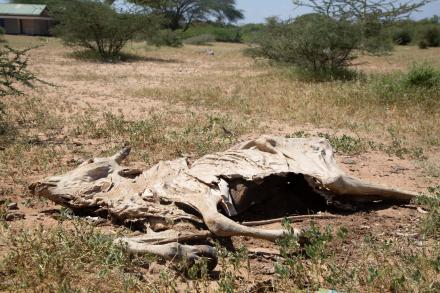
The climate change crisis has worsened with droughts across the Horn of Africa, with up to 13 million people in Ethiopia, Kenya and Somalia likely facing severe hunger, reports ITREALMS.Sources at ActionAid’s emergency teams, informed ITREALMS that with millions of people still recovering from the devastating drought that hit the region in 2017, a large-scale response is urgently needed to avert a catastrophic food and malnutrition crisis.
Wednesday, December 19, 2018
Africans seek collaboration between ISOC chapters - ITREALMS
Arising from the recently held African chapters session at the just concluded AFRINIC29 in Harmmamet, Tunisa, participants seek collaboration between Internet Society (ISOC) chapters across the continent, reports ITREALMS.
Chokri Ben Romdhane, a member of the local organizing committee, disclosed to ITREALMS that African Chapters members who participated in the AFRINIC29 public policy meeting in Hammamet, Tunisia, organized by the Tunisia ISOC Chapter, and discussed how to improve the collaboration between African chapters.
Part of the communique read:
“We consider that the collaboration between African Chapters is important for African chapters, and also for the achievement of the whole mission of Internet Society.
“We are aware of the difference in culture, policies, infrastructure between our countries and the difficulty to make in synergy all these factors.
“We believe that for the benefit of our region and community we should collaborate, and to do that we have established the following recommendations; Maintain an updated list of all the successful projects funded by Internet Society in the region; Define a list of topics based on the previous list of projects; and Create a group by topic and a call for memberships will be launched for all the chapters members.
Also, ITREALMS gathered that the groups should achieve feasible regional projects and facilitate funds seeking from ISOC and others foundations. Ideally, these projects should allow a replication of successful projects already implemented locally by another African chapter.
Chuks Egbune/GEE
*JOIN our alert's group | Share stories with us | Advert placement: WhatsApp | SMS: +2348033592762 *Twitter: @ITREALMS *Email: itrealms.dsa@gmail.com*
Chokri Ben Romdhane, a member of the local organizing committee, disclosed to ITREALMS that African Chapters members who participated in the AFRINIC29 public policy meeting in Hammamet, Tunisia, organized by the Tunisia ISOC Chapter, and discussed how to improve the collaboration between African chapters.
Part of the communique read:
“We consider that the collaboration between African Chapters is important for African chapters, and also for the achievement of the whole mission of Internet Society.
“We are aware of the difference in culture, policies, infrastructure between our countries and the difficulty to make in synergy all these factors.
“We believe that for the benefit of our region and community we should collaborate, and to do that we have established the following recommendations; Maintain an updated list of all the successful projects funded by Internet Society in the region; Define a list of topics based on the previous list of projects; and Create a group by topic and a call for memberships will be launched for all the chapters members.
Also, ITREALMS gathered that the groups should achieve feasible regional projects and facilitate funds seeking from ISOC and others foundations. Ideally, these projects should allow a replication of successful projects already implemented locally by another African chapter.
Chuks Egbune/GEE
*JOIN our alert's group | Share stories with us | Advert placement: WhatsApp | SMS: +2348033592762 *Twitter: @ITREALMS *Email: itrealms.dsa@gmail.com*
Labels:
Africans,
collaboration,
ISOC chapters,
ITRealms,
seek
Thursday, November 15, 2018
Facebook unveils powerful tools, resources for Africans - ITREALMS
FacebookAfrica has unveiled powerful new tools and resources to help youth, professionals and entrepreneurs in South Africa to access new career opportunities, reports ITREALMS.
This, ITREALMS gathered to include the new Learn with Facebook career development site, an enhanced Mentorship tool, and an improved jobs on Facebook product.
"Together with partners such as CcHub, Livity, She Leads Africa and Digify Africa, we are training thousands of people in Africa with the digital skills they need to compete in the modern workplace," a public statement made available to ITREALMS.
This, ITREALMS gathered to include the new Learn with Facebook career development site, an enhanced Mentorship tool, and an improved jobs on Facebook product.
"Together with partners such as CcHub, Livity, She Leads Africa and Digify Africa, we are training thousands of people in Africa with the digital skills they need to compete in the modern workplace," a public statement made available to ITREALMS.
With the updated career resources, "we are furthering our commitment to training business owners across Africa, and helping people access new career opportunities."
Nenye Dom/GEE
Nenye Dom/GEE
#FacebookAfrica #Mentorship #Digitaltraining
*JOIN our alert's group | Share stories with us | Advert placement: WhatsApp & SMS: +2348033592762 Twitter: @ITREALMS *Email: itrealms.dsa@gmail.com*
Wednesday, October 24, 2018
Black Friday: An insult to Africans? - ITREALMS
MidWeek Commentary@ITREALMS:
Indeed, as Bernard Mandeville argued in his influential work Fable of the Bees in 1714, a country's prosperity ultimately lies in the self-interest of the consumer. This school of thought, controversial as it may have sounded back then, paints a realistic picture of the current state of affairs in the 21st Century.
Today, advertising is perhaps the biggest promoter of consumerism.
In the current age of information overload, one in which a variety of eye-catching goods and services are marketed through a multiplicity of intrusive channels and media, the average consumer’s life is perpetually in need of some product, an upgrade or a switch to a better existence. Worse still, there is an increasingly growing tendency to not only push the consumer to the point of distraction with the deluge of promotional contents, but to get him to accept alien shopping traditions, messages and cultures as a result of the global influence of consumerism.
This trend finds deeper relevance in the concept of emulation, widely regarded as a major plank of latter-day consumerism. The poor attempt to emulate the rich; the rich look up to the stupendously wealthy; modern consumers react positively to celebrity endorsement as a measure of emulating or aspiring to the perceived lifestyle or status of public figures and, more to the point, native consumers are force-fed largely alien or foreign shopping ideas that find no relevance in their cultural realities.
What does Black Friday mean to a native African or Nigerian?
To begin with, the term has no local significance but has its origins in a foreign tradition. Put differently, Black Friday represents another form of neo-colonialism; a repudiation of what makes us African and a wholesale acceptance of the sub-texts of another man’s culture without any form of questioning.
An informal name for the day following Thanksgiving Day in the United States, the fourth Thursday of November, which has been regarded as the beginning of the country's Christmas shopping season since 1952, Black Friday – as a term – only began to assume widespread recognition around the early 2000s. The earliest evidence of the application of the phrase Black Friday to the day after Thanksgiving in a shopping context suggests that the term originated in Philadelphia, where it was used to describe the heavy and disruptive pedestrian and vehicle traffic that would occur on the day after Thanksgiving. Indeed, alternative history indicates that the first recorded use of the term – Black Friday – was applied not to holiday shopping but to financial crisis and the crash of the U.S. gold market on September 24, 1869. As the phrase became more widespread, a popular explanation became that this day represented the point in the year when retailers begin to turn a profit, thus going from being "in the red" to being "in the black.
Today, many Nigerians who have little or no idea of the associated meanings or etymology of the term – Black Friday – glory in the consumerism-driven fever which advertising has helped entrench in the minds without paying heed to how the term came about.
When an entire people lose their way and emulate culturally-alien concepts, there should be a conscious effort to query the norm, to ask questions and to customize these imports to suit native circumstances or existential realities. Little wonder the famous Greek philosopher Socrates quipped: “The unexamined life is not worth living.”
Presently, Black Friday is widely regarded as the busiest shopping event of the year, with research indicating that, spending on Black Friday 2017 raked in $7.9 billion in online sales (up 17.9% from 2016) while a whopping $700 billion was recorded throughout the November – December period, a 5.5% rise from 2016.
Perhaps, we would be better off looking inwards for a more fitting term, an original word to situate our acceptance of the annual celebration of global consumerism.
None comes to mind better than what Konga, a Nigerian e-commerce giant, has done with the term – Yakata.
Yakata, in the local Nigerian parlance, means crashing. In other words, the term is used to signify what the annual shopping fiesta has come to represent to the brand and its numerous patrons: a time to crash prices and offer consumers best deals on a wide range of goods and services.
Rather than slavishly ape an alien concept – which Black Friday remains despite the global phenomenon it has become – Konga has given us a refreshing variation on the theme by re-christening it Konga Yakata. Interestingly, Konga has also gone beyond just jumping on the Black Friday band-wagon to actually making it a sales event worth participating in.
Konga Yakata, as an original term finds more relevance with Nigerians and Africans, is indigenous and most importantly, lends a proudly local flavour to what is a very important shopping activity in the annual calendar. Through it, Konga has managed to do what other e-commerce companies have been unable to do: take a foreign concept, adapt it our local circumstances and weave/build a solid original structure around it which every patriotic Nigerian shopper should be proud of.
*Contributed by Robert Flynn, an e-commerce researcher from New Jersey, resides in Abuja.
ITREALMS ... everything news digitally!
Be original. That's my best advice. You're going to find that there's something that you do well, and try to do it with as much originality as you can, and don't skimp on the words. Work on the words – Bob Seger.Consumerism is the engine of our contemporary society. It drives the ambitions of 21st Century businesses and large corporates, resulting in a massive all-out assault on the senses of the consumer. By feeding into the frenzy associated with the acquisition of goods and services in ever-increasing amounts, businesses continually re-invent the cycle, creating a culture of consumption that keeps the global economy ticking.
Indeed, as Bernard Mandeville argued in his influential work Fable of the Bees in 1714, a country's prosperity ultimately lies in the self-interest of the consumer. This school of thought, controversial as it may have sounded back then, paints a realistic picture of the current state of affairs in the 21st Century.
Today, advertising is perhaps the biggest promoter of consumerism.
In the current age of information overload, one in which a variety of eye-catching goods and services are marketed through a multiplicity of intrusive channels and media, the average consumer’s life is perpetually in need of some product, an upgrade or a switch to a better existence. Worse still, there is an increasingly growing tendency to not only push the consumer to the point of distraction with the deluge of promotional contents, but to get him to accept alien shopping traditions, messages and cultures as a result of the global influence of consumerism.
This trend finds deeper relevance in the concept of emulation, widely regarded as a major plank of latter-day consumerism. The poor attempt to emulate the rich; the rich look up to the stupendously wealthy; modern consumers react positively to celebrity endorsement as a measure of emulating or aspiring to the perceived lifestyle or status of public figures and, more to the point, native consumers are force-fed largely alien or foreign shopping ideas that find no relevance in their cultural realities.
What does Black Friday mean to a native African or Nigerian?
To begin with, the term has no local significance but has its origins in a foreign tradition. Put differently, Black Friday represents another form of neo-colonialism; a repudiation of what makes us African and a wholesale acceptance of the sub-texts of another man’s culture without any form of questioning.
An informal name for the day following Thanksgiving Day in the United States, the fourth Thursday of November, which has been regarded as the beginning of the country's Christmas shopping season since 1952, Black Friday – as a term – only began to assume widespread recognition around the early 2000s. The earliest evidence of the application of the phrase Black Friday to the day after Thanksgiving in a shopping context suggests that the term originated in Philadelphia, where it was used to describe the heavy and disruptive pedestrian and vehicle traffic that would occur on the day after Thanksgiving. Indeed, alternative history indicates that the first recorded use of the term – Black Friday – was applied not to holiday shopping but to financial crisis and the crash of the U.S. gold market on September 24, 1869. As the phrase became more widespread, a popular explanation became that this day represented the point in the year when retailers begin to turn a profit, thus going from being "in the red" to being "in the black.
Today, many Nigerians who have little or no idea of the associated meanings or etymology of the term – Black Friday – glory in the consumerism-driven fever which advertising has helped entrench in the minds without paying heed to how the term came about.
When an entire people lose their way and emulate culturally-alien concepts, there should be a conscious effort to query the norm, to ask questions and to customize these imports to suit native circumstances or existential realities. Little wonder the famous Greek philosopher Socrates quipped: “The unexamined life is not worth living.”
Presently, Black Friday is widely regarded as the busiest shopping event of the year, with research indicating that, spending on Black Friday 2017 raked in $7.9 billion in online sales (up 17.9% from 2016) while a whopping $700 billion was recorded throughout the November – December period, a 5.5% rise from 2016.
Perhaps, we would be better off looking inwards for a more fitting term, an original word to situate our acceptance of the annual celebration of global consumerism.
None comes to mind better than what Konga, a Nigerian e-commerce giant, has done with the term – Yakata.
Yakata, in the local Nigerian parlance, means crashing. In other words, the term is used to signify what the annual shopping fiesta has come to represent to the brand and its numerous patrons: a time to crash prices and offer consumers best deals on a wide range of goods and services.
Rather than slavishly ape an alien concept – which Black Friday remains despite the global phenomenon it has become – Konga has given us a refreshing variation on the theme by re-christening it Konga Yakata. Interestingly, Konga has also gone beyond just jumping on the Black Friday band-wagon to actually making it a sales event worth participating in.
Konga Yakata, as an original term finds more relevance with Nigerians and Africans, is indigenous and most importantly, lends a proudly local flavour to what is a very important shopping activity in the annual calendar. Through it, Konga has managed to do what other e-commerce companies have been unable to do: take a foreign concept, adapt it our local circumstances and weave/build a solid original structure around it which every patriotic Nigerian shopper should be proud of.
*Contributed by Robert Flynn, an e-commerce researcher from New Jersey, resides in Abuja.
ITREALMS ... everything news digitally!
Monday, October 15, 2018
Internet Shutdowns: Africans must get on keyboards and fight - ITREALMS
FifAfrica lands in Accra:
The fifth edition of the Forum on Internet Freedom in Africa (FIFAfrica) in Accra, Ghana, which held at La Palm Beach Resort, was a sort of reviving the African spirit to engage, mostly positively so as to make a digital sense, especially with regards to access to information and online mediums. It was organized by the Collaboration on International ICT Policy for East and Southern Africa (CIPESA) in partnership with the Media Foundation West Africa (MFWA), from Wednesday, September 26 through Friday, September 28, 2018.Although I missed that of Wednesday, which agenda centered on the Ford Foundation partners’ meeting, UPRoar: Advocating for Internet Freedom with the Universal Period Review as well as Digital Tools Localisation Sprint, due to my flight schedule largely, it was interesting to catch up for the remaining two days.
I succeeded holding a brief meeting with members of my panel that were already on ground and we shared modus operandi for the session on “Trends in Online Regulation in Africa.” It aided us to agree on workabilities and think ahead for plan ‘B’ in case of last minute changes.
The Ghanaian handmade:
![]() |
So, in the morning of Thursday, September 27 was the official opening and welcoming session after registration was done, with the name tags having this Ghanaian handmade necklace, of course, with her national colours. The chief executive, Media Foundation for West Africa, Mr. Sulemana Braimah took the podium to welcome participants to the city of Black stars and enjoined we relax and enjoy the hospitality of Ghana people.
For the Executive Director of CIPESA, Dr. Wairagala Wakabi, #FIFAfrica has served as a platform to mark the International Day for Universal Access to Information (IDUAI) in Africa, stressing the fact that the continent is having an increase in Internet shutdowns, which have drastically affected the state of Internet freedom, advised Africans especially digital rights defenders to adopt the approach of Aneke the bird as depicted in Nigeria’s Nollywood; summed up in African proverb where the bird declared that since the hunters or shooters have decided to shoot without missing, Aneke the bird will also fly without perching; to avoid being caught by the government in their exercises who may be looking for reasons to shut down the Internet on the continent.
Hate for free Internet?
![]() |
Kofi Annan, (April 8, 1938 – August 18, 2018): Nairobi,
February 2008.
|
The publisher of Africapedia, Mr. Charles Onyango-Obbo in his Africanese-laden keynote address, entitled “Many African Governments Hate the Free Internet – And That Is a Very Good Thing” noted that for the fact African leaders hate free Internet, gave digital rights advocates a role to play towards saving the situation.
His take off point was a hearty tribute on behalf of Africans and indeed all participants in #FiFAfrica 2018 on the recent death of true African, Mr. Kofi Annan, the former United Nations Secretary-General and Nobel Peace Prize laureate who passed on Saturday, August 18, 2018, in a hospital in Bern, Switzerland.
He recalled that about February 2008 that late Kofi Annan (April 8, 1938 – August 18, 2018) was in Nairobi, leading a peace talk after the Kenya’s general election which resulted in violence and after a session, he took a walk over a 100 meters to show the return of peace on the streets of Nairobi, which was remarkable which he tagged as “the most important walk in a park in Africa.”
He said on one hand, that “Most African Big Men Hate the Free Internet - And that’s a ‘Wonderful’ thing” and listed what he called “Enemies of the Internet” to include leaders and governments of Ethiopia, Cameroon, Egypt, Eritrea, Tanzania, Uganda, Zambia, Congo (Rep.) and Gabon. Stressing that idea of “enemy of the internet” relies on a grand myth: That African dictators and their henchmen/women “don’t get” the internet/digital universe.
“They do, possibly better than the democrats and good guys appreciate its power, which is why they suppress it,” he said, pointing out that the Internet has driven several significant “state shifting” forces the Big Men understand.
According to him, there are just a few examples, in that it was “instrumentalised” by the new and dominant 21st African bureaucracy, the “digitocracy” which is built around telcos, platform technologies like Mpesa, E-Citizen, and the “surveillance securitocracy”.
He reiterated the fact that fake news may have saved Kenya from an Internet shutdown after the 2017 elections, which included but not limited to the likelihood that government was benefitting from much of the false content that “fake news was motivating more people to go to the polls.”
The Big Men, Onyango-Obbo also said, understood the internet allowed a new type of “digital/virtual secession” which paved the way for growing exit by citizens from the spaces controlled by states, citing for instance, the Nigeria’s Lola Omolola’s invitation-only Facebook group “Female in Nigeria” (FIN); founded in 2015 as “a movement of women focused on building compassion and providing support for one another, with the goal of having up to 1,000 members” but today, has over 1 million members!
He also elaborated with “Kilimani Mums in Nairobi, Confessions of a Married Woman in Egypt and Iranian ‘Signal Madam,’” emphasizing that Internet has finally been seized from the state narrative-making power (via satire and memes).
“It doesn’t forget, so keeps memory alive. Without amnesia, political control is difficult,” Onyango-Obbo declared, insisting that this virtual secession has significantly constituted emotional emigration, which he explained to mean that already some African leaders rule mostly over the bodies of their subjects, not their souls.
“The real surprise is not that there’s internet censorship, but if there had been none,” he said, and called for more innovation around subverting digital censorship. Charging the new generation of netizens that past generations, had the fight for independence, for the liberation of Africa, and for the ‘second liberation’ … this one is yours. Get on your keyboards and fight.”
For Grace Bomu, it was time to extend invitation to the session on ‘Consumer Rights Protection in the Digital Age, considering the fact that digital technologies create new opportunities for consumers, but yet make the upholding of their rights more challenging. She urged participants to come to the session to know how to navigate some of these challenges.
The last but not the least on the highlight session was Peter Asare Nuamah, a PhD candidate at the Pan African University, who underscored the importance of Africans taking cognizance of trends in online regulations on the continent. He noted that since 2017 Cameroon shut down the internet to digital communications and ever since has remained one of the longest interruptions in a bid to control online community, especially in the Anglophone regions of the country.
Then came a session on open data and importance of recognizing open data for better economic planning and improved life.
The session examined the series of laws in Africa which have in recent time proposed or passed laws and regulations that undermine public confidence in the use of online platforms and could lead to increased self-censorship by media, civil society groups and individual citizens, as well as to their withdrawal from online discourse.
Top on the outcome of the session was the charge on media entities and digital rights defenders group to establish both regulatory desk in media houses and regulatory officers to work with the lawmakers at the national levels, across African countries to aid proactive interventions against turns of Internet shutdowns.
They ended by calling on all Africans to join the train of creating contents especially in our local languages to save such languages from extinction and at the same time promoting the language which cannot be distanced from the culture. In addition, a proposition from yours sincerely is that the African Development Bank (AfDB) should see the issue of localization of African languages as huge way of resetting the online narrative for the continent, by investing on it to make it more attractive.
His take off point was a hearty tribute on behalf of Africans and indeed all participants in #FiFAfrica 2018 on the recent death of true African, Mr. Kofi Annan, the former United Nations Secretary-General and Nobel Peace Prize laureate who passed on Saturday, August 18, 2018, in a hospital in Bern, Switzerland.
He recalled that about February 2008 that late Kofi Annan (April 8, 1938 – August 18, 2018) was in Nairobi, leading a peace talk after the Kenya’s general election which resulted in violence and after a session, he took a walk over a 100 meters to show the return of peace on the streets of Nairobi, which was remarkable which he tagged as “the most important walk in a park in Africa.”
He said on one hand, that “Most African Big Men Hate the Free Internet - And that’s a ‘Wonderful’ thing” and listed what he called “Enemies of the Internet” to include leaders and governments of Ethiopia, Cameroon, Egypt, Eritrea, Tanzania, Uganda, Zambia, Congo (Rep.) and Gabon. Stressing that idea of “enemy of the internet” relies on a grand myth: That African dictators and their henchmen/women “don’t get” the internet/digital universe.
“They do, possibly better than the democrats and good guys appreciate its power, which is why they suppress it,” he said, pointing out that the Internet has driven several significant “state shifting” forces the Big Men understand.
According to him, there are just a few examples, in that it was “instrumentalised” by the new and dominant 21st African bureaucracy, the “digitocracy” which is built around telcos, platform technologies like Mpesa, E-Citizen, and the “surveillance securitocracy”.
Internal contest:
These, Onyango-Obbo said, they weaponised for political messaging, attacking regime foes, and election influencing. He alleged an internal contest between the old and new, with the new favouring open internet even for cynical political reasons and urged new generation or netizens to take heed and do well to fight the ‘battle’ of keeping the Internet open, because the old had fought for the African independence.He reiterated the fact that fake news may have saved Kenya from an Internet shutdown after the 2017 elections, which included but not limited to the likelihood that government was benefitting from much of the false content that “fake news was motivating more people to go to the polls.”
The Big Men, Onyango-Obbo also said, understood the internet allowed a new type of “digital/virtual secession” which paved the way for growing exit by citizens from the spaces controlled by states, citing for instance, the Nigeria’s Lola Omolola’s invitation-only Facebook group “Female in Nigeria” (FIN); founded in 2015 as “a movement of women focused on building compassion and providing support for one another, with the goal of having up to 1,000 members” but today, has over 1 million members!
He also elaborated with “Kilimani Mums in Nairobi, Confessions of a Married Woman in Egypt and Iranian ‘Signal Madam,’” emphasizing that Internet has finally been seized from the state narrative-making power (via satire and memes).
“It doesn’t forget, so keeps memory alive. Without amnesia, political control is difficult,” Onyango-Obbo declared, insisting that this virtual secession has significantly constituted emotional emigration, which he explained to mean that already some African leaders rule mostly over the bodies of their subjects, not their souls.
“The real surprise is not that there’s internet censorship, but if there had been none,” he said, and called for more innovation around subverting digital censorship. Charging the new generation of netizens that past generations, had the fight for independence, for the liberation of Africa, and for the ‘second liberation’ … this one is yours. Get on your keyboards and fight.”
#FiFAfrica18’s overview:
This saw the highlights of some of the key themes to be expected with Hu Xianhong of UNESCO, Grace Bomu of KICTANET and Peter Asare Nuamah of Pan African University sharing their insights. For Xianhong, UNESCO will have a session on Friday afternoon on the “International Day for Universal Access to Information” (IDUAI) study on some seven African countries including Nigeria.For Grace Bomu, it was time to extend invitation to the session on ‘Consumer Rights Protection in the Digital Age, considering the fact that digital technologies create new opportunities for consumers, but yet make the upholding of their rights more challenging. She urged participants to come to the session to know how to navigate some of these challenges.
The last but not the least on the highlight session was Peter Asare Nuamah, a PhD candidate at the Pan African University, who underscored the importance of Africans taking cognizance of trends in online regulations on the continent. He noted that since 2017 Cameroon shut down the internet to digital communications and ever since has remained one of the longest interruptions in a bid to control online community, especially in the Anglophone regions of the country.
Then came a session on open data and importance of recognizing open data for better economic planning and improved life.
Trends in online regulation:
Penultimate afternoon witnessed the session on Trends in Online Regulation in Africa at Room 2, which saw the Lead Strategist at DigitalSENSE Africa Media group, Mr. Remmy Nweke leading discussions at FIFAfrica2018. Other speakers include Sakah Bernard Nsaidzedze of Pan African University in Cameroun; Legal practitioner and media trainer, Mr. Zakaria Tanko Musah of Ghana Institute of Journalism, an independent analyst, Nanjala Nyabola, and Sellina Sheena Nkowani from the Nation Publications, Malawi.The session examined the series of laws in Africa which have in recent time proposed or passed laws and regulations that undermine public confidence in the use of online platforms and could lead to increased self-censorship by media, civil society groups and individual citizens, as well as to their withdrawal from online discourse.
Top on the outcome of the session was the charge on media entities and digital rights defenders group to establish both regulatory desk in media houses and regulatory officers to work with the lawmakers at the national levels, across African countries to aid proactive interventions against turns of Internet shutdowns.
Resetting Online Narrative on Africa:
After that comes the “Re-setting Online Narrative on Africa” anchored by Dembah Kandeh from the University of the Gambia and featured Sandister Tei of Wikimedia, Charles Onyango-Obbo of Africapedia as well as Dragana Kourin of Localisation Lab, where they examined who is creating online contents and for whom, taking into perceptive, the truism of these content as for Africa and Africans.They ended by calling on all Africans to join the train of creating contents especially in our local languages to save such languages from extinction and at the same time promoting the language which cannot be distanced from the culture. In addition, a proposition from yours sincerely is that the African Development Bank (AfDB) should see the issue of localization of African languages as huge way of resetting the online narrative for the continent, by investing on it to make it more attractive.
*Zankaria, Sellina, Remmy, Nanjala and Benard after the session on Trends ...
*Remmy Nweke/ED, Ops
ITREALMS ... everything news digitally!
These stories may interest you:
CIPESA goes to Accra with FiFAfrica’18 - ITREALMS
Wednesday, September 05, 2018
Uwaje advocates localization of passwords by Africans - ITREALMS
He gave this advice at the third quarterly forum of the
Nigeria Information Technology Reporters Association (NITRA) in Lagos at the weekend,
with the theme: Local Content Development in Nigeria’s ICT Sector: Stimulant
for National Economic Recovery.”
ITREALMS
gathered there are over 520
languages spoken
in Nigeria alone, while the major languages are Igbo, Urhobo, Hausa, Yoruba,
Ibibio, Fulfulde, Edo, Pidgin English, Ijaw, Kanuri, and Tiv, to name a few.
Out of 520, nine was reported to have gone extinct.
As
said by him, Nigerians and Africans as a whole need to re-identify themselves
by changing their electronic device passwords, to make it somewhat difficult
for hackers, because they have to contend with various African languages,
outside adding special characters and numbers.
“We
need to re-identify ourselves by changing our passwords so that whoever will
hack you will need to first learn your language,” he declared.
Uwaje popular known as the Oracle of the Nigerian IT
Industry, also said that software is a language not only a code, stressing that
capacity building for local content emancipation should come from bottom-up,
starting from kindergartens, primary schools, post-primary schools and
tertiaries.
He also urged the various industry regulators to catch-up
with disruptive tendencies within the ICT sector, Uwaje pointed out that
services, constitute two-third of ICT sector, and advised that services should
not be outsourced to foreigners.
Equally, Uwaje identified collaboration as the missing
link in stimulating local content for development for national economic
recovery.
Therefore, he asked Nigeria to declare what the nation
wants to achieve out of technology, that way its goals and mission could be
streamlined towards achieving same.
ITREALMS
recalled that NITRA, established since November 2013 serves as the umbrella
body of all practicing ICT journalists in Nigeria, cutting across the print,
broadcast and online media, with a vision to drive ICT development and ensure
accurate and robust ICT reportage.
NITRA chairman, Mr. Emma Okonji in his opening speech,
said that in line with this noble vision, the association decided to make it a
point of duty to organize quarterly seminar, where issues of national interest
will be discussed.
According to him, since the incursion of financial
technology (FinTech) players into the polity, has led to digital disruption in
the banking sector and Nigeria has witnessed the growth of several FinTech and
technology startups.
FinTechs and startups, he said, have developed home grown
technology solutions with the best of quality and are commercially viable in addressing
specific and organizational challenges, but they lack support and patronage
from the government agencies and organisations who still prefer foreign
software and hardware solutions to the detriment of locally developed products.
NITRA, therefore, called on the federal government to as
a matter of urgency, formulate new policies and ensure full implementation of
such policies that will protect local content in Nigeria.
Chuks Egbune/GEE
Pix: Chief Chris Uwaje
Tuesday, February 28, 2017
Medikal is of Africa, by Africans for Africa - Okugbo
Perfectsoft Systems Ltd has declared that Medikal, an open
source hospital information management software solution is of Africa, and by
Africans for Africa, reports ITRealms.
Edwin Okugbo of Perfectsoft System said that Medikal covers
virtually every area of hospital information management, process control and
administration.
“It is a software that is simple enough to run a small
health care center but powerful, feature rich and scalable enough to run a Major
Hospital complex or multi-site group of health centers. It is suitable for both
private and government facilities,” he said.
Medikal, he also comes with several extended services and
enterprise modules.
“Medikal is committed to the pursuit of the achievement of
Sustainable Development Goals for Africa,” he said.
Nenye Dom/GEE
ITREALMS ... everything news digitally!
Subscribe to:
Posts (Atom)